The Changing Role of Village Midwives Across Rural Java

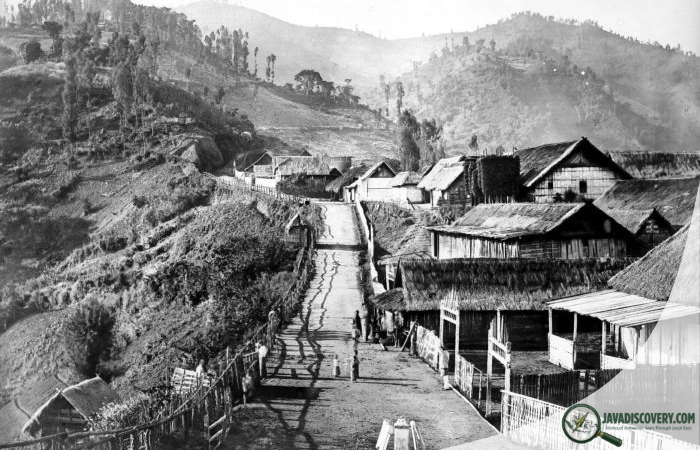
javadiscovery.com – The changing role of village midwives across the central Javanese heartland has become a defining marker of the island’s transition from ancient spiritualism to modern medical precision. In the quiet hours before dawn, when the mist still clings to the terraced rice fields of Magelang, the silence is often broken by the mechanical thrum of a small motorcycle. This is the vehicle of the Bidan Desa, the modern village midwife, who navigates narrow, winding paths to reach expectant mothers in remote hamlets. For centuries, this space was occupied solely by the dukun bayi, a traditional healer whose authority was rooted in ancestral lore and spiritual rituals. Today, that narrative has shifted, as the changing role of village midwives creates a new clinical frontier where stethoscopes and digital tablets work in tandem with the deep-seated customs of the rural community. This evolution is not merely a policy change; it is a profound cultural negotiation that ensures the safety of the next generation while honoring the complex identity of the Javanese people.
The Sacred Heritage of the Traditional Healer
To understand the magnitude of the shift, one must first look at the historical position of the dukun bayi. In Javanese cosmology, pregnancy and childbirth are seen as liminal states, periods where the boundary between the physical world and the spiritual realm becomes dangerously thin. The traditional healer was the navigator of this crossing. She was responsible for rituals that ensured the child’s safety from malevolent spirits and for the proper handling of the ari-ari, or placenta, which Javanese believe is the infant’s spiritual sibling. The smells of incense, kembang telon flowers, and turmeric ointments defined the birthing atmosphere. It was a role defined by touch, prayer, and community trust.
However, the traditional system had its physical limits. While the dukun bayi provided immense emotional and spiritual comfort, they lacked the training to handle the medical emergencies that often occur during labor. Postpartum hemorrhage, neonatal infection, and obstructed labor were frequently met with more ritual rather than surgical or pharmacological intervention. This led to high maternal mortality rates in the mid-twentieth century, prompting the Indonesian government to rethink the structure of rural healthcare. The goal was to preserve the trust held by traditional figures while introducing the safety of clinical medicine.
The Introduction of the Bidan Desa Program
The turning point arrived in the late 1980s and early 1990s with the massive deployment of certified midwives to the villages. These women, known as Bidan Desa, were often young graduates from urban nursing schools who were sent to live in the villages they served. It was a social experiment as much as a medical one. At first, the arrival of these young women in white uniforms was met with skepticism. In a culture that values age and experience, a twenty-year-old with a medical kit faced a steep climb to earn the community’s kepercayaan, or trust. They had to prove that their clinical methods were not an attack on Javanese values, but a necessary supplement to them.
The initial years were a period of trial and error. Midwives had to learn the local dialects and the specific social hierarchies of their assigned dusun (hamlet). They had to understand that they could not simply order a family to ignore the advice of a grandmother or a local dukun. Instead, they had to become diplomats. They began to demonstrate the tangible benefits of their training, such as the use of sterile equipment and the ability to monitor fetal heart rates with a Doppler device. Slowly, the villagers began to see that the bidan was not there to replace their culture, but to protect the lives of their daughters and grandchildren.
A Partnership Model for the Modern Era
The changing role of village midwives today is characterized by a “partnership model.” Rather than attempting to eliminate traditional practices, the modern Javanese midwife actively collaborates with the dukun bayi. In regencies across West and Central Java, incentive programs encourage traditional healers to refer pregnant women to the local midwife. In this system, the dukun still plays an important role, managing the rituals, massaging the mother, and providing postpartum herbal care, but the bidan takes the clinical lead. This synergy ensures that the mother receives the emotional support she craves while having access to life-saving medical care.
This partnership has been instrumental in the decline of maternal and infant mortality across the island. By recognizing the dukun bayi as a stakeholder rather than a competitor, the government has created a healthcare bridge. The midwife has become a master of two worlds, capable of discussing blood pressure and glucose levels in one breath and acknowledging the importance of the selapanan ritual in the next. She has become a social mediator who translates the cold language of the hospital into the warm, familiar tones of the village.
The Digital Revolution in Rural Health
As we move further into the decade, technology is playing an even larger role in the work of these women. The changing role of village midwives is now deeply influenced by mobile health technology. In the rugged terrains of the Tengger highlands or the remote coastal villages of southern Java, a midwife’s smartphone is her most valuable diagnostic tool. Through specialized applications, she can upload patient data directly to district hospitals, allowing specialists in the city to monitor high-risk pregnancies from hundreds of miles away.
This digital connectivity allows for a triage system that was previously impossible. If a mother in a remote mountain hamlet shows early signs of pre-eclampsia, the midwife can coordinate with the district health office via encrypted messaging apps to arrange an ambulance or a referral long before the situation becomes critical. This “early warning system” is a massive leap forward from the days of relying on word-of-mouth or slow-moving messengers. The modern midwife is a data analyst on the frontline, using real-time information to prevent the “three delays” that often lead to maternal death: delay in recognizing a problem, delay in reaching a facility, and delay in receiving treatment.
Physical Realities and the Geography of Care
Despite the high-tech advancements, the physical labor of the midwife remains incredibly demanding. Java’s geography is a landscape of extremes, from volcanic slopes to flood-prone plains. A midwife’s daily life involves navigating these environments regardless of the weather. During the monsoon season, the roads can turn into rivers of mud, making a routine prenatal check-up a test of endurance and skill. A journalist traveling with a midwife in the Dieng Plateau would see her struggle to kick-start a motorbike in the freezing mountain air, her medical bag securely strapped to her back as she prepares for a three-hour journey to a single household.
The role is also emotionally taxing. Because the midwife lives in the village, she is never truly off duty. A knock on the door at two in the morning is a frequent occurrence. She is the first person called when a child has a high fever or when an elderly neighbor has a fall. In the Javanese village, the midwife is a community anchor. Her home often serves as the Polindes (Village Maternity Post), a place that is part clinic and part community center. She is a neighbor, a friend, and a lifeline, all rolled into one.
Local Voices from the Frontline
Ibu Sri, a midwife who has served a small community near the southern coast for over twenty years, shares a common perspective on this evolution. She remembers when she first arrived and had to convince mothers that a hospital birth was not a sign of failure. She explains that in the past, people thought the clinic was only for when things went wrong. Now, they see it as a place of preparation. She notes that the most significant change is the trust. The mothers now understand that she is there to walk with them through the entire process, from the first month of pregnancy to the first years of the child’s life.
A younger colleague, Bidan Anisa, highlights the impact of the new digital requirements. She mentions that she spends nearly as much time on her tablet as she does with her stethoscope. She records everything from nutritional intake to immunization schedules. She admits it is a lot of paperwork, but she also sees that it makes her work more accurate. She feels like she is part of a much larger network, which gives her a sense of security when she has to make difficult clinical decisions in the middle of the night.
The Midwife as an Economic Catalyst
The changing role of village midwives extends beyond the clinical room into the economic and social fabric of the village. By promoting family planning and reproductive health, midwives are helping to break the cycle of poverty. A family with fewer children and better health is more capable of investing in education and local businesses. The midwife also leads the charge against childhood stunting, which is a major national priority in Indonesia. By monitoring the “first one thousand days” of a child’s life, she ensures that the next generation of Javanese citizens is physically and cognitively equipped for the future.
This focus on nutrition and preventative care has turned the midwife into a teacher. She organizes Posyandu sessions where mothers learn how to prepare healthy local food and the importance of breastfeeding. These sessions are also vital social gatherings, fostering a sense of communal responsibility for the health of all children in the village. The midwife’s influence ripples through the community, affecting everything from hygiene practices to the local perception of women’s professional roles. In many villages, she is the most educated and respected woman, a role model for young girls who dream of a life beyond the domestic sphere.
Refining the Javanese Identity in a Globalized World
As Java continues to modernize and globalize, the village midwife remains a crucial link to the island’s authentic soul. She represents the Javanese concept of rukun, or harmony. She does not seek to destroy the old ways, but to harmonize them with the new. In her hands, a modern fetal monitor is used with the same gentleness and respect that a dukun might use when applying a traditional herbal wrap. She understands that healing is as much about the spirit as it is about the body.
The story of the midwife is a story of Javanese resilience. It shows that the island can adopt international medical standards without losing the warmth and community-centric values that define its culture. The changing role of village midwives is a testament to the fact that progress does not have to be cold or impersonal. In the heart of Java, it is warm, local, and deeply human. As the sun sets over the teak forests and the calls to prayer echo from the village mosques, the midwife prepares for another night of vigilance. She is the guardian of the island’s future, standing at the crossroads of science and soul.
In the quiet corners of rural Java, the roar of a motorbike in the night is not a disturbance; it is a reassurance. It means that somewhere, a life is beginning, and it is being held in hands that are both skilled and compassionate. The tools may change, the data may move across invisible networks, but the core of the mission remains as old as the volcanic soil of Java itself. To nurture life, to protect the mother, and to ensure that the village continues to thrive, one birth at a time.