Death Rituals Compared Across Java Bali and Flores Traditions

javadiscovery.com – The scent of burning sandalwood drifts through the humid air of a Balinese afternoon, mixing with the metallic tang of buffalo blood in the highlands of Flores and the damp, cool smell of freshly turned earth in a quiet Javanese cemetery. In the Indonesian archipelago, death is rarely a silent exit; it is a profound, multisensory transition that demands the participation of the entire community. Death Rituals Compared Across Java, Bali, Flores reveal a fascinating spectrum of human belief, where the end of life is treated as the most critical “rite of passage” a soul will ever undertake. In Java, death is often met with a stoic, rhythmic prayer intended to soothe the spirit into the afterlife. In Bali, it is a spectacular, fiery celebration designed to liberate the soul from its earthly cage. Meanwhile, in the rugged interior of Flores, death remains etched in stone, where ancient megalithic traditions persist alongside modern faith. To explore Death Rituals Compared Across Java, Bali, Flores is to journey into the heart of the Indonesian soul, discovering how three distinct islands navigate the universal threshold of mortality with elegance, fire, and sacrifice.
The Javanese Slametan: The Quiet Path to Ikhlas
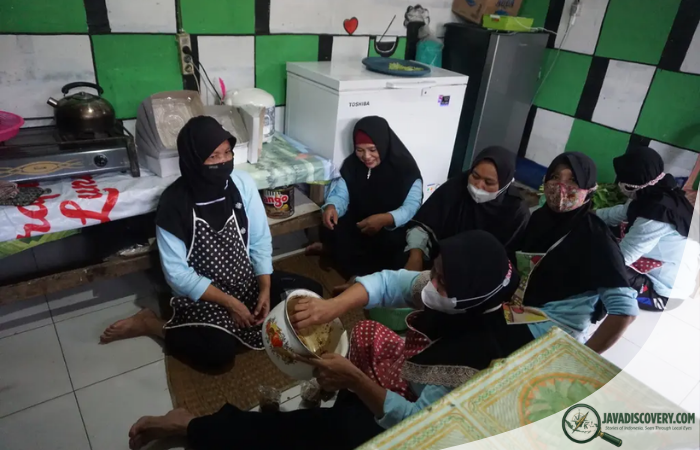
In the villages of Central and East Java, the prevailing philosophy toward death is ikhlas, a state of profound, sincere letting go. When a person passes away, the news spreads through the neighborhood via the Lelayu, a formal announcement often broadcast through mosque loudspeakers or delivered house to house. Within hours, the community gathers. The role of the collective in Death Rituals Compared Across Java, Bali, Flores begins here, with neighbors bringing sugar, rice, and tea to support the grieving family. The atmosphere is heavy but disciplined; loud wailing is discouraged, as it is believed that excessive grief will weigh down the soul of the departed on its journey.
The core of the Javanese ritual is the Slametan, a series of communal feasts and prayer sessions held at specific intervals: on the day of death, and then on the 3rd, 7th, 40th, 100th, and finally the 1000th day. During these nights, men sit cross legged on floor mats, chanting the Tahlil in a low, rhythmic drone that vibrates through the wooden walls of the house. In the framework of Death Rituals Compared Across Java, Bali, Flores, the Javanese approach is the most “inner focused.” The goal is tentrem, or inner peace, ensuring that the spirit of the leluhur (ancestor) is properly honored and does not linger in the world of the living as a troubled ghost.
The Balinese Ngaben: The Release through Fire
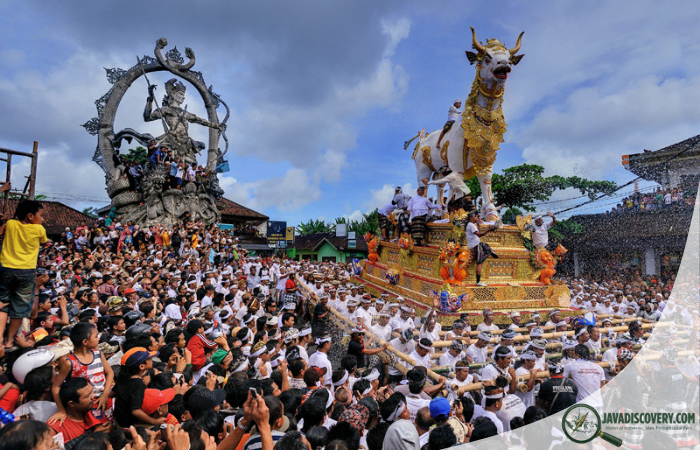
In sharp contrast to the quietude of Java, the Balinese Ngaben is a riot of color, sound, and movement. For the Balinese Hindu, death is not a tragedy but a joyous occasion, as it represents the soul’s chance to be reincarnated or to achieve moksha, liberation from the cycle of rebirth. In Death Rituals Compared Across Java, Bali, Flores, the Balinese tradition is undoubtedly the most visually spectacular. The body is placed inside a Bade, a towering, multi tiered cremation tower made of bamboo, wood, and bright paper, which is carried through the streets by dozens of men.
The procession is a chaotic, energetic event. The tower is spun around at every crossroads to confuse the spirit, ensuring it cannot find its way back to its former home. In the context of Death Rituals Compared Across Java, Bali, Flores, the “cremation sarcophagus,” often shaped like a massive black bull (Lembu) or a winged lion, serves as the final vessel for the body. When the fire is lit at the Setra (cemetery), it is seen as a holy act of purification. The physical body, composed of the five elements or Panca Maha Bhuta, is returned to the universe, while the soul is washed clean by holy water and the intense heat of the flames. The final act involves gathering the ashes and committed them to the sea, symbolizing the ultimate return to the source of life.
The Sacred Water of Bali
One cannot discuss Death Rituals Compared Across Java, Bali, Flores without mentioning the role of Tirta, or holy water, in Bali. Before the body is cremated, it is washed multiple times with water infused with frangipani flowers and sandalwood. Each drop of water is a prayer, intended to cool the soul before it faces the fires of the Ngaben. This ritualized bathing is a moment of intense intimacy for the family, a final physical contact that bridges the world of the living and the dead.
The Flores Megaliths: Anchoring the Soul in Stone
Traveling further east to the island of Flores, specifically among the Ngada and Lio people, Death Rituals Compared Across Java, Bali, Flores takes on a more primal, ancestral character. Here, death is a conversation with the stones. In villages like Bena or Luba, the dead are often buried in the center of the village, marked by massive limestone slabs or megalithic structures. For these communities, the ancestors are not gone; they are the literal “foundation” of the village. The role of Death Rituals Compared Across Java, Bali, Flores in this region is to anchor the soul into the lineage of the clan.
A death in Flores often requires the sacrifice of buffaloes and pigs, whose horns are later mounted on the front of the traditional Sa’o houses. This is not mere display; the horns represent the “social capital” and spiritual strength the deceased has brought to the family. In the comparison of Death Rituals Compared Across Java, Bali, Flores, the Flores rituals are the most “material” and enduring. While the Javanese shroud decomposes in the earth and the Balinese body vanishes in fire, the Flores ancestor is memorialized in stone and bone. The ritual cycle, known as Gawai in some areas, involves calling the spirits of the dead back to the village to share in a feast, ensuring that the connection between the “seen” world and the “unseen” ancestral world remains unbroken.
“In Java, we bury the body to let the soul rest. In Bali, we burn it to let the soul fly. But here in Flores, we feed the soul and give it a seat of stone so it never has to leave us.” — Bapak Yohanes, 68, an elder in the Ngada Highlands.
Symbolism of the Shroud and the Sarcophagus
When analyzing Death Rituals Compared Across Java, Bali, Flores, the “clothing” of the dead reveals deep theological differences. In Java, following Islamic tradition, the body is wrapped in simple white cotton lengths, the kafan. This uniformity symbolizes that in death, all are equal before the Creator, stripped of rank and wealth. This is the ultimate expression of the Javanese desire for prasaja, or simplicity.
In contrast, Death Rituals Compared Across Java, Bali, Flores shows that in Bali, the body is often dressed in fine traditional textiles and surrounded by “bekal,” or provisions for the afterlife, including coins, mirrors, and even small pieces of gold. In Flores, the deceased is often wrapped in a hand woven Ikat cloth, where the patterns tell the story of their clan and their achievements. These Ikat blankets are “spiritual passports,” identifying the soul as it enters the realm of the ancestors. The contrast in Death Rituals Compared Across Java, Bali, Flores is clear: the white shroud of Java is a erasure of identity, while the textiles of Bali and Flores are a celebration of it.
| Island | Primary Ritual | Symbolic Element | Theological Goal |
|---|---|---|---|
| Java | Slametan / Tahlilan | White Shroud (Kafan) | Resting the soul in peace (Ikhlas). |
| Bali | Ngaben (Cremation) | Bade Tower & Lembu Bull | Liberating the soul for reincarnation. |
| Flores | Megalithic Burial / Gawai | Stone Tombs & Buffalo Horns | Ancestral continuity and status. |
The Role of Sacrifice: Buffaloes vs. Prayers
A major point of divergence in Death Rituals Compared Across Java, Bali, Flores is the concept of sacrifice. In the Christian and animist traditions of Flores, the death of a high ranking individual requires the slaughter of dozens of water buffaloes. This is a form of potlatch, where the family’s wealth is redistributed to the community in the form of meat. In the eyes of a Floresian, the buffalo is the “vehicle” that carries the soul to the mountain peaks where the ancestors dwell.
In Java, however, the sacrifice is purely “spiritual” and “social.” The “sacrifice” is the time and energy spent by the community in prayer. In Death Rituals Compared Across Java, Bali, Flores, the Javanese host provides food, but it is the guests who provide the “merit” through their chanting. Bali sits somewhere in between, where the sacrifice is “artistic” and “financial.” The building of the Bade tower and the commissioning of the gamelan orchestra represent a massive sacrifice of resources, intended to show the soul that it is loved and honored, encouraging it to move on without looking back. Death Rituals Compared Across Java, Bali, Flores demonstrates that whether through blood, art, or prayer, the living must always pay a price to ensure the peace of the dead.
Modernity and the Changing Face of Death
In the 21st century, the traditions explored in Death Rituals Compared Across Java, Bali, Flores are facing the pressures of urban living and globalized culture. In cities like Jakarta, Javanese funerals have become more “streamlined,” often taking place in funeral parlors rather than the home. In Bali, “mass cremations” (Ngaben Massal) are becoming popular as a way to share the immense costs of the ritual, allowing even the poorest families to give their loved ones a dignified send off. The dynamic of Death Rituals Compared Across Java, Bali, Flores is shifting toward efficiency without losing its sacred core.
Even in Flores, the young generation is grappling with the traditional demands of buffalo sacrifice, which can lead to significant family debt. Yet, the Death Rituals Compared Across Java, Bali, Flores remain resilient. The “smartphone” is now used to document these rituals, and “Go-Send” or other delivery services are used to distribute the berkat food boxes in Java. This proves that while the “tools” of Death Rituals Compared Across Java, Bali, Flores may change, the fundamental human need to mark the end of life with communal ritual remains as strong as ever. The archipelago’s “economy of death” continues to thrive because it is, at its heart, an economy of memory.
Conclusion: The Architecture of the Afterlife
Death Rituals Compared Across Java, Bali, Flores reveal that for the people of Indonesia, death is not a wall, but a window. Whether it is the quiet, shadowed room of a Javanese Slametan, the roaring flames of a Balinese Ngaben, or the cold, immovable stones of a Floresian tomb, the goal is always the same: to maintain the balance between the worlds. Death Rituals Compared Across Java, Bali, Flores show us that “humanity” is defined by how we treat those who can no longer speak for themselves.
As the “senja” (twilight) falls over these islands, and the smoke from a thousand ritual fires or kitchen stoves rises into the sky, the ancestors are remembered. Death Rituals Compared Across Java, Bali, Flores are the threads that weave the past into the present, ensuring that no soul is ever truly lost. In the heart of Java, Bali, and Flores, the dead continue to live through the actions of the living. To witness these rituals is to understand that in Indonesia, the story of life does not end with the last breath; it simply begins a new chapter in the collective memory of the islands. Death Rituals Compared Across Java, Bali, Flores remind us that we are all just “tamu” (guests) in this world, and that the best we can hope for is to be sent home with a song, a prayer, or a flame that lights the way. The diversity of these rituals is the true wealth of the archipelago, a testament to the infinite ways the human spirit finds meaning in the face of the great unknown.