Inside Vault Museum Jakarta Home for Automotive Obsession

javadiscovery.com – South Jakarta is full of places designed to look modern.
Stylish cafés. Hidden bars. Creative spaces. Lifestyle districts built for the city’s fast-moving urban culture.
But somewhere between the crowded streets and residential corners of Cipete, there is a building that feels strangely different from everything around it.
Not louder.
Not more luxurious.
Just more personal.
Behind its industrial-modern façade lies Vault Automotive Museum, one of Jakarta’s most unusual cultural spaces — a place where machines are preserved not merely because they are expensive, but because they represent emotion, design, risk, and memory.
For some visitors, Vault is an automotive museum.
For others, it feels more like an art space dedicated to mechanical obsession.
And perhaps that ambiguity is exactly what makes it interesting.
Where Cars Become Storytelling Objects
Most museums organize collections around chronology.
Vault organizes them around feeling.
Each floor carries a different emotional atmosphere, almost like chapters inside a visual narrative about human fascination with speed, freedom, engineering, and exploration.
The lighting is intentionally cinematic.
Reflections bounce softly across polished metal surfaces.
The silence inside the building makes every detail stand out more clearly — the curvature of body panels, the texture of vintage interiors, even the imperfections that come with age.
Unlike conventional automotive exhibitions that focus heavily on technical specifications, Vault emphasizes emotional presence.
You do not need to understand engines to appreciate why these vehicles matter.
Their personalities speak for themselves.
The Elegant World of European Classics
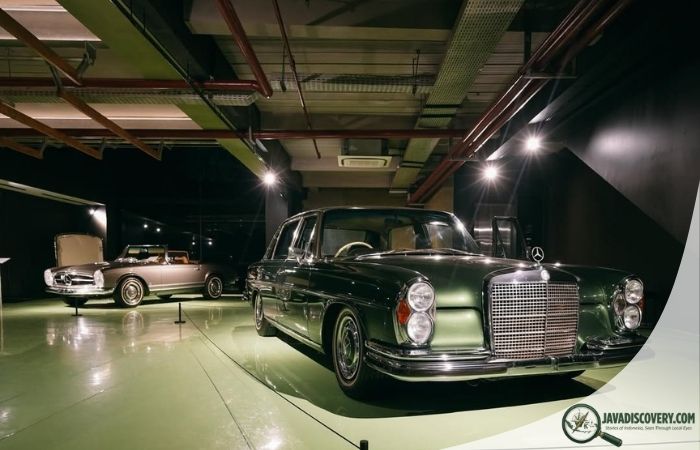
One section inside Vault feels almost like entering the private garage of a wealthy European collector from the mid-20th century.
Classic Mercedes-Benz models dominate the room with long silhouettes, chrome details, and proportions rarely seen in modern vehicles.
Cars from this era carried themselves differently.
They were not designed to look aggressive.
They were designed to look confident.
Among the highlights is the iconic Mercedes-Benz 230 SL Pagoda, a car that still looks remarkably elegant despite being decades old.
Its nickname came from the slightly concave roof shape inspired by traditional Asian pagoda architecture.
Today, the vehicle is considered one of the most beautiful Mercedes-Benz designs ever produced.
Nearby, other classic sedans quietly showcase an era when luxury was expressed through restraint rather than excess.
Thin steering wheels.
Wood accents.
Minimalist dashboards.
Everything feels intentional.
The Floor Dedicated to Porsche Purists
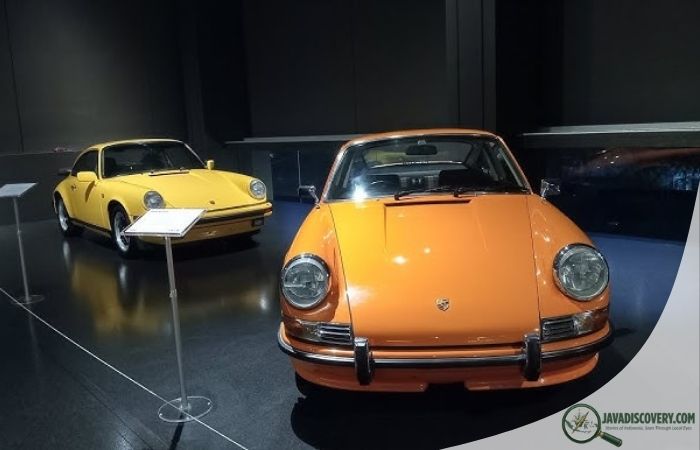
Further inside the museum, the atmosphere changes completely.
The elegance of old European sedans gives way to something more emotional and rebellious.
This area celebrates classic Porsche culture, especially the legendary air-cooled era that remains deeply respected among enthusiasts worldwide.
Unlike modern supercars filled with digital systems and driving assistance technology, these older Porsches feel mechanical and demanding.
Drivers often describe them as cars with personality.
Machines that require trust and concentration.
One of the most admired vehicles here is the Porsche 930 Turbo.
Even standing still, the car feels aggressive.
Wide rear proportions, dramatic curves, and its infamous turbocharged power delivery helped create its legendary reputation.
Nearby sits the softer-looking Porsche 356, a model carrying a completely different energy — lighter, more optimistic, and deeply connected to Porsche’s early history.
Together, they reveal how automotive evolution is often shaped not only by engineering, but also by changing cultural identity.
The Machines Built for Difficult Roads
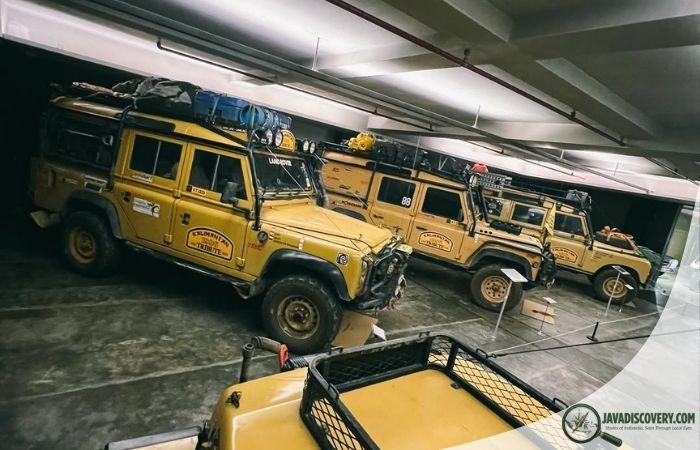
Perhaps the most surprising section inside Vault is the off-road collection.
Here, beauty is no longer defined by speed or luxury.
Instead, the focus shifts toward endurance.
Function.
Survival.
Legendary four-wheel-drive vehicles stand proudly throughout the room, each carrying traces of adventure culture from different parts of the world.
The Toyota Land Cruiser FJ40 immediately attracts attention with its rugged proportions and timeless utilitarian design.
Nearby, classic Land Rover models reflect the era of old expeditions crossing forests, mountains, and remote territories long before GPS existed.
These vehicles were never created to impress people in urban cafés.
They were built to confront uncertainty.
And strangely, that purpose gives them a completely different kind of beauty.
A Museum That Feels Alive
One reason many visitors return to Vault repeatedly is because the museum does not feel static.
The collections rotate regularly, creating new experiences over time.
A car displayed today may disappear months later, replaced by another equally fascinating machine with its own story and personality.
This constant evolution keeps Vault connected to the living culture surrounding it.
Collectors, photographers, filmmakers, designers, and automotive communities frequently gather here, especially during weekends.
The building slowly transforms from a museum into a social space where conversations about art, design, mechanics, and nostalgia naturally blend together.
Even visitors with little automotive knowledge often end up staying longer than expected.
Because ultimately, Vault is not only about cars.
It is about human passion expressed through machines.
The Coffee Shop That Completes the Atmosphere
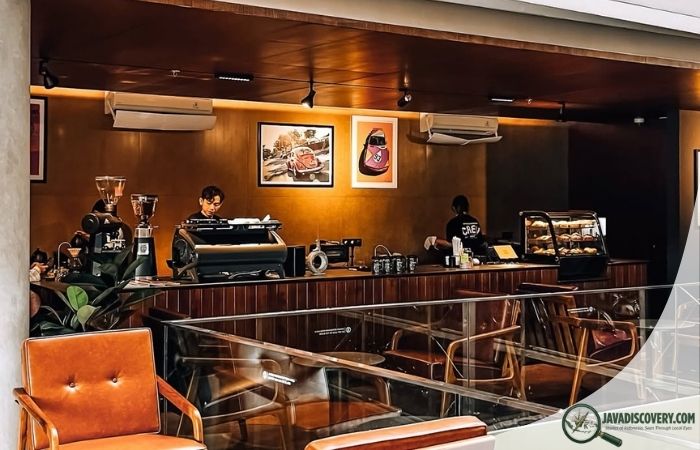
Attached to the museum is Vault Coffee, a café that feels seamlessly integrated into the overall experience.
Rather than functioning as a separate commercial space, the café extends the museum’s atmosphere naturally.
Concrete textures, industrial interiors, warm lighting, and the surrounding vehicles create an environment that feels both stylish and relaxed.
During quieter weekdays, visitors often sit for hours working, editing photos, or simply observing the museum environment through large windows.
On weekends, the atmosphere becomes more energetic as automotive communities and creatives gather throughout the space.
It is not difficult to understand why Vault has become increasingly popular among younger urban audiences in Jakarta.
It successfully combines museum culture, lifestyle space, and visual storytelling without feeling artificial.
Vault Museum Opening Hours
Vault Automotive Museum
- Monday: Closed
- Tuesday – Friday: 09:00 – 20:00
- Saturday – Sunday: 08:00 – 20:00
Vault Coffee
- Monday – Friday: 09:00 – 21:00
- Saturday – Sunday: 08:00 – 21:00
One of Jakarta’s Most Unexpected Cultural Spaces
In many ways, Vault Automotive Museum reflects a side of Jakarta rarely discussed by outsiders.
A city not only driven by business and traffic, but also by communities passionate about creativity, craftsmanship, nostalgia, and design.
Because beneath the polished metal and expensive collections, Vault quietly explores something universal.
The emotional relationship between humans and the objects they create.
Some people see cars as transportation.
Others see memory.
Identity.
Dreams.
Freedom.
And inside Vault Museum, those emotions become visible everywhere.