Veins of Fate in Batu Akik: Micro Local Rock Lore of Sukabumi and Pacitan

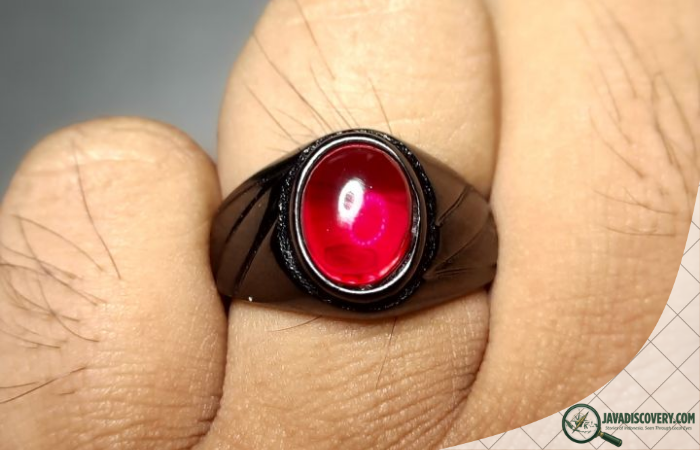
javadiscovery.com – Under the fierce, humid heat of a mid-afternoon sun in West Java, Pak Engkos sits on a low wooden stool outside his modest workshop near the banks of the Cicatih River in Sukabumi. His hands, perpetually stained gray with silicone carbide slurry and iron oxide dust, move with practiced, delicate precision. He holds a raw, rough-cut chunk of local chalcedony up to a bare incandescent light bulb. To an untrained eye, it appears to be nothing more than a dull, river-worn rock with a jagged streak of red and white mineral running through its core. But as the bright light passes through the semi-translucent stone, Pak Engkos squints, pointing his thumbnail at a hairline fissure filled with micro-crystalline jasper. Look at the flow of this serat, he whispers, using the Javanese and Sundanese word for mineral fiber or vein. This is not just quartz. This is a river of fate. If you cut across this vein the wrong way, the stone loses its soul. But if you follow its natural curve, it will protect the person who wears it.
The Sacred Geography of Javanese Chalcedony
Across the Indonesian archipelago, the obsession with lapidary quartz, agate, and chalcedony—known collectively as batu akik—is far more than a passing collecting trend or a simple trade in semi-precious gems. It is an ancient, deeply rooted mineral lore that bridges geology, folk medicine, and indigenous spirituality. While batu akik can be found scattered across many islands, two regions on the island of Java stand out as the undisputed twin capitals of chalcedony tradition: Sukabumi in the rugged western highlands, and Pacitan along the dramatic, cave-pocked limestone coastline of East Java.
Although separated by hundreds of kilometers and distinct regional cultures—Sundaneness in Sukabumi and Javanese in Pacitan—both regions share a geological origin story written in volcanic fire and ancient ocean beds. Millions of years ago, intense submarine volcanism and hydrothermal activity forced silica-rich fluids through underground cracks, hollow gas pockets, and petrified ancient trees. As these fluids cooled over millennia, they deposited layered micro-crystalline quartz, forming the breathtaking chalcedony nodules, moss agates, and jasper veins that local collectors dig up today.
Yet, in the local imagination, these geological processes are viewed through the lens of living earth philosophy. In both Sukabumi and Pacitan, rocks are not inert, dead matter. They are seen as living organisms that grow, breathe, and mature inside the earth over centuries. The distinctive color bands, swirled inclusions, and stark internal fractures known as “serat” (veins) or “gambaran” (pictures) are regarded as the stone’s physical memory, holding subtle energetic fields that can influence the luck, health, and emotional stability of the human being who wears it against their skin.
Sukabumi: The Fiery Veins of Pancawarna and Red Jasper
In the steep, jungle-draped valleys around Sukabumi, particularly surrounding the districts of Caringin, Nagrak, and Sagaranten, the rock lore centers around the legendary “Pancawarna” (five-color stone) and deep red jasper known locally as “Batu Red Baron” or “Merah Cabai.” Sukabumi’s chalcedony is famed for its intense, high-contrast mineral inclusions, where vivid reds, bright yellows, deep greens, milky whites, and pitch blacks are fused together in a single stone.
Local prospectors, known as “penambang akik,” spend days wading through fast-moving rivers and digging dangerous, narrow shafts into river terraces to locate these embedded silica pockets. In Sukabumi rock lore, the value and spiritual power of a Pancawarna stone are determined entirely by the orientation and clarity of its internal veins. A stone where five distinct colors meet in a clear, unbroken junction is known as “Pancawarna Raja.” Elders believe that such a stone possesses a “hot” energy that must be balanced by a owner with a strong, calm personality.
Pak Engkos picked up a polished oval cabochon of Sukabumi jasper, holding it so the light highlighted a bright red mineral vein cutting straight through a field of dark green moss agate. This line is called ‘Sulaeman’ or the straight path, he explained, running his thumb over the glassy, hand-polished surface. When the red vein runs straight through without breaking or knotting, it acts like an arrow. In local belief, it gives the wearer ‘wibawa’—a formidable personal authority and protection against slander. But if that same red vein forms a loop or a sudden sharp zigzag, it becomes ‘Satriya Paningping,’ a stone that attracts conflict unless the owner is a leader or a warrior by trade.
The Micro-Taxonomy of Sukabumi Vein Patterns
In the workshops of Sukabumi, lapidary masters classify stone inclusions using an intricate vocabulary handed down through generations of cutters:
Serat Jarum (Needle Veins): Fine, needle-like mineral fibers radiating from the center of the stone outward. Associated with sharp mental focus, rapid decision making, and shielding the owner from envy.
Serat Pelangi (Rainbow Veins): Iridescent chalcedony bands that refract light into subtle spectral bands. Believed to soften a person’s speech, making them persuasive in business negotiations.
Batu Junjung Drajat (Elevated Rank Veins): Chevron-shaped or triangular bands pointing upward toward the top of the cabochon. Highly sought after by civil servants and military officers, as the upward arrows are believed to elevate social standing and career advancement.
Pacitan: The Translucent Waters of Calcedon Kalsedon
Journeying east to the karst landscapes of Pacitan, where white limestone cliffs plunge into the roaring blue currents of the Indian Ocean, the rock lore takes on an entirely different, cooler character. Pacitan is world-famous among mineral collectors for its translucent chalcedony, particularly the prized “Kalsedon Pacitan,” which ranges from soft honey-yellow and pale lavender to the legendary “Red Baron Pacitan”—a deep, fiery orange-red stone that glows with an internal, jelly-like radiance when lit from behind.
Unlike the high-contrast, opaque jasper pictures of Sukabumi, Pacitan rock lore revolves around light transmission, depth, and the subtle, cloud-like inclusions known as “serat awan” (cloud veins) or “serat gelembung” (bubble veins). In the traditional villages surrounding Donorojo and Punung, elders view Pacitan chalcedony as a stone of the water element, intimately connected to emotional balance, physical health, and spiritual cooling.
In a small cutting workshop in Donorojo, Mbah Jiwo, a veteran stone cutter whose family has worked Pacitan’s river deposits since the 1970s, displayed a drop-shaped piece of pale yellow chalcedony. Under a small LED torch, the interior of the stone revealed a soft, swirling white inclusion that resembled a plume of smoke suspended in clear water. This is what we call ‘Kalsedon Air’ or water chalcedony, Mbah Jiwo said softly, turning the stone slowly between his fingers. Notice how the internal vein has no sharp edges; it floats like a cloud inside the stone. This type of rock carries ‘energi adem’—a cool, soothing frequency. People who suffer from a quick temper or insomnia wear this to quiet their mind.
Matching the Weton to the Vein: The Ritual of “Cocok”
In both Sukabumi and Pacitan, the decision to wear a specific batu akik is never based solely on visual beauty. A stone that brings immense prosperity and health to one person might bring chronic bad luck, restlessness, or financial loss to another. This compatibility dynamic is known as “cocok”—the subtle alignment between the stone’s internal mineral veins and the owner’s personal energy, determined by their “Weton” (the Javanese birth date based on the 35-day calendar cycle).
Before mounting a freshly cut chalcedony cabochon into a silver or brass ring, traditional collectors will often take the stone to a local elder or “pawang batu” (stone whisperer) to test its “khasiat” (spiritual potency) and compatibility. The elder calculates the owner’s birth Neptu—adding the numerical values of the day of the week and the market day—and compares it against the mineral classification and color profile of the stone.
For example, a person born on a “Neptu Tinggi” (a high numerical birth day like Saturday Pahing) carries an intense, fiery internal energy. If they wear a bright red Sukabumi jasper with sharp, jagged needle veins, the combination is believed to create an excess of internal heat, leading to reckless decisions and heated arguments. Such an individual will be advised to wear a translucent, cloud-veined Pacitan yellow chalcedony to absorb and cool their natural volatility. Conversely, someone born on a quiet, low Neptu day like Tuesday Wage might be gifted a red or black-veined stone to ignite their ambition and provide physical stamina.
Testing Stone Compatibility on the Threshold
To verify if a stone is “cocok” without relying entirely on mathematical calculations, elders in rural Java use simple, intuitive physical tests that have been practiced for over a century:
The Pillow Test (Tidur Kemenyan): The prospective owner places the unmounted stone wrapped in a clean white handkerchief beneath their pillow before sleeping on a Thursday night. If they experience restful, dreamless sleep or dreams of clean flowing water, the stone is compatible. If they suffer nightmares, sudden fever, or restless thoughts, the stone is deemed “panas” (too hot) and returned to the cutter.
The Water Immersion Balance: In Pacitan, a high-quality water chalcedony is placed in a small porcelain bowl filled with clean spring water and fresh jasmine petals overnight. If the water remains crystal clear and sweet-smelling at dawn, the stone is considered energetically pure and ready to wear.
The Lapidary Art: Reading the Grain Before the Blade
The role of the lapidary master—the “tukang gosok batu”—is part artist, part geologist, and part spiritual guardian. When a raw nodule of chalcedony is brought out of the river mud, the master cutter must spend hours studying the stone’s external skin, looking for subtle surface lines that indicate where the internal veins flow. Cutting a high-value chalcedony is a nerve-wracking process; a single misplaced cut of the diamond blade can slice straight through a rare “Junjung Drajat” chevron or destroy an intricate picture inclusion, turning a priceless cultural treasure into worthless gravel.
In both Sukabumi and Pacitan, old-school lapidaries perform a brief, quiet prayer or touch the stone to their forehead before turning on the grinding wheel. They seek permission from the spirit of the rock to expose its inner beauty. The grinding process proceeds through progressive stages, starting with coarse carborundum wheels to shape the cabochon, followed by fine sandstone smoothing, and finishing with traditional polishing methods using dried bamboo skin, cattle leather, or coconut husk smeared with fine diamond powder.
This painstaking, manual polishing process does not merely create a mirror finish; it allows the cutter to feel the density changes across the stone’s veins with their fingertips. The vein where two minerals meet is often harder or softer than the surrounding quartz matrix, requiring a delicate, steady hand to ensure the surface of the finished gem remains perfectly smooth and symmetrical.
Preserving Java’s Geological Heritage in the Modern Era
While the massive, viral batu akik buying frenzy that swept through Indonesia in the mid-2010s has quieted down, the true heart of Javanese rock lore remains as vibrant as ever. The commercial craze, which saw thousands of temporary street vendors setting up polishing machines on city sidewalks, has given way to a more mature, dedicated community of master collectors, traditional healers, and artisanal lapidaries who view these stones as an essential part of Java’s natural and intangible heritage.
In both Sukabumi and Pacitan, younger generations of rockhounds are now combining traditional micro-local lore with modern geological science. They document river deposits using GPS mapping and mineralogical testing while still honoring the traditional terminology of “serat,” “wibawa,” and “cocok” passed down by their grandfathers. They recognize that these polished pieces of ancient riverbeds are more than simple jewelry items; they are tangible, enduring pieces of the island’s volcanic soul.
As the late afternoon sun dips below the hills of Sukabumi, casting long orange shadows across Pak Engkos’s workshop, he carefully slips the newly polished red jasper cabochon into a soft velvet pouch. He hands it to a young man from the village who is preparing for his first job interview in the city tomorrow morning. Wear this with a humble heart, Pak Engkos tells him, smiling as the young man touches the pouch respectfully to his chest. The vein inside this stone took a million years to find its path through the dark earth. Remember that when you face your own crossroads tomorrow.