Volcanic Ash Crafters Sustainable Construction Materials Java

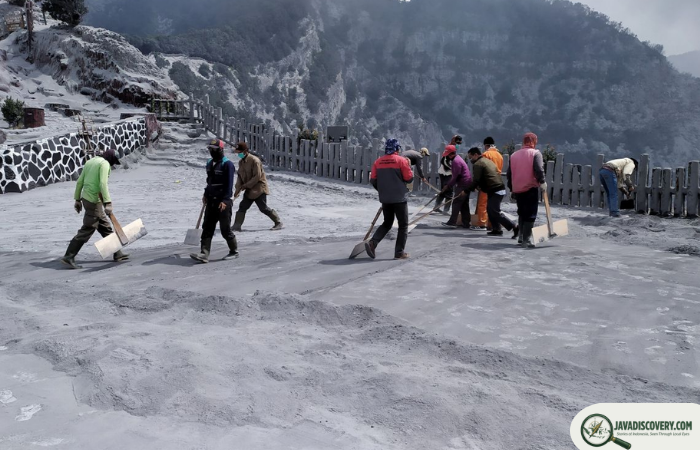
javadiscovery.com – High on the fertile, cinder-dusted slopes of Mount Kelud and Mount Merapi, the morning air carries the sharp, metallic tang of pulverized basalt, damp earth, and woodsmoke. As the first light pierces through high-altitude cloud cover, the rhythmic clink of metal shovels striking dense, grey mineral deposits echoes across riverbeds and communal processing yards. For centuries, the volcanic eruptions that periodically shatter the peace of Central and East Java were viewed almost exclusively through the lens of catastrophic destruction—pyroclastic flows obliterating farmland, thick tephra collapsing roofs, and choking ash plumes forcing hundreds of thousands from their homes. Yet, in the wake of every volcanic pulse, a resilient subculture of rural artisans, civil engineers, and local cooperatives steps into the fallout zone. Known as the volcanic ash crafters, these local builders and innovators are quietly pioneering a circular economic transformation, turning tons of hazardous volcanic ash and lahars into high-strength, sustainable construction materials that are reshaping Javanese architecture.
The Chemistry of Fallout: Pozzolanic Potential of Volcanic Tephra
To understand how destructive volcanic ash becomes an exceptional building material requires peering into the molecular architecture of Java’s fiery eruptions. Unlike industrial waste or ordinary quarry sand, the tephra ejected by stratovolcanoes like Merapi, Kelud, and Semeru is packed with highly reactive mineral compounds formed under intense subterranean heat and pressure.
Geologically, volcanic ash consists of tiny, jagged particles of volcanic glass, plagioclase feldspar, pyroxene, and silica. When an eruption occurs, superheated magma cools almost instantaneously upon contact with the atmosphere, trapping a amorphous, glassy atomic structure within the microscopic ash grains. This unique structure grants volcanic ash its remarkable pozzolanic properties—a chemical phenomenon recognized since Roman antiquity, when builders mixed volcanic ash from Mount Vesuvius with slaked lime to create concrete structures that have endured for two millennia.
When finely ground volcanic ash mixes with water and calcium hydroxide (or ordinary Portland cement), the reactive amorphous silica and alumina react chemically to form calcium silicate hydrate binder gels. This pozzolanic reaction fills microscopic voids within the concrete matrix, significantly lowering water permeability, increasing compressive strength over time, and offering superior resistance to chemical weathering, acid rain, and saltwater corrosion compared to standard commercial concrete mixes.
From Disaster Fallout to Sustainable Brickmaking
In villages across Sleman Regency near Merapi and Kediri Regency near Kelud, the transformation of ash from a hazardous byproduct into structural building blocks is a hands-on, community-driven enterprise. Following a major eruption, millions of cubic meters of fine grey ash coat every surface, clogging drainage systems and threatening local water sources. Clearing the ash is an urgent imperative for community survival.
Rather than dumping tons of collected ash into landfills or riverbanks, local brickmaking collectives (*pengrajin batako*) collect the raw material directly from rooftops, roads, and settling basins. Inside open-air village workshops, crafters blend washed volcanic ash with river sand, lime, and a minimal ratio of binder water using manual mixing troughs or simple mechanical blenders.
The resulting damp mineral paste is shoveled into heavy steel hand-presses or hydraulic block-molding machines. Under heavy mechanical pressure, the mixture is compacted into dense, crisp-edged structural blocks known as *batako abu vulkanik* (volcanic ash bricks) or lightweight interlocking paving stones. Once pressed, the blocks undergo a crucial air-curing process under shaded palm-leaf shelters, where they are misted with water daily for several weeks to allow the subterranean pozzolanic chemical bonds to fully crystallize.
These cured volcanic blocks boast exceptional thermal insulation qualities, keeping rural home interiors cool during hot tropical afternoons while providing sturdy seismic resistance. Because the raw material is harvested directly from local fallout without requiring heavy quarrying or high-temperature kiln firing, the carbon footprint of these bricks is a fraction of conventional red clay bricks, which rely on burning vast quantities of firewood or fossil fuels in open kilns.
Geopolymer Innovations and Low-Carbon Concrete
Beyond traditional village-level blockmaking, Javanese material scientists and structural engineers from regional universities are elevating volcanic ash crafting into the realm of advanced green technology. By developing zero-cement *geopolymer concrete*, researchers are unlocking new possibilities for low-carbon infrastructure across Indonesia.
Standard Portland cement production is responsible for roughly eight percent of global carbon dioxide emissions due to the high-heat calcination of limestone. Geopolymer technology bypasses Portland cement entirely. By activating fine volcanic ash with alkaline solutions—such as sodium silicate and sodium hydroxide—the silica and aluminum chains within the ash undergo rapid polymerization at room temperature, forming a solid, stone-like aluminosilicate matrix.
Structures poured using volcanic ash geopolymer concrete achieve rapid early strength, high fire resistance, and extraordinary durability against sulfate attacks. Experimental projects across Java are already using these ash-based geopolymers to cast precast drainage channels, structural retaining walls along landslide-prone mountain roads, and low-cost eco-housing panels for communities living in rural disaster-prone zones.
Economic Resilience and Community Regeneration
The craft of transforming erupted materials extends far beyond technical chemistry; it serves as a critical socio-economic stabilizer for communities rebuilding their lives after volcanic disruptions. Eruptions often destroy standing crops, blanket agricultural fields in sterile grit, and halt traditional farming livelihoods for months at a time.
For agricultural families living high inside the volcanic risk zones (*Kawasan Rawan Bencana*), transitioning into ash harvesting and eco-construction provides immediate, vital income during recovery phases. Local cooperatives supply volcanic building blocks to regional infrastructure projects, creating localized circular economies where the financial value generated from disaster cleanup stays directly within the affected villages.
Moreover, the extraction of volcanic sand and aggregate from river valleys choked by lahars (*lahar dingin*) helps clear natural river channels, reducing the risk of catastrophic flash flooding during subsequent monsoon rains. Specialized crafters filter coarse volcanic gravel into high-grade construction aggregate while harvesting the finest silica silt for architectural finishing plasters, ceramic glazes, and decorative wall panels.
A Living Tradition of Harmony with the Fire
The work of Java’s volcanic ash crafters exemplifies a profound cultural philosophy rooted deep in Javanese identity: the concept of *Lestari*, or living in enduring harmony with the natural cycles of creation and destruction. The volcano is never viewed purely as a force of malice, but as an energetic entity that takes away with one hand and bestows gifts with the other.
By transforming the destructive fallout of Mount Merapi, Kelud, and Semeru into durable, eco-friendly homes and roads, these crafters bridge ancient Javanese adaptability with modern sustainable engineering. In their hands, the sharp grey ash of a terrifying explosion becomes the solid, quiet foundation for tomorrow’s resilient communities.