The Mystical Power of Mount Lawu

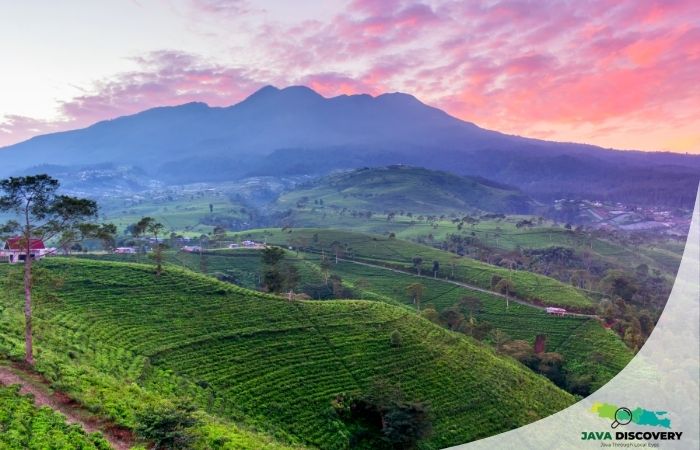
javadiscovery.com – Shrouded in mist and mystery, Mount Lawu rises quietly between Central and East Java — a mountain believed to be more than just a peak of rock and soil. For centuries, Javanese people have seen Lawu as a sacred realm, a threshold between the seen and the unseen, where spirits dwell and prayers find their way to the heavens. Those who climb its slopes are not merely hikers; they are pilgrims walking between two worlds.
The Mountain Between Two Worlds
Mount Lawu, standing 3,265 meters tall, rests on the border between Karanganyar and Magetan. Locals often call it the mountain of balance — a place where day meets night, life meets death, and human ambition meets divine will. Its weather changes suddenly, clouds sweep low, and the air feels charged with unseen energy. For many Javanese, this is a place where the alam nyata (physical world) and the alam gaib (spiritual world) overlap.
Legends and the Spirit of Brawijaya V
Among the many tales whispered through generations, the story of Prabu Brawijaya V remains the most sacred. The last king of Majapahit, disheartened by his crumbling empire and the coming of a new era, is said to have retreated to Mount Lawu. There, on the misty summit of Hargo Dalem, he meditated until he achieved moksa — liberation from the cycle of life and death — becoming an invisible guardian spirit of the mountain.
In this myth lies a deeper reflection: the end of the Majapahit era and the birth of Islamic Mataram. Lawu thus stands as a symbol of transition — not just of dynasties, but of spiritual evolution. To this day, pilgrims believe the mountain keeps the secrets of Java’s ancient wisdom, passed down silently through its stones, streams, and sacred winds.
Sacred Sites on the Slopes
Scattered along Lawu’s slopes are relics of faith and devotion. At Candi Cetho and Candi Sukuh, ancient temples adorned with erotic and cosmic carvings whisper of Java’s pre-Islamic spirituality. Their architecture — both enigmatic and intimate — hints at rituals of fertility and cosmic balance, long before Western explorers even knew these mountains existed.
Higher up, sacred springs such as Sendang Drajat and Sendang Panguripan are said to cleanse the soul. Villagers come to collect the water before major life events — marriage, pilgrimage, or meditation — believing it grants strength and clarity. And at the summit, twin peaks known as Hargo Dumilah and Hargo Dalem mark the spiritual heart of the mountain, where offerings of flowers, incense, and prayers are placed for the ancestral spirits.
Pilgrimage and Rituals Today
Even in the modern age, Lawu’s spiritual pulse beats strong. Each year, during the sacred night of 1 Suro — the Javanese New Year — hundreds of pilgrims ascend its paths carrying offerings, candles, and hope. They meditate in silence, recite mantras, and seek blessings for peace and protection. The blend of Hindu-Buddhist symbols and Islamic prayers reflects Java’s unique spiritual tapestry — where the old and new coexist harmoniously.
In the stillness of the night, the smell of burning incense mixes with the mountain mist. Some say they hear faint chants carried by the wind, others feel watched by unseen eyes. Yet fear rarely follows. What remains is awe — a quiet reverence for something greater, older, and eternal.
Nature, Silence, and the Inner Journey
Beyond its legends, Lawu’s true power lies in its silence. The mountain invites reflection. Its dense pine forests, mossy trails, and whispering fog feel almost alive, guiding wanderers inward as much as upward. Many who come seeking scenery leave with a sense of serenity they cannot explain — as if the mountain itself has listened to their unspoken thoughts.
To walk Lawu’s trails is to journey not only across land but through layers of belief, history, and the self. Whether one climbs as a pilgrim, a seeker, or a traveler, Mount Lawu has a way of touching the unseen corners of the soul.
In the heart of Java, Mount Lawu stands eternal — the silent guardian of a faith that transcends time, reminding all who come that the sacred still breathes among the clouds.