Navigating the Sungkan Scale Understanding Java Hidden Social Code

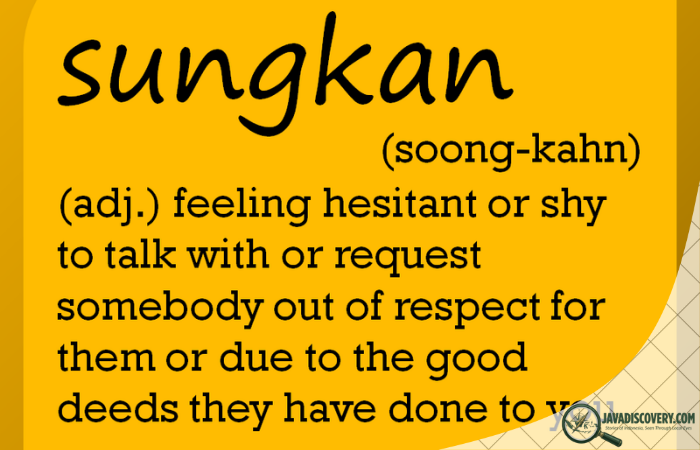
javadiscovery.com – To the uninitiated visitor, a conversation with a Javanese local can feel like walking through a beautifully manicured garden where the paths are invisible but the boundaries are strictly felt. You may ask a direct question and receive a soft, ambiguous smile, or offer a gift only to have it politely declined three times before it is finally accepted. This is not a lack of clarity or a sign of indecision; it is the delicate operation of “sungkan,” a sophisticated psychological state of respectful constraint that governs every human interaction on the island. For the Javanese, sungkan is the silent oil that prevents the gears of society from grinding against one another, ensuring that harmony is maintained even at the expense of personal desire.
The Invisible Weight of Respect
At its core, sungkan is a complex emotional cocktail of respect, politeness, and a desire to avoid causing even the slightest discomfort to another person. It is often translated as “feeling uneasy” or “constrained,” but these words fail to capture its cultural nobility. In the Javanese worldview, the preservation of “rukun” or social harmony is the highest achievement. To be “sungkan” is to acknowledge one’s place within the social hierarchy and to act with a refined sensitivity that prioritizes the collective peace over individual expression. It is a shield against “kagol,” the jarring feeling of social disappointment or friction.
For a foreigner, encountering sungkan for the first time can be baffling. Imagine you are visiting a local home in a small village near Yogyakarta. Your host offers you a glass of sweet jasmine tea and a plate of steamed cassava. Even if they are tired or have other pressing tasks, they will sit with you, offering their full attention. If you ask if your presence is an inconvenience, they will invariably say “mboten,” meaning no. Here, the host is practicing sungkan; they feel it would be “ngewaki” or rude to show their exhaustion. Conversely, a Javanese guest might feel sungkan to finish the last piece of food on a plate, fearing they might appear greedy or deprive the host, even if they are still hungry. This silent negotiation is the heartbeat of Javanese etiquette.
The Hierarchy of the Soul
Java is a society built on vertical and horizontal layers of status, age, and spiritual maturity. The level of sungkan one feels is directly proportional to these factors. A younger brother feels a deep sense of sungkan toward his older sister; a student feels it toward a teacher; and everyone feels it toward the village elders or figures of authority. This is reflected in the very language used. Javanese is a tiered language where “Kromo Inggil,” the highest form of speech, is used to navigate these relationships. The physical posture also changes; a person may slightly bow their shoulders or lower their head when walking past a seated elder to show they are “sungkan” to disturb the space.
For the traveler, understanding this hierarchy is the key to unlocking the “Sungkan Scale.” When you interact with a taxi driver or a street food vendor, the level of constraint is low, yet the baseline of Javanese politeness remains. However, as you move into more formal settings, such as a traditional wedding or a meeting with a government official, the air grows heavy with “ewuh pakewuh.” This term, often used alongside sungkan, refers to the psychological burden of not wanting to offend. It is the reason why a Javanese person may find it nearly impossible to say a direct “no.” Instead, they may say “insya Allah” (God willing) or “nanti dulu” (maybe later), which are culturally understood signals that the answer is likely negative but delivered softly to save everyone’s face.
The Art of the Indirect Request
In the West, efficiency is often equated with directness. In Java, directness is often equated with “kasar,” or coarseness. To ask for something directly is to bypass the emotional buffer of sungkan. If a neighbor’s music is too loud, a Javanese person will rarely knock on the door and ask them to turn it down. Instead, they might drop a subtle hint about how well the speakers are working, or simply endure the noise out of sungkan. They trust that the neighbor, also feeling the weight of the social code, will eventually realize the disturbance. For the foreigner, this means learning to “read the air.” If you ask a local for directions and they seem hesitant but still point you down a path, they might be feeling too sungkan to admit they don’t know the way, fearing that disappointing you would be a failure of hospitality.
The Threshold of the Guest
Hospitality in Java is a sacred duty, but it is one heavily mediated by the sungkan scale. When you are invited into a Javanese home, you are entering a space where the host’s primary goal is to make you feel “at home” while they themselves remain in a state of high alert for your needs. A common ritual is the “monggo pinarak,” the invitation to sit and eat. As a guest, it is polite to display a degree of sungkan yourself. When offered food, it is customary to wait for the host to explicitly say “monggo” (please) before taking a bite. To dig in immediately is seen as a lack of “unggah ungguh,” or proper manners. By showing a little bit of constraint, you signal that you respect the effort the host has made.
This dynamic creates a beautiful, if sometimes exhausting, dance of mutual consideration. The host is sungkan to stop serving, and the guest is sungkan to stop eating. The resolution usually comes through a series of “maturnuwun” (thank yous) and gentle physical gestures, such as placing a hand over the heart. This indicates that the heart is full, even if the stomach is not, allowing the host to relax their duty without feeling they have failed. Understanding these cues transforms an awkward interaction into a deep moment of cultural connection.
Ewuh Pakewuh and the Professional World
In modern Javanese offices and creative hubs, the ancient scale of sungkan still dictates the flow of work. Superiors are often treated with a level of deference that can slow down decision making processes. A junior employee might have a brilliant idea but feel “sungkan” to voice it during a meeting if it contradicts a senior colleague. This is not a lack of ambition, but a prioritizing of the group’s “rasa,” or collective feeling. For foreigners working in Java, the challenge is to create an environment where the “heat” of disagreement is cooled by the “water” of mutual respect, allowing for honest feedback without shattering the delicate glass of sungkan.
This cultural trait is also why Javanese people are renowned for their patience. In long queues or stifling traffic, you will rarely hear the aggressive honking or shouting common in other global megacities. The collective sungkan means that everyone understands that they are all in the same situation. To lose one’s temper is to lose “muka” or face, and more importantly, it is to abandon the grace of the Javanese soul. The restraint is a form of spiritual discipline, a way of proving that the mind is the master of the emotions.
The Foreigner’s Guide to Grace
How then, should a visitor navigate this invisible scale? The goal is not to become Javanese, but to show that you recognize the values of the people you are visiting. Small gestures go a long way. Use your right hand for everything—eating, giving, and receiving—as the left is considered “kasar.” When walking through a group of seated people, lower your right hand and bow slightly, murmuring “nyuwun sewu” (excuse me). These acts show that you are aware of the space and are “sungkan” to intrude upon it. The local response will almost always be a warm, genuine smile of appreciation.
Ultimately, sungkan is about empathy. It is the radical idea that our words and actions should be filtered through the lens of how they will affect others. It creates a society where people are looking out for one another’s feelings with an intensity that is rare in the modern world. While it can lead to misunderstandings for those used to blunt communication, it also creates a culture of extraordinary gentleness and profound dignity. To experience sungkan is to experience the true heart of Java, a place where the most important things are often left unsaid, but are always deeply felt.
As you leave a village or say goodbye to a new friend, you might find yourself feeling a little bit of that constraint too. You might hesitate to leave, worried that your departure is too abrupt. You might find yourself bowing your head just a fraction. In that moment, the scale has shifted. You are no longer just an observer; you have begun to move in the rhythm of the island, finding the beauty in the silence and the peace in the restraint.
Category: People
Writer: Nizam Hamidan
A. SEO Title
Understanding Sungkan Why the Javanese Social Code Matters
B. Meta Description
Master the Javanese concept of sungkan. Learn how this unique feeling of constraint and respect shapes daily life, etiquette, and relationships in Java.
C. Meta Keywords
sungkan meaning, Javanese etiquette, ewuh pakewuh, Java social code, Indonesian culture, Javanese politeness, rukun harmony, Javanese customs for foreigners
D. Excerpt
Explore the invisible social code of sungkan that defines the heart of Java.
F. Focus Keyword
Sungkan