When Javan Leopards Strike: Is Mount Muria Sending a Warning?

Shadows on the Slopes: Leopard Strikes in Muria
“I was traumatized for nearly a month,” recalled Karsini, her voice trembling as she stood on the edge of her yard, which overlooks the dense woods of Mount Muria. It was here, in 2020, that a Javan leopard attacked and killed her goat—an incident that shook not only her, but the entire village of Plukaran in Pati, Central Java.
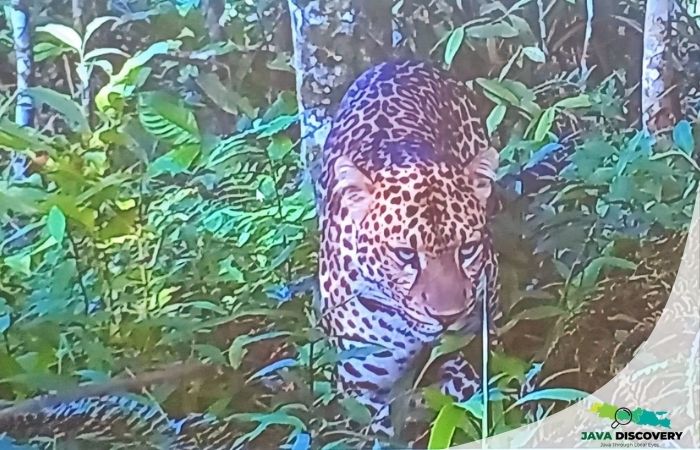
Mount Muria, whose misty volcanic ridges stretch across the regencies of Kudus, Pati, and Jepara, is more than just a mountain. It is one of the last known habitats of the critically endangered Javan leopard (Panthera pardus melas), with only about 14 individuals estimated to remain in this fragmented ecosystem.
As forests are razed and land is converted for monoculture crops, the leopards are losing ground—literally. With their territory shrinking, the predators have started appearing more frequently in villages, preying on livestock in a desperate attempt to survive.
“In just two months, leopards killed eight goats,” said Teguh Budi Wiyono, founder of PEKA Muria, a local conservation initiative. “People tend to report to us rather than the government’s conservation agency. Maybe because we’re here, living with them.”
These attacks, however, are more than just isolated events—they are, in the words of Professor Hendra Gunawan, a leading biodiversity expert at BRIN, “an ecological alarm.”
“When leopards clash with humans, it’s a sign that something is off in nature. This is not just an animal problem—it’s a human one too,” Prof. Hendra stated.
The price of this conflict is steep. Not only do villagers lose livestock, but the leopards themselves become targets—hunted, poisoned, or trapped in retaliation. Since the extinction of the Javan tiger in the 1980s, the Javan leopard is the last apex predator on the island. And its future is hanging by a thread.
Wildlife biologist Didik Raharyono noted that between 2000 and 2023, at least three Javan leopards were killed by hunters in the Muria region alone. And that’s just what made it to the records.
As Mount Muria groans under the weight of ecological degradation, a small but determined group of villagers have taken it upon themselves to answer the leopard’s cry for help. Their story unfolds in the next part of this series.
Guardians of the Forest: The Rise of PEKA Muria
In the wake of growing leopard-human conflicts, a grassroots conservation movement emerged from the very slopes of Mount Muria itself. At its heart is Teguh Budi Wiyono, a soft-spoken yet resolute villager from Colo, Kudus. His journey began not with a formal education in biology, but with a troubling realization—his family’s water supply from the mountain springs was drying up.
“I climbed up to the spring and saw how bare the land had become,” Teguh said. Trees were gone, replaced by coffee plantations and barren soil. The hills, once thick with jungle, had been stripped by years of illegal logging and land conversion. The numbers are stark: between 1990 and 2006, Mount Muria lost over 85% of its natural forest cover.
But Teguh was not alone in his concern. In 1999, a visionary man named Mohammad Shokib Garno Sunarno had already begun planting trees on the denuded slopes and founded the Perkumpulan Masyarakat Pelindung Hutan Muria (PMPH Muria). Their mission: restore the mountain, one tree at a time.
Inspired by Shokib’s legacy, Teguh joined the group and eventually carried on its mission after Shokib’s passing in 2021. In 2023, he founded PEKA Muria—short for Penggiat Konservasi Muria. This new initiative brought together a younger generation of environmental guardians, many of them locals who once had no interest in conservation.
“Our motto is simple but sacred: ‘The forest is a trust; protecting it is an act of devotion.’ This is not just about trees, it’s about our survival,” Teguh explained.
PEKA Muria’s approach is hands-on and holistic. They regularly conduct forest patrols to check for illegal activity, install camera traps to monitor wildlife, and plant thousands of trees around water springs to aid reforestation. They also work to rehabilitate springs and reduce landslide risks by stabilizing the soil with native vegetation.
Their efforts have not gone unnoticed. Professor Hendra Gunawan, Indonesia’s only research professor in Javan leopard conservation, emphasized the importance of such grassroots involvement:
“Local community conservation like this is essential. It aligns with Indonesia’s environmental law, which recognizes conservation as a shared responsibility between the government and the people.”
In fact, the villagers’ growing awareness has started shifting old mindsets. Former forest encroachers now join replanting efforts. Local youth who once saw the forest as a resource to exploit now see it as something sacred to protect.
For Teguh, this movement is deeply personal. “We were born in Muria, we live in Muria, and we will die in Muria. If we don’t protect it, who will?”
Coffee, Culture, and Cats: Turning Crisis into Conservation
In the steep highlands of Muria, where the forest once fell silent under the buzz of chainsaws, a new sound is rising—laughter, learning, and the soft steps of eco-tourists. Thanks to PEKA Muria’s innovative approach, conservation is no longer just about protecting wildlife. It’s about empowering people and transforming the economy from extractive to sustainable.
One of their most successful programs involves converting former forest encroachers into responsible coffee farmers. PEKA Muria teaches them how to increase yield on existing land through pruning, composting, and shade management—without expanding into the remaining forest. Today, over 500 farmers are actively involved.
“At first, they saw us as enemies,” Teguh admitted. “But now, when we meet them, there’s respect. They’ve seen that with the same land, they can earn more without cutting a single tree.”
To further enhance income and awareness, PEKA Muria introduced eco-educational tourism. Visitors are invited to experience “Kopi Muria” tours—tracing beans from mountain farm to cup. Foreign students, curious travelers, and urban Indonesians alike walk the trails, hear the stories, and sip the flavor of a forest reborn.
But coffee is just the beginning. PEKA Muria also offers parijoto tours—a native fruit linked to ancient Muria culture—and wildlife tracking experiences focused on the elusive Javan leopard. On these tours, guests learn how to track pawprints, identify leopard scat, and review footage from camera traps.
“In 2020, our camera traps captured 14 individuals, not counting the cubs,” Teguh said. “By 2025, after monitoring 40 different points across Kudus, Pati, and Jepara, we still found the same number: 14. It shows how fragile this population is.”
Yet the message is clear. When villagers protect the leopard, the leopard protects the forest. As an apex predator, the Javan leopard keeps prey populations balanced, preserving the ecosystem’s health. Lose the leopard, and the entire system begins to unravel.
“That’s the real warning,” Teguh concluded. “If the leopard disappears, everything else will follow. But if we protect it—if we listen to the mountain—we still have hope.”
From fear to harmony, from destruction to regeneration, Mount Muria’s story is one of revival. And its fate, perhaps, lies not in government hands, but in the hearts of those who call it home.