Javan Rhino Extinction Threat Grows in Indonesia’s Last Forest

javadiscovery.com – Javan rhino extinction is no longer a distant conservation warning. It is a reality quietly unfolding inside Indonesia’s last remaining lowland rainforest, where one of the world’s rarest mammals survives on the edge of disappearance.
Once roaming across much of Southeast Asia, the Javan rhinoceros is now confined to a single place. Its fate reflects a wider global crisis facing rhinos, animals pushed toward extinction by habitat loss, illegal poaching, ecological imbalance, and shrinking genetic diversity.
The Global State of Rhinos Today
Rhinos are among the most threatened animal groups on Earth. Across Africa and Asia, conservation reports paint a picture of fragile hope mixed with serious decline.
In Africa, the black rhino population has increased from 6,195 to 6,788 individuals, a modest but encouraging sign. In contrast, white rhino numbers have fallen from 15,942 to 15,752 since 2021, highlighting how easily progress can be reversed.
Even in South Africa, home to the world’s largest rhino populations, many groups are now too small and isolated to remain healthy in the long term. Fragmentation weakens resilience against disease outbreaks, climate stress, and continued poaching.
Why Population Size Matters
According to Nina Fascione, Executive Director of the International Rhino Foundation, larger populations are essential for long-term survival. Bigger groups are better able to absorb losses caused by poaching and natural disasters while maintaining stronger genetic diversity.
Conservation efforts increasingly focus on expanding safe habitats and strengthening biological management rather than simply preventing immediate extinction.
A Rare Success Story in Asia
Not all rhino populations are declining. The greater one-horned rhinoceros, found in India and Nepal, has seen its numbers rise to approximately 4,075 individuals. Classified as Vulnerable by the IUCN, this species has steadily recovered over the past century.
Strict habitat protection, coordinated anti-poaching enforcement, and long-term government commitment have played a decisive role in this recovery.
The Sumatran Rhino’s Silent Struggle
In Indonesia, the situation is far more alarming. On the island of Sumatra, the Sumatran rhinoceros population remains critically low, estimated at only 34 to 47 individuals.
With numbers unchanged since the last official count in 2022, conservationists now regard the Sumatran rhino as the most endangered large mammal on Earth. Extremely limited genetic diversity places the species at constant risk of functional extinction.
Javan Rhino Extinction Risk in Ujung Kulon
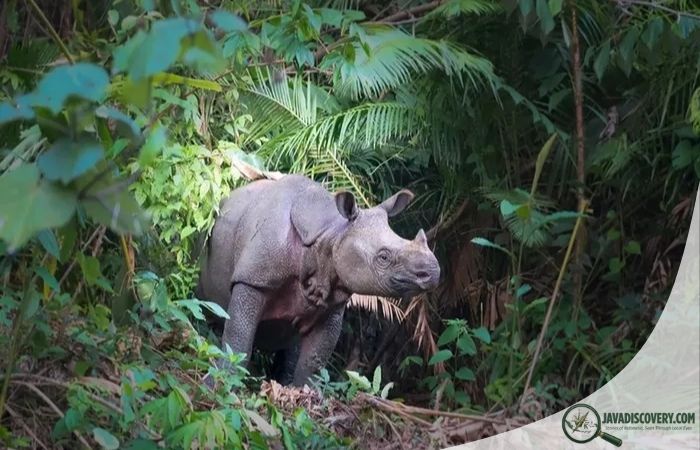
The most severe threat of Javan rhino extinction is unfolding in Ujung Kulon National Park, the species’ last refuge. Today, the entire global population of Javan rhinos lives within this single protected area at the western tip of Java.
Current estimates suggest the population has fallen to around 50 individuals, down from approximately 76 in previous decades. This extreme concentration leaves the species dangerously exposed to disease, natural disasters, and human interference.
Beyond Poaching: An Ecological Threat
While poaching remains a serious concern, another threat grows quietly within the forest itself. The invasive Arenga palm (Arenga obtusifolia) has spread rapidly across parts of the park.
This palm species outcompetes native plants that form the primary food sources for Javan rhinos, reducing available forage and shrinking suitable habitat even further.
Why the Loss of the Javan Rhino Matters
The total number of rhinos surviving in the wild today is estimated at around 26,700 individuals across all species. This figure excludes rhinos kept in zoos or private facilities and reflects only those living in natural ecosystems.
The extinction of the Javan rhino would mark the loss of a species that survived volcanic eruptions, climate shifts, and centuries of environmental change, only to disappear under modern pressures.
The Narrow Path Forward
Saving the Javan rhino will require more than protection alone. Ending illegal wildlife trade, restoring degraded habitats, controlling invasive species, and carefully managing genetic diversity are all essential.
Without sustained and coordinated action, the quiet forests of Ujung Kulon may soon lose one of their most ancient inhabitants.
The fate of the Javan rhinoceros stands as a test of whether conservation can still succeed in a rapidly changing world.