Lawang Sewu The Living Heritage of Semarang

javadiscovery.com – Semarang, a coastal city rich in history, holds one landmark that seems to bridge the realms of past and present — Lawang Sewu. This grand colonial building is more than just an architectural marvel; it is a silent witness to Indonesia’s railway history, as well as countless tales whispered through its halls.
The Birth of a Legend
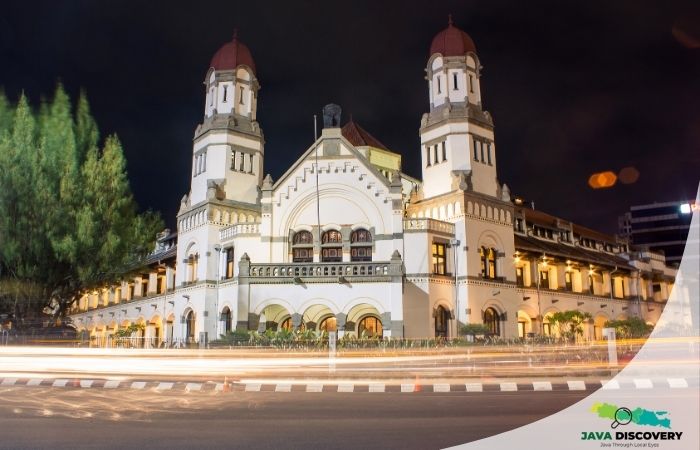
Built in 1904 by the Dutch railway company Nederlandsch-Indische Spoorweg Maatschappij (NIS), Lawang Sewu — which means “a thousand doors” — first served as the company’s headquarters. Its main building was completed in 1907, followed by several extensions in the following years. Designed by architects P. de Rieu, J. F. Klinkhamer, and B. J. Ouëndag with the contribution of G. C. Citroen, the building was crafted to adapt perfectly to Java’s tropical climate.
High ceilings, wide verandas, and numerous large windows ensure that air and sunlight flow freely, keeping the interior cool despite Semarang’s humid weather. During the Japanese occupation, the basement was converted into a detention center by the military police, the Kenpeitai. Later, Lawang Sewu also became a key site during the historic Five Days Battle of Semarang, symbolizing the city’s resistance against colonial power.
Architectural Brilliance
Standing proudly on an 18,000-square-meter area, Lawang Sewu embodies the fusion of Dutch colonial and local Javanese influences. Its Romanesque arches blend harmoniously with tropical design principles. The main structure, known as Building A, is adorned with intricate details that reveal the artistry of early 20th-century architecture.
Some of its most striking features include:
- Stained-glass windows by artist J. L. Schouten depicting Dutch virtues and rail motifs.
- Terracotta ornaments that add elegance to the arches and balconies.
- Twin towers crowned with bronze ornaments, offering a majestic skyline presence.
- Dual-layer ventilation systems that let natural light and air circulate efficiently.
These features not only create a visually stunning building but also demonstrate thoughtful design adapted to Java’s hot and humid environment.
The Truth Behind “A Thousand Doors”
The name Lawang Sewu literally means “a thousand doors,” but the building actually has around 928 doorways and large windows — many of which look like doors. Some entrances have multiple panels, adding to the illusion of countless doors. Regardless of the number, the name endures as a poetic reflection of its grandeur and endless corridors.
The Whispering Shadows
Beyond its architectural charm, Lawang Sewu carries an aura of mystery. The underground prison used during World War II has long been rumored to be haunted. Visitors often speak of strange sounds, fleeting shadows, or sudden chills in the dimly lit hallways. While these stories may not be proven, they’ve become part of the building’s identity — drawing curious travelers to experience the eerie side of history.
Night tours and cultural events often blend legend with learning, giving visitors a glimpse of Semarang’s layered past through storytelling and atmosphere.
Lawang Sewu Today
Today, Lawang Sewu no longer functions as a railway office but as a railway museum managed by PT Kereta Api Indonesia. Inside, visitors can explore historical documents, uniforms, antique communication tools, and even vintage locomotives. The site also hosts art exhibitions, cultural performances, and photography sessions — its timeless aesthetic making it one of Semarang’s most photographed spots.
Entrance fees remain affordable — about IDR 10,000 for adults and IDR 5,000 for students — ensuring everyone can step into this historical masterpiece.
The Soul of Semarang
Lawang Sewu is more than just a building; it is Semarang’s heartbeat, telling stories of power, pain, and perseverance. Each arch and corridor echoes the city’s journey through colonialism, war, and independence. To stand within its walls is to stand in dialogue with history — where light and shadow, myth and memory, meet.