Rosita, the Tiger of Megamendung’s Living Forest


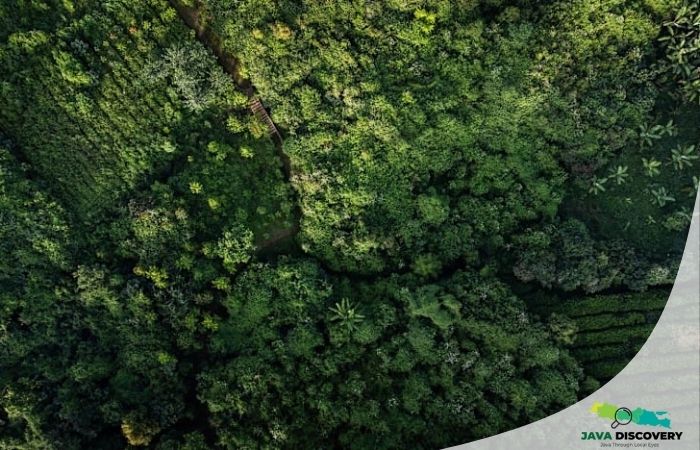
javadiscovery.com – The afternoon sun filters weakly through a thick canopy of leaves, its rays halted by the dense foliage of Rosita Istiawan’s organic forest in Megamendung, Bogor. Two decades ago, this land was barren and dry — a landscape of eroded soil and dying vegetation. Today, it breathes again. Over 30 hectares of restored wilderness now stand tall, sheltering 44,000 trees and more than a hundred species of birds, mammals, and insects. At the heart of it all stands Rosita, a woman whose quiet determination turned dust into life.
The Woman Who Grew a Forest from Dust
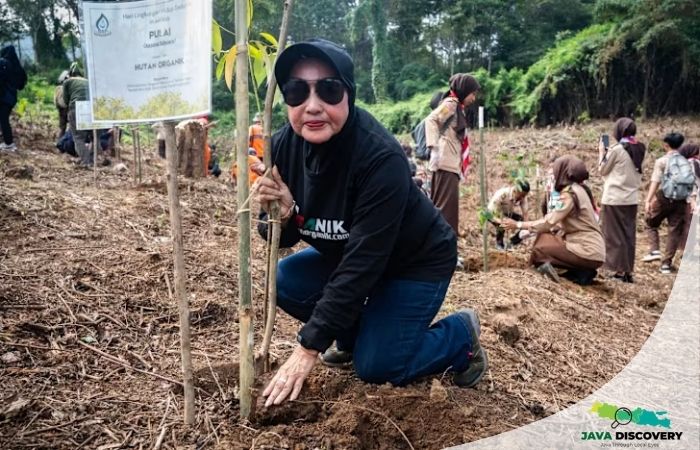
When visitors walk through Rosita’s forest, they often forget that it was once a wasteland. The earth was cracked, the air dry, and water a rare luxury. Yet, what seemed impossible gradually became real. Layer by layer, Rosita and her late husband cultivated life where none existed — transforming the barren slopes of Megamendung into a self-sustaining ecosystem where roots, leaves, and streams weave a new rhythm of life.
A Dream Born from Love and Loss
It began with a dream shared between Rosita and her husband in the year 2000. He wanted to create a “small botanical garden” after retirement — a gift to the earth. With savings from his work in the oil industry, they purchased a small plot of land, no more than 2,000 square meters, once used to plant cassava. The soil was acidic, the pH low, the environment harsh. Still, Rosita saw potential. When her husband passed away, she carried the dream alone, transforming grief into purpose.
“I took it as a challenge,” she said. “He wanted a forest, and I promised to make it happen.” Step by step, she expanded the land — buying one piece after another from local villagers — until the forest grew to 30 hectares, alive with teak, ebony, damar, sengon, sonokeling, and even exotic species from abroad.
Fighting the Land, the System, and Doubt
In the beginning, nothing came easy. The soil refused to absorb water, and Rosita had to haul it up the slopes in jerry cans. Locals mocked her for planting hardwoods instead of selling the land for villas. But Rosita persisted, experimenting with tumpang sari — the traditional intercropping system of mixing hardwoods and vegetables in 2.5-meter intervals. “Ninety-nine percent of it worked,” she smiled. “When you water the vegetables, the trees drink too.”
What made her effort extraordinary was her commitment to staying organic. No chemicals, no artificial fertilizers. “I wanted to prove that the soil could heal itself,” she said. “Now, the pH is back to normal, and even seeds thrown to the ground will grow because the humus is rich again.”
When Water Returned to the Earth
After two years of planting, something miraculous happened. Clear water began to trickle out of the ground — a new spring that soon fed two nearby villages. “When we preserve trees, water will follow,” Rosita explained. The spring never dried, even during long droughts. Today, her forest acts as a natural water reservoir, regulating rainfall and preventing erosion. The once-silent land now hums with life — birds calling, insects buzzing, and monkeys darting through the branches.
The Human Threat to the Mountains
Rosita’s journey, however, also reveals a painful truth. In Megamendung and the surrounding Puncak area, forests are disappearing rapidly, cleared for resorts and villas catering to weekend visitors from Jakarta. According to the West Java branch of WALHI, over 65 percent of Puncak’s natural landscape has suffered ecological damage. The result: landslides, flash floods, and water scarcity that eventually reach the capital city downstream.
“People with money build resorts, but they never save the trees,” Rosita said. “The biggest pest is the human who doesn’t care.”
The Tiger of the Forest
Rosita’s nickname — the “tiger of the forest” — was born not from her fierceness, but from her courage. She faced threats from land brokers who lost profit when she bought directly from villagers. Once, a man pointed a machete at her, demanding she stop expanding the forest. Rosita didn’t flinch. “If you want to make a forest,” she said calmly, “you must become the tiger of the forest. You must be brave.”
Over the years, her patience and strength inspired respect. Even those who once mocked her now visit the forest to learn. The place that was once ridiculed as “Bu Rosita’s crazy project” has become a living classroom of resilience.
From Private Dream to Public Legacy
Rosita never wanted her forest to be a private treasure. Today, it is an educational sanctuary for students, farmers, and curious visitors who come to learn about organic farming, tree planting, and soil restoration. The forest provides free seedlings and teaches natural composting methods to surrounding communities. Her efforts have been recognized nationally — she was nominated for Indonesia’s prestigious Kalpataru Award in 2023.
Her next dream is to digitize every tree — to record its species, age, and history — creating a living database of biodiversity. Most remarkably, Rosita has decided that the forest will not belong to her family after she’s gone. “My children have agreed,” she said. “This forest will return to nature through the Organic Forest Foundation. It is not an inheritance; it is a responsibility.”
Reflection: When One Woman Becomes a Forest
From barren earth to a thriving sanctuary, Rosita’s story is a reminder that reforestation is not just about trees — it’s about faith, patience, and courage. She turned her grief into growth, her solitude into a symphony of life. In her, the forest found its guardian — fierce yet nurturing, a true tiger of Megamendung who roars not with sound, but with the whisper of leaves she brought back to life.