Loom Masters of Troso Woven Ikat Traditions Central Java

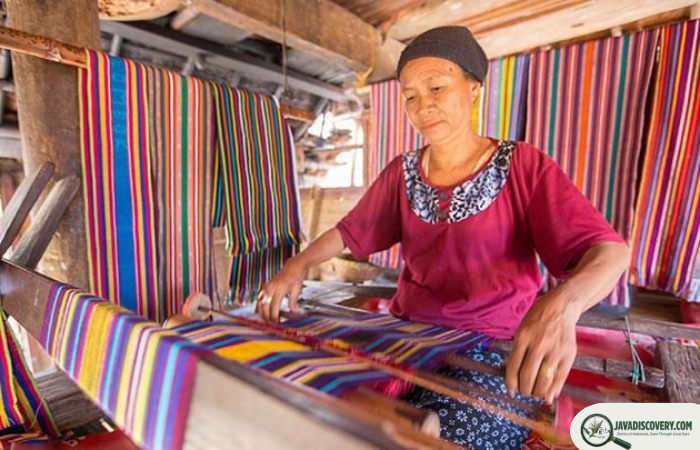
javadiscovery.com – A resonant, rhythmic clatter of wooden shuttles flying across handlooms echoes through the narrow avenues of Desa Troso, a bustling village tucked inside Pecangaan District, Jepara Regency, Central Java. Located just a short distance from the region’s massive export furniture factories and modern industrial parks, Troso stands out as a vibrant bastion of traditional textile manufacturing. Here, thousands of local weavers operate traditional non-mechanized handlooms (*Alat Tenun Bukan Mesin* or ATBM), manipulating miles of vibrant, hand-dyed cotton and silk threads. Known far and wide as the premier center for Javanese double and single ikat weaving (*tenun ikat*), Troso’s loom masters have preserved a complex, labor-intensive weaving tradition that continues to thrive in the heart of industrial Central Java.
Historical Roots: The Sacred Thread of Troso
The weaving heritage of Troso stretches back over three centuries, deeply rooted in the cultural matrix of northern coastal Java (*Pasisir*). According to local oral tradition, the craft was first introduced in the 19th century by a revered Islamic scholar and village founder, Mbah Shobib, who taught villagers the art of thread-tying and natural dyeing to create ceremonial garments (*sarung* and *selendang*):
- From Utility to Royal Patronage: Initially produced for domestic village use, Troso’s woven fabrics gained fame across the courts of Surakarta and Demak for their vibrant geometric patterns and high structural durability.
- Adaptation of Maritime Styles: Sitting near the historic trading ports of Jepara, Troso’s weavers absorbed motifs and binding techniques from across the Indonesian archipelago—incorporating elements from Sumbanese *ikat*, Toraja geometric motifs, and Balinese *endek* alongside classical Javanese patterns.
- Resilience Through Hand-Looming: While power-loom factories swept across Southeast Asia during the late 20th century, Troso’s artisans consciously maintained the use of manual ATBM looms, preserving the distinct texture, thickness, and soul of hand-woven textiles.
The Complex Chemistry and Geometry of Ikat
The defining characteristic of Troso’s *tenun ikat* lies in its preparation. Unlike standard woven fabrics where patterns are printed onto finished cloth, *ikat* (meaning “to tie” or “bind”) requires the pattern to be precisely calculated and dyed into individual warp or weft threads *before* the weaving process ever begins on the loom:
- Pattern Designing and Thread Wrapping (*Mothang*): Thousands of fine white cotton or silk threads are stretched taut across long wooden frames. Master pattern makers use plastic ribbons or waterproof palm fibers to tightly wrap specific sections of the thread bundles according to intricate geometric diagrams.
- Resist Dyeing (*Pencelupan*): The wrapped thread bundles are submerged in hot dye baths. The tightly bound sections resist the dye, remaining white, while exposed areas absorb rich colors. For multi-colored patterns, threads are unwrapped and re-tied in meticulous succession before each subsequent dye dip.
- Loom Preparation (*Ngenting & Nyolet*): Once dry, the dyed thread bundles are carefully untied, revealing distinct, blurred-edge color segments. The threads are meticulously mounted onto the ATBM loom, aligning thousands of individual threads so the pattern emerges accurately as the shuttle moves.
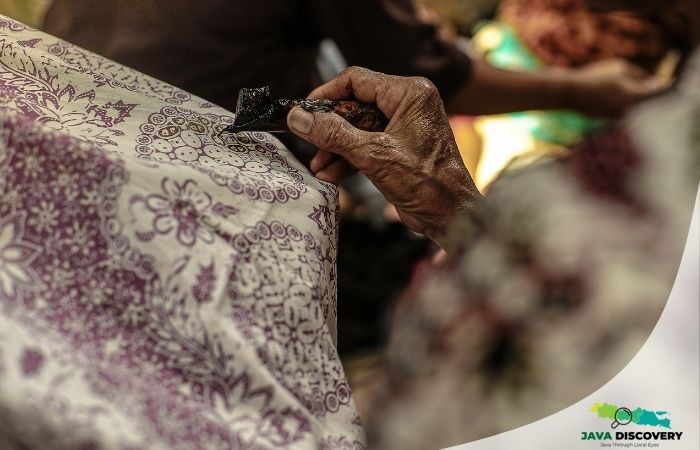
- Weaving on the ATBM (*Ngeten*): Seated at the wooden frame, the weaver operates foot pedals to alternate warp sheds while throwing the wooden shuttle containing the cross-wise weft thread back and forth with hand precision, building the cloth millimeter by millimeter.
Sustaining a Village-Wide Textile Economy
Unlike many traditional crafts that have been relegated to isolated elderly artisans, Troso’s ikat industry remains an active, village-wide economic engine that engages multiple generations:
- Intergenerational Employment: Over eighty percent of Troso’s households participate directly in the weaving ecosystem—from thread winders, pattern binders, and master dyers to active weavers and international exporters.
- Customary and Modern Fashion Demand: Troso’s fabrics are widely used across Indonesia for official government uniforms, traditional ceremonial attire, contemporary fashion runways, and high-end interior furnishings.
- Cultural Adaptation: Master weavers continually innovate by blending traditional hand-bound *ikat* techniques with contemporary color palettes and breathable natural fibers, catering to eco-conscious global fashion markets.
Preserving Java’s Woven Identity
Inside the light-filled workshops of Troso, as wooden shuttles slide back and forth across taut cotton warps, the ancient geometry of Javanese *ikat* continues to take shape. Through their dedication to manual precision, hard physical labor, and artistic innovation, the loom masters of Troso prove that ancient craft traditions can flourish alongside modern industry—weaving the living heritage of Java into the fabric of tomorrow.