From Colonial Brothels to Contract Marriages in Java Today


javadiscovery.com – The story of Java’s hidden economy of desire is not one of scandal, but survival. Beneath the island’s temples and rice terraces, another history runs quietly—of women, power, morality, and control. From the colonial brothels of Batavia to the shadowy “contract marriages” in Puncak today, the body has long been a battleground where economics and ethics collide.
Regulating Desire in the Dutch East Indies
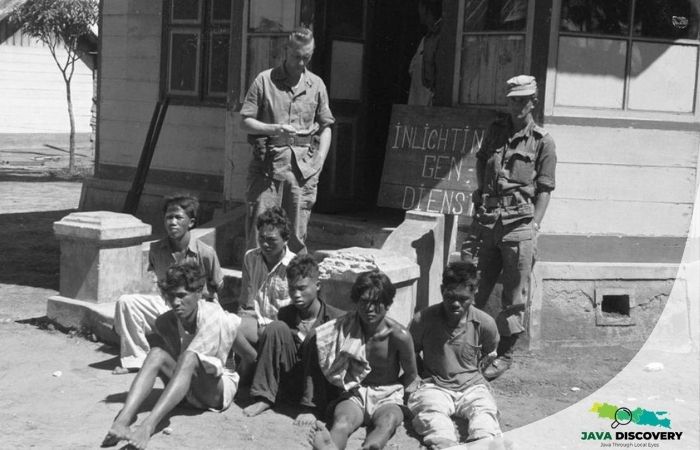
When the Dutch established Batavia in the 17th century, they brought with them not only trade and guns but a particular anxiety about morality. In the humid, disease-prone colonial outpost, European soldiers far from home created a demand that shaped a new, controlled class of women. By the 19th century, the colonial administration formalized this into policy—regulating prostitution under the guise of public health.
Historian Jean Gelman Taylor noted that by 1852, the Dutch government had issued detailed regulations requiring sex workers in major cities to register and undergo medical examinations. The stated reason was to “limit the spread of venereal disease,” but it also served as a mechanism of social control. These licensed brothels—many in Batavia, Semarang, and Surabaya—were placed under police watch. European men frequented them; Javanese and Chinese women often had little choice.
“It was the state’s way of managing loneliness and lust,” said cultural historian Fadly Rahman in an interview with Kompas Historia. “The moral language was medical, but the system was economic.”
The War Years: Comfort Stations and Coercion
When the Japanese occupied Indonesia during World War II, this system took a darker turn. Thousands of women across the archipelago were forced into military-run brothels known as “ianjo.” In Java, these comfort stations often repurposed colonial buildings. The practice left a deep scar on survivors, many of whom only spoke publicly decades later. Their testimonies, preserved by researchers and NGOs, remain one of the most painful chapters in Java’s wartime history.
Independence and the Birth of the “Lokalisasi” System
After independence, Indonesia faced a moral dilemma. The new republic condemned prostitution as a social disease, yet urban migration, poverty, and weak enforcement made it impossible to erase. So the government chose containment. Through the 1960s and 1970s, cities from Surabaya to Semarang created lokalisasi—designated red-light districts where sex work could be monitored, taxed, and policed.
These enclaves became paradoxical spaces: illegal by law, tolerated by practice. Health clinics, cooperative savings groups, and informal schools for workers’ children emerged. “We were never proud, but we worked cleanly,” said a former Dolly resident in an interview with Tempo magazine in 2014. “We had rules, security, and dignity. Outside, we’d be hunted.”
Dolly, Saritem, and Sunan Kuning: The Rise and Fall of Java’s Red-Light Districts
Dolly, Surabaya
At its peak in the early 2000s, Dolly was Asia’s largest red-light district, employing over 9,000 women and supporting an entire local economy of food stalls, laundry services, and musicians. Its narrow alleys glowed with neon signs, each boarding house a small theater of survival. When the government shut it down in 2014 under moral pressure, Surabaya’s mayor Tri Rismaharini declared, “We are freeing women from exploitation.”
Yet not everyone felt liberated. Many women, suddenly jobless, struggled to transition. Some joined retraining programs; others quietly returned to the trade in nearby districts. A community leader, Bu Marni, told BBC Indonesia, “They told us to make cakes and sew. But our customers were not buying cakes—they were buying companionship.”
Saritem, Bandung
Older than Dolly, Saritem’s history stretches back to the Dutch era, when it served soldiers and railway workers. Nestled near Bandung Station, it became infamous but oddly integrated into city life. Local warungs thrived, and residents coexisted with workers. After several closures—most notably in 2007 and again in 2015—the area’s nightlife faded, replaced by laundry shops and budget hotels. Yet as one local youth activist observed, “The activity moved online, not away.”
Sunan Kuning, Semarang
Named after a nearby saint’s tomb, Sunan Kuning—officially Argorejo—was a government-sanctioned lokalisasi until its closure in 2019. It once had health services and cooperative credit systems, but by the end, authorities argued it contradicted religious values. “We are erasing sin from the city,” said Semarang’s mayor at the closing ceremony. But a midwife who worked there for 20 years countered, “We were also erasing disease. Now they come to my clinic in secret.”
After the Closures: What Changed, What Didn’t
The government framed closures as moral victories, yet public health data and social work reports tell a more complex story. After each shutdown, outreach became harder, infections rose, and women lost stable income. Researchers from Gadjah Mada University found that many ex-workers migrated to smaller cities or joined the unregulated online sex trade, where exploitation risks are higher.
Meanwhile, city governments repurposed former red-light areas into training centers, craft markets, and MSME hubs. Dolly’s transformation into a souvenir district was hailed as urban renewal, though critics noted the sanitized narrative erases the women who built it. “It’s heritage without memory,” said sociologist Irwan Abdullah.
Puncak’s Contract Marriages: A New Face of an Old Trade
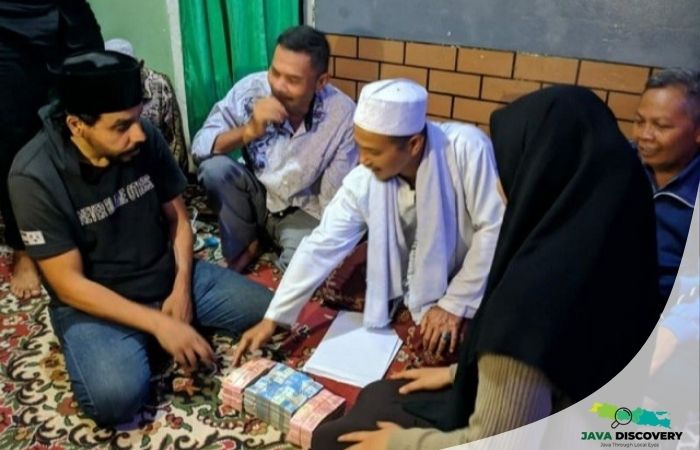
High in the cool mist of Puncak, West Java, another phenomenon took root: kawin kontrak, or contract marriages. Since the 1980s, when Arab tourists began visiting Indonesia for summer escapes, Puncak’s villas became scenes of short-term unions—marriages lasting days or weeks, blessed by local clerics for a fee. The practice exists in a legal gray area: not registered with the state, yet cloaked in religious legitimacy.
“It’s not prostitution, it’s marriage,” one local intermediary told Tempo reporters. “But everyone knows the duration ends when the holiday does.” The women, often from Cianjur or Sukabumi, receive a one-time dowry. Some see it as economic survival; others as cultural shame. Local officials have repeatedly raided villas, but the practice resurfaces every tourism season.
Why Arabic Is Spoken in Puncak
Visitors often remark how easily they find Arabic-speaking drivers, menus, and signs in Puncak. This linguistic adaptation began in the late 1980s when Middle Eastern tourists—mostly from Saudi Arabia and Yemen—sought Indonesia’s cool climate. Entrepreneurs learned basic Arabic to serve this market, creating an informal hospitality network. Over time, this economy blurred with the “temporary marriage” trade.
Religious leaders in West Java have condemned the practice, calling it a distortion of Islam. Yet some local clerics defend it as nikah mut’ah, a temporary marriage recognized in certain interpretations. The police, meanwhile, face a paradox: no clear legal definition criminalizes the practice outright, unless coercion or trafficking is proven.
Faith, Law, and the Moral Economy
The tension between faith and livelihood runs deep. “We cannot deny the economic roots,” said Professor Lies Marcoes, a gender expert at UIN Jakarta. “Moral reform without economic reform only displaces the problem.” She argues that women in these systems are not simply victims, but actors negotiating limited choices in a patriarchal economy.
In Cianjur, a former participant shared her story anonymously: “My father died, and I had siblings to feed. A neighbor introduced me to a ‘marriage agent.’ The man was kind, from Jeddah. It lasted two weeks. He left me money and a prayer bead. I don’t call it sin, but I don’t call it love either.”
From Red-Light to Daylight: The Struggle to Reclaim Identity
In former red-light districts, women’s cooperatives now run small businesses—tailoring, catering, and batik-making. In Dolly, a group called Paguyuban Warga Dolly sells coffee under the brand “Kopi Tuwo.” “We want people to remember us differently,” said its founder, Dini, a former worker. “Not as sinners, but survivors.”
Yet stigma lingers. Many children of former sex workers still face discrimination in schools. Social reintegration programs often fail because they focus on morality, not market access. “You can’t moralize hunger away,” said an NGO volunteer in Semarang. “Empowerment means giving choices, not lectures.”
The Legacy of Control
Across Java, from colonial brothels to contract villas, the state’s impulse to regulate women’s bodies has remained strikingly consistent. The moral language changes—from hygiene to faith, from civilization to decency—but the gaze of control persists. What has rarely changed is whose voices get heard.
“The body of a Javanese woman,” wrote the late sociologist Sita van Bemmelen, “has always been where the state rehearses its power.” Whether in colonial hospitals, wartime barracks, or municipal rehabilitation centers, women’s lives have been measured in policies, not empathy.
Reflections on a Hidden History
To trace this history is to confront uncomfortable truths: that morality has always been political, and that survival often wears the mask of sin. The geography of desire in Java—Batavia’s colonial brothels, the alleys of Dolly, the villas of Puncak—is a map of inequality and resilience.
Today, as debates over morality, tourism, and women’s rights continue, the question lingers: can dignity exist outside respectability? Perhaps the answer lies not in erasing the past, but in acknowledging the women who endured it—and refused to disappear when the lights went out.