When Islam Met Java A Cultural Conversation Not a Conversion

The Shore Where Worlds First Touched
At dawn along Java’s northern coast, the air still carries a familiar saltiness. Fishing boats sway gently, their wooden hulls creaking like old men clearing their throats. For centuries, this shoreline has been Java’s open door. Traders, pilgrims, and storytellers arrived not with armies or edicts, but with goods, ideas, and time. It was here, long before minarets rose above rice fields, that Islam first stepped onto Javanese soil.
The meeting was quiet. There were no mass declarations, no dramatic overthrow of temples. Instead, Islam arrived as a guest—curious, adaptable, and patient. Java, already layered with Hindu-Buddhist cosmology, animist reverence for ancestors, and an intimate relationship with the unseen, did not resist. It listened.
What followed was not a conversion in the abrupt sense, but a cultural conversation that unfolded over generations. Faith did not erase what came before it. It learned to speak Javanese.
Java Before Islam A World Already Sacred
Long before the first call to prayer echoed across the lowlands, Java was a deeply spiritual landscape. Mountains were not mere geology but cosmic pillars. Rivers carried memory. Forests were inhabited by forces both benevolent and dangerous. The spiritual and the material were inseparable.
Hindu-Buddhist kingdoms like Mataram and Majapahit shaped political power, but belief itself lived closer to the soil. Farmers marked planting seasons with ritual meals. Villages honored ancestral spirits who guarded boundaries and balance. Kings ruled not only through authority, but through perceived harmony with the cosmos.
This worldview did not disappear when Islam arrived. It remained the grammar through which new ideas would be understood.
Merchants Mystics and the Long Road Inward
Islam entered Java through trade routes connecting Arabia, India, and Southeast Asia. Muslim merchants settled along ports such as Gresik, Tuban, and Demak. They married locally, learned the language, and participated in daily life.
Their Islam was not rigid. Many were Sufis, mystics who spoke of inner journeys, self-discipline, and closeness to the divine. These concepts resonated with Javanese ideas of batin—inner life—and laku—spiritual practice.
Rather than preaching rupture, they modeled conduct. Faith was demonstrated through ethics, humility, and social bonds. Conversion, when it happened, was gradual and personal.
The Wali Songo Teaching Through Culture
Javanese memory credits the spread of Islam largely to the Wali Songo, the nine saints. Whether viewed as historical figures, symbolic archetypes, or a blend of both, their stories reveal how Islam rooted itself by adaptation rather than confrontation.
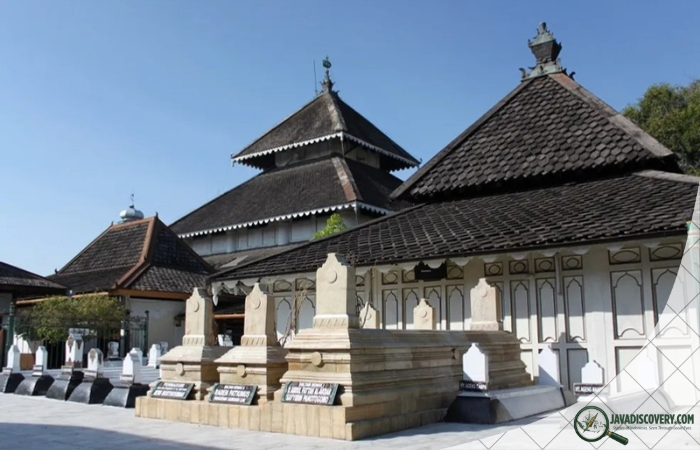
Sunan Kalijaga used shadow puppetry, wayang, embedding Islamic values within familiar epics. Sunan Bonang composed melodies that carried spiritual messages through gamelan. Mosques were built with tiered roofs resembling older sacred structures, not domes imported from afar.
The message was subtle but profound: Islam did not demand Java to become something else. It offered another way of understanding what it already was.
Kejawen The Space Between Worlds
Out of this encounter emerged Kejawen, a fluid spiritual orientation rather than a formal doctrine. Kejawen weaves Islamic belief with older Javanese philosophy, emphasizing balance, self-mastery, and harmony between the human and the unseen.
For many Javanese, being Muslim did not negate rituals honoring ancestors or observing cosmic cycles. Prayer and meditation coexisted. Mosques stood near sacred graves and ancient trees.
To outsiders, this hybridity often appeared contradictory. To Javanese practitioners, it felt natural. Faith was not an exclusive identity but a layered experience.
Rituals That Speak Two Languages
The slametan, a communal meal seeking harmony and protection, remains one of the clearest expressions of this synthesis. Islamic prayers open the gathering, yet its structure echoes pre-Islamic communal rites.
Life-cycle events—births, marriages, deaths—are marked by ceremonies blending Quranic recitation with symbolic foods and gestures rooted in older traditions. The boundary between religion and culture is deliberately porous.
These rituals do not dilute belief. They anchor it in lived experience.
Power Politics and the Shape of Faith
As Islamic sultanates replaced Hindu-Buddhist courts, rulers adopted Islam as both faith and legitimacy. Yet even in royal contexts, accommodation persisted.
Court rituals preserved cosmic symbolism. Kings were still seen as guardians of balance. Islam informed governance, but did not strip power of its spiritual responsibility.
Colonial rule later disrupted these systems, introducing new pressures to define religion more rigidly. Even then, local practice continued to negotiate identity on its own terms.
Modern Tensions Old Conversations
In contemporary Java, debates over orthodoxy and tradition reflect global Islamic currents. Some view local customs as deviations. Others defend them as cultural expressions of faith.
Yet in villages, markets, and family gatherings, the old conversation continues. Islam is practiced not as an imported script, but as a lived relationship shaped by place, history, and memory.
The call to prayer still rises over rice fields where offerings are quietly placed at the edge of paths. Neither cancels the other. Together, they tell Java’s story.
Faith as Dialogue Not Erasure
When Islam met Java, it did not arrive as a final answer. It entered as a participant in an ongoing dialogue about meaning, ethics, and the unseen.
That dialogue produced something neither entirely Arab nor entirely ancient Javanese, but distinctly local. A faith at ease with symbolism, patience, and inner depth.
In Java, belief did not conquer culture. It conversed with it—and in that conversation, both were transformed.