Forest Coffee in Mount Muria

javadiscovery.com – At first light, mist drifts between tall sengon and mahogany trees on the slopes of Mount Muria. The air is cool and fragrant, carrying the scent of wet soil, fallen leaves, and ripening coffee cherries. In the half-shadow of the forest canopy, red coffee berries glow like scattered beads against dark green foliage. Roosters crow from distant villages below, and somewhere uphill, a farmer’s machete gently clears undergrowth around young coffee plants.
Here, coffee does not grow in wide open monoculture fields. It grows in the forest.
The Slopes of Mount Muria
Rising in northern Central Java, Mount Muria overlooks the coastal plains of Kudus, Pati, and Jepara. Though modest in height compared to Java’s towering volcanoes, Muria holds a distinct place in Javanese history and spirituality. Pilgrims visit the tomb of Sunan Muria near its upper slopes, while farmers cultivate cloves, durian, and coffee in the fertile volcanic soil below.
Unlike large plantation systems introduced during the colonial era, coffee on Mount Muria is often grown by smallholder farmers who integrate it into existing forest landscapes. Tall shade trees form a natural canopy above the coffee shrubs, protecting them from harsh sunlight and preserving soil moisture. The result is what locals call “kopi hutan” — forest coffee.
Shade-Grown and Slow Ripened
Under the forest canopy, coffee cherries mature more slowly. Filtered sunlight and cooler temperatures allow sugars to develop gradually inside the fruit. Farmers believe this slower process produces a smoother and more complex flavor profile, often described as earthy, slightly sweet, with hints of chocolate and spice.
Pak Ahmad, a farmer in the village of Colo, walks carefully between rows of coffee plants interspersed with banana trees and timber species.
“We don’t clear everything,” he explains. “The forest protects the coffee, and the coffee gives us income. If we remove the trees, the soil dries and the harvest drops.”
His plot sits on a slope where fallen leaves accumulate, forming a natural mulch layer. This organic cover helps retain moisture during the dry season and reduces erosion during heavy monsoon rains. In a landscape increasingly vulnerable to unpredictable weather, such agroforestry practices offer resilience.
Harvest Season in the Highlands
Harvest typically arrives between June and September. Families move through the forested plots with woven baskets tied around their waists, carefully picking only the ripest red cherries. The work is methodical and communal. Children help sort the harvest, while elders oversee drying racks laid out in sunny clearings.
After picking, the cherries are either processed using a traditional wet method or dried whole under the sun. In many villages, the sound of hand-cranked pulping machines echoes in the afternoon, followed by the rhythmic raking of beans spread across bamboo mats.
Ibu Sulastri, who manages post-harvest processing for her cooperative, describes the drying stage as crucial.
“If the beans are dried too fast, the taste changes. If they are dried too slow, mold can form. We watch the sky carefully.”
Tarps are quickly unfurled when sudden rain clouds gather over the mountain. In this way, forest coffee remains deeply tied to natural rhythms.
Agroforestry and Conservation
The integration of coffee into forest ecosystems has environmental implications beyond flavor. By maintaining tree cover, farmers help stabilize slopes that might otherwise be vulnerable to landslides. Root systems bind the soil, while canopy layers reduce the direct impact of rainfall.
Birdsong fills the early mornings in Muria’s coffee forests. Bulbuls, sunbirds, and drongos move between branches, feeding on insects that could otherwise damage crops. Biodiversity thrives in shade-grown systems compared to cleared farmland.
Local environmental groups have begun promoting forest coffee as a sustainable alternative to more intensive agricultural expansion. In areas where deforestation has occurred for short-term profit, soil degradation and reduced water retention often follow. By contrast, agroforestry allows farmers to generate income without sacrificing long-term ecological health.
The Role of Cooperatives
In recent years, farmer cooperatives around Mount Muria have gained greater visibility. By pooling harvests and improving quality control, they negotiate better prices with buyers in cities like Semarang and Yogyakarta. Some specialty roasters now market “Muria Forest Coffee” as a distinct regional product.
These cooperatives also provide training in organic cultivation methods, pest management, and post-harvest handling. Younger farmers, many of whom once considered migrating to larger cities for factory work, are beginning to see coffee as a viable livelihood.
“Before, we sold cherries cheaply to middlemen,” says Dimas, a 28-year-old cooperative member. “Now we understand grading and roasting profiles. We feel proud when people in Jakarta drink coffee from our mountain.”
Spiritual Landscape and Daily Life
Mount Muria is not merely an agricultural zone; it is also a spiritual landscape. Pilgrims ascend its paths to visit sacred sites, and traditional ceremonies are sometimes held to give thanks for abundant harvests. Offerings of flowers and incense may appear at the edge of coffee plots, blending Islamic devotion with older Javanese customs.
During certain months, the flow of visitors increases, bringing additional income to roadside vendors who sell snacks, souvenirs, and freshly brewed coffee. Small warung stalls serve cups of locally roasted beans, prepared simply with hot water and sugar.
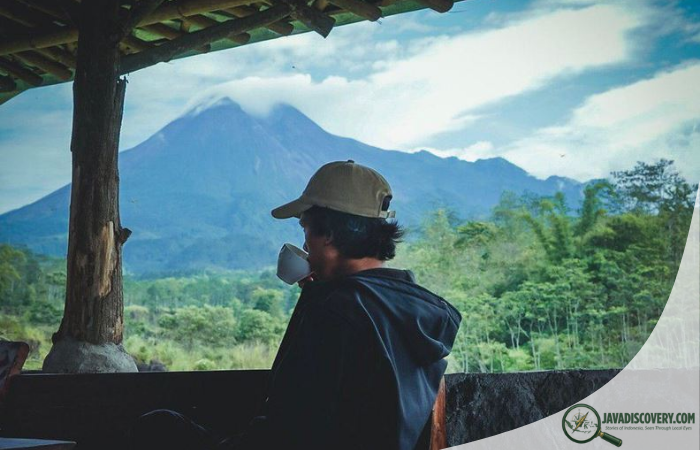
Sipping coffee on a wooden bench overlooking the lowlands, one can see the patchwork of fields stretching toward the Java Sea. The taste carries hints of the forest itself — damp earth, wood smoke, and sweetness drawn from slow ripening fruit.
Challenges Ahead
Despite its promise, forest coffee in Mount Muria faces challenges. Climate variability can disrupt flowering cycles. Pests such as coffee berry borers threaten yields. Market fluctuations influence prices in ways that small farmers cannot control.
There is also pressure to convert forested plots into more intensive agriculture. Short-term gains from monoculture crops can appear attractive, particularly when household expenses rise. Balancing economic needs with ecological stewardship remains an ongoing negotiation.
Yet many farmers remain committed to the forest model. They have witnessed how tree cover protects springs that supply drinking water to villages below. They have seen how shaded soil remains moist even in prolonged dry spells.
A Cup Rooted in Place
As evening descends over Mount Muria, mist returns to the slopes. The forest grows quiet except for the hum of insects and the distant call to prayer drifting from a valley mosque. Coffee beans, now dried and stored in woven sacks, await transport to local roasters.
Forest coffee here is more than a commodity. It represents a relationship between people and land shaped by patience, knowledge, and respect for natural systems. Each cup carries the imprint of volcanic soil, filtered sunlight, and communal labor.
In a world where coffee often travels thousands of kilometers disconnected from its origin, Muria’s forest coffee remains rooted in place. It tells a story of resilience on a modest mountain in northern Java, where agriculture and forest meet beneath a shifting canopy of leaves.
Category: Nature
Writer: Fikri Hidayat
A. SEO Title
B. Meta Description
C. Meta Keywords
D. Excerpt
F. Focus Keyword
Forest Coffee in Mount Muria