Java’s Caves as Spiritual and Geological Archives


javadiscovery.com – The entrance yawns like a dark mouth in the limestone cliff, exhaling cool air that smells of damp earth and ancient stone. Outside, the tropical sun burns white against the karst hills of southern Java. Inside, light dissolves into shadow. Water drips steadily from the ceiling, each drop echoing against unseen walls, marking time in a language older than memory.
Across Java, caves are more than hollowed rock formations. They are archives. Geological records written in calcite and mineral veins. Spiritual sanctuaries shaped by meditation, pilgrimage, and myth. Within their chambers, the island’s natural history and inner life converge.
The Karst Landscapes of Southern Java
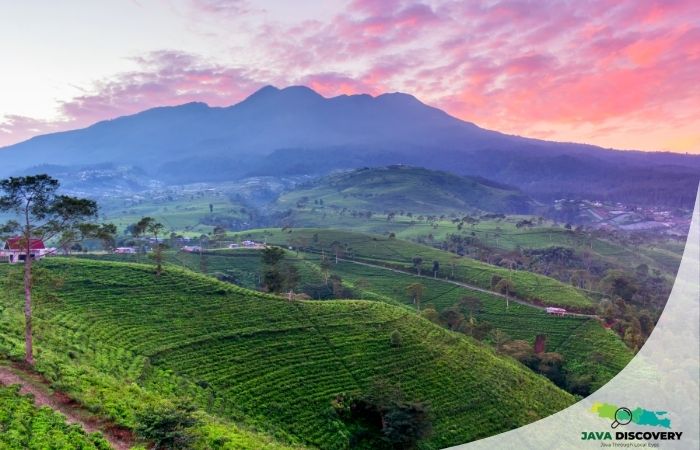
Much of Java’s most dramatic cave systems lie within vast limestone regions formed millions of years ago beneath ancient seas. In areas like Gunung Sewu in Yogyakarta and Pacitan in East Java, rainwater has carved intricate underground networks through soluble rock, creating sinkholes, underground rivers, and cathedral-like caverns.
Stalactites hang like frozen icicles from cave ceilings. Stalagmites rise slowly from the floor, formed by centuries of mineral-rich drips. Some columns have fused into thick pillars, silent witnesses to climatic shifts that predate human settlement on the island.
Geologists study these formations as climate archives. Each layer of calcite records variations in rainfall, temperature, and vegetation. By analyzing isotopes trapped within mineral deposits, researchers reconstruct patterns of ancient monsoons and drought cycles that shaped Java’s ecological history.
Goa Jomblang and the Vertical World
In the karst region of Gunungkidul, Goa Jomblang descends vertically into the earth like a hidden well. Sunlight pierces the opening at midday, forming a luminous column that illuminates ferns and moss thriving at the base. The beam of light, often described as heavenly, reveals a subterranean forest nourished by filtered sun.
For local guides, the cave is both geological marvel and sacred space. They speak of it with a mix of scientific explanation and reverence.
“This cave is alive,” says Agus, who has led visitors into its depths for years. “The water shapes it slowly. We must move carefully and respect what we cannot see.”
His words echo against stone walls that have been sculpted drip by drip over millennia.
Spiritual Retreats in Darkness
Beyond their geological significance, many caves in Java serve as places of meditation and spiritual retreat. In Javanese mysticism, silence and isolation are pathways to inner clarity. Caves provide both.
Goa Langse, perched dramatically along the southern coast, has long attracted seekers practicing tirakat, a form of spiritual discipline involving fasting and prayer. Waves crash violently against cliffs below, but within the cave, the sound becomes distant thunder.
Those who spend nights in such caves often speak of heightened awareness. The absence of light sharpens other senses. The rhythm of dripping water becomes a metronome for contemplation. In darkness, time stretches.
Myth and Royal Pilgrimage
Some caves hold deep connections to Javanese royal history. Goa Pindul and Goa Cerme, among others, are linked to legends of wandering princes and spiritual tests undertaken by future rulers. Oral traditions describe royal figures meditating within cave chambers before ascending to power.
In these narratives, caves function as thresholds. Entering the cave symbolizes descent into uncertainty or chaos. Emerging represents rebirth, clarity, and rightful authority.
Local caretakers often recount such stories to visitors, blending folklore with historical memory. Offerings of flowers and incense occasionally appear at cave entrances, quiet acknowledgments of unseen guardians.
Prehistoric Footprints
Long before recorded kingdoms, Java’s caves sheltered prehistoric communities. Archaeological excavations in caves across East Java have uncovered stone tools, bone fragments, and traces of early human habitation.
In Pacitan, caves have yielded artifacts linked to early hominin populations, suggesting that these limestone shelters provided refuge from predators and weather. Layers of sediment preserve evidence of ancient diets and seasonal movements.
Thus, caves become layered archives. Geological formations speak of ancient seas. Archaeological remains reveal early human adaptation. Spiritual practices reflect evolving belief systems. All coexist within the same stone walls.
Underground Rivers and Hidden Ecosystems
Many Javanese caves are threaded with subterranean rivers. In Goa Pindul, visitors float along calm underground currents, their lanterns reflecting off smooth limestone ceilings. Bats cluster in shadowed crevices, while blind fish navigate dark waters below.
These ecosystems are fragile. Subtle changes in water quality or human disturbance can disrupt species adapted to permanent darkness. Conservation efforts aim to balance access with preservation, recognizing that caves are living systems as much as geological monuments.
Hydrologists study these underground rivers to understand groundwater flow and regional water security. In karst landscapes, surface water quickly disappears into sinkholes, reemerging kilometers away. Caves thus function as natural reservoirs and channels, shaping water availability for surrounding communities.
Monsoon and Stone
The monsoon rains that sweep across Java each year continue to sculpt cave interiors. Acidic rainwater seeps into limestone, dissolving rock and widening passages. During heavy rains, underground rivers swell, reminding visitors of nature’s quiet but relentless power.
Over centuries, these seasonal rhythms have etched delicate patterns into cave walls. Flowstones ripple like frozen waterfalls. Mineral curtains hang in translucent sheets. Each formation represents thousands of monsoon cycles, a stone memory of climate’s pulse.
Voices from the Cavern
Inside a cave, sound behaves differently. A single whisper can carry across chambers. Footsteps reverberate unpredictably. For some, these acoustics enhance spiritual atmosphere. For others, they amplify awe at geological scale.
Ibu Ratna, who occasionally joins meditation groups in a coastal cave near Yogyakarta, describes the experience.
“When the lights are off, you feel very small. But not in a frightening way. More like you are part of something very old.”
Her description mirrors the dual nature of caves in Java. They humble and connect simultaneously.
Modern Pressures and Preservation
As interest in cave exploration grows, questions of preservation intensify. Unregulated tourism can damage delicate formations formed over thousands of years. Touching stalactites leaves oils that disrupt mineral growth. Litter and artificial lighting alter cave environments.
Local communities, government agencies, and environmental groups increasingly collaborate to establish guidelines for responsible visitation. Controlled access, trained guides, and environmental education aim to protect both geological and spiritual integrity.
The challenge lies in honoring caves as shared heritage while ensuring they remain intact for future generations.
Archives Beneath the Surface
At dusk, as the sky over southern Java fades from gold to indigo, cave entrances become silhouettes against limestone hills. Inside, darkness resumes its dominion. Water continues its patient work. Mineral layers thicken invisibly. Bats stir.
Java’s caves are not static relics. They are active archives, continuously recording environmental change and human interaction. They hold the memory of ancient oceans, the footsteps of early inhabitants, the whispered prayers of mystics, and the evolving science of climate study.
To enter a cave in Java is to step into layered time. The stone walls carry stories without ink. The air holds echoes of both geology and devotion. And in the cool, quiet chambers beneath the island’s restless surface, the past remains present.