Sacred Heirlooms and Political Legitimacy in Java

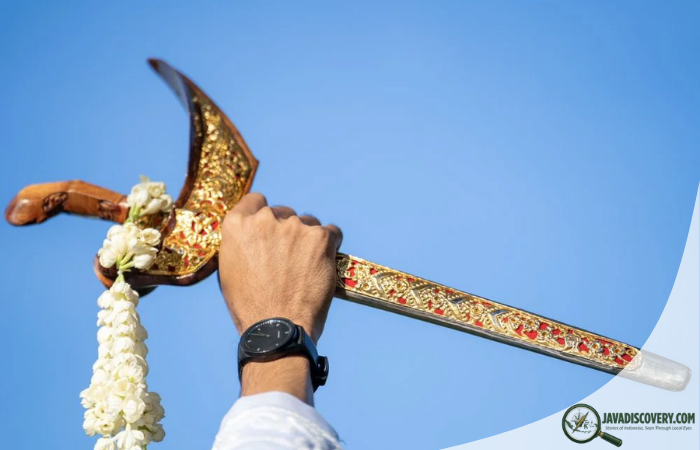
javadiscovery.com – In a dim inner chamber of a Javanese palace, where the air smells faintly of sandalwood and old wood polish, a kris rests on folded white cloth. Its blade curves in quiet defiance of symmetry, its surface rippled with pale lines like flowing water frozen in steel. Around it, courtiers sit cross-legged in silence. No one touches the weapon casually. It is not merely metal. It is memory, ancestry, and authority distilled into form.
The Invisible Architecture of Power
Across Java, sacred heirlooms known as pusaka have long served as invisible pillars of political legitimacy. Kings rose and fell, colonial regimes intervened, republics were declared, yet the belief in the spiritual potency of certain objects endured. Among them, the kris stands foremost, though it is joined by spears, gamelan sets, royal carriages, and even batik textiles believed to carry ancestral force.
In the courts of Yogyakarta and Surakarta, pusaka are treated not as artifacts but as living presences. They are bathed, perfumed, and addressed with reverence. During the Javanese month of Suro, palace retainers conduct ritual cleansings in ceremonies that unfold before dawn. The heirlooms are unwrapped slowly, as if awakening from sleep.
To understand their political significance, one must look beyond material value. In Javanese cosmology, power is not seized through proclamation alone. It must be aligned with unseen forces. A ruler who holds pusaka recognized by lineage is believed to stand within a continuum of sacred authority.
Kris as Axis of Legitimacy
The kris is perhaps the most potent symbol of this authority. Forged by empu, master bladesmiths who combined metallurgy with meditation, each blade carries a distinct pamor pattern formed by layered iron and nickel. These patterns are read almost like scripture, interpreted for signs of protection, prosperity, or danger.
During the era of the Mataram Sultanate, possession of certain kris signified rightful rule. A blade associated with a founding ancestor could legitimize succession in times of dispute. Chronicles recount moments when rival claimants sought specific pusaka to strengthen their claim to the throne.
Pak Wiryanto, a palace caretaker in Surakarta, describes the kris not as weapon but as witness. “It has seen generations,” he says softly. “It remembers.”
Memory, in this sense, is political. A pusaka embodies continuity. In a society where harmony and lineage are deeply valued, continuity becomes a form of proof.
Ritual as Renewal of Authority
Every year, rituals reaffirm the bond between ruler and heirloom. The cleansing ceremony known as jamasan involves washing the blades with scented water and lime, wiping them dry with careful strokes. The act is both maintenance and metaphor. Just as rust must be removed from steel, moral impurities must be cleansed from leadership.
These rituals are rarely theatrical. They unfold in semi-private spaces, attended by select palace officials and spiritual advisors. Yet news of the ceremony ripples outward. The community understands that the act symbolizes renewal of cosmic balance.
In Javanese thought, political legitimacy is intertwined with spiritual equilibrium. A leader out of harmony risks not only social unrest but metaphysical disorder. Pusaka serve as conduits, linking earthly governance with ancestral blessing.
Colonial Shadows and Quiet Resistance
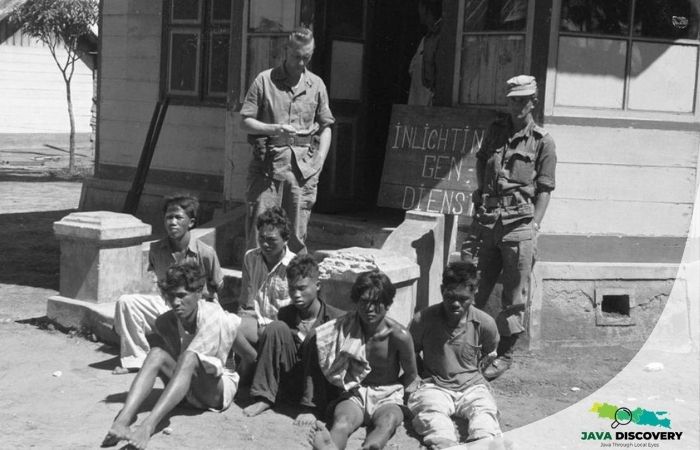
When Dutch colonial authorities expanded control over Java, they quickly recognized the symbolic weight of sacred heirlooms. Some were confiscated, others catalogued. Yet many remained within palace walls, their significance too deeply rooted to be erased.
There are accounts of heirlooms hidden during times of upheaval, wrapped in layers of cloth and concealed within village homes. Protecting them was not simply an act of preservation but of resistance. To safeguard a pusaka was to safeguard identity.
Even as colonial power imposed administrative systems, local legitimacy often continued to hinge on spiritual symbols. A regent might hold office under Dutch oversight, yet his acceptance among the people depended on recognition by traditional custodians and their sacred objects.
The Psychology of Belief
Modern observers sometimes view such reverence as superstition. Yet within Javanese society, belief in pusaka operates as a psychological anchor. It offers a tangible expression of intangible values such as continuity, trust, and moral responsibility.
A ruler who inherits a revered kris inherits not only privilege but obligation. The object becomes a mirror. Any failure in governance reflects not only on the individual but on the lineage the heirloom represents.
This dynamic shapes leadership behavior. Public humility, ritual observance, and measured speech are not mere performance. They are expected signs that the leader recognizes the weight of inherited authority.
Heirlooms Beyond the Palace
Sacred heirlooms are not confined to royal courts. In rural villages, families treasure their own pusaka, sometimes modest in appearance yet profound in meaning. A farming community may revere an ancestral spear believed to protect rice fields. A coastal village might safeguard a centuries-old fishing net preserved for ceremonial use.
During communal gatherings, these objects are displayed briefly, accompanied by offerings of flowers and incense. The ritual reinforces collective memory. Authority at this level is communal rather than hierarchical, yet the principle remains similar. Legitimacy arises from continuity with the past.
Modern State and Ancient Symbols
In contemporary Indonesia, political legitimacy is defined by constitutional law and democratic process. Yet traditional symbols continue to hold quiet influence, especially in Java. Ceremonial events often incorporate heirlooms as reminders of historical roots.
Within the Yogyakarta Sultanate, which retains a special administrative status, sacred objects remain integral to court ceremony. The presence of pusaka during official events signals that governance here rests upon layered foundations: legal authority intertwined with cultural heritage.
Observers note that such symbolism fosters stability. By acknowledging ancestral continuity, leaders reinforce a sense of belonging that transcends political cycles.
Steel, Spirit, and the Future
As night settles over palace courtyards, the heirlooms are returned to their resting places. Cloth is folded carefully. Lamps are extinguished one by one. Outside, motorbikes hum through city streets, and neon signs flicker to life. Java moves forward, yet within its inner chambers, time folds back upon itself.
The role of sacred heirlooms in political legitimacy endures not because of blind reverence but because they embody narrative. They tell stories of origin, struggle, and survival. They anchor leadership in something older than ambition.
In the cool darkness, the kris lies still. Its blade no longer gleams under ceremonial light. Yet its presence continues to shape perception. For in Java, authority is never merely declared. It is cultivated, inherited, and ritually renewed through objects that bridge the visible and the unseen.