Migration Without Leaving (Digital Work in Villages)

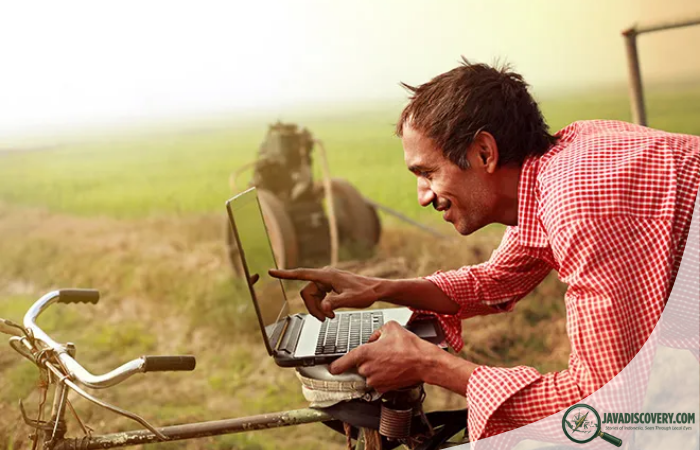
javadiscovery.com — In a quiet, tile-roofed house in a village near the slopes of Mount Lawu, the hum of a high-performance cooling fan marks the beginning of a quiet revolution: migration without leaving (digital work in villages). Traditionally, for the Javanese youth, “sukses” (success) was synonymous with merantau—the physical act of leaving the ancestral “kampung” for the smog and steel of Jakarta or Surabaya. However, the rise of migration without leaving (digital work in villages) is dismantling this centuries-old narrative. Today, a young Javanese illustrator or software engineer can earn “dollar” (U.S. dollars) from global clients while still eating “nasi pecel” from the local warung and attending the village “selametan” (communal feast). Migration without leaving (digital work in villages) is the ultimate synthesis of Javanese “guyub” (togetherness) and the borderless “ekonomi digital” (digital economy). It is a journey where the “perantau” (migrant) no longer needs a bus ticket, but a stable fiber-optic connection, allowing the “jiwa” (soul) of the village to thrive in a globalized market without losing its youth to the urban sprawl.
The Digital “Merantau”: A New Path to Success
The concept of merantau is deeply embedded in Javanese culture as a rite of passage—a way to gain “pengalaman” (experience) and “rezeki” (fortune) to bring back home. In the framework of migration without leaving (digital work in villages), this journey has become “maya” (virtual). The “digital migrant” navigates the complex hierarchies of Silicon Valley or Tokyo from a wooden desk in Central Java. This shift allows the individual to fulfill the Javanese ideal of mikul dhuwur mendhem jero (honoring one’s parents and family) by remaining physically present to care for elders while achieving the financial status once reserved for city dwellers.
This new reality is visible in the proliferation of “co-working spaces” inside traditional Javanese homes. In villages that once only produced rice or tobacco, you can now find “studio kreatif” where young people specialize in 3D modeling, data entry, or remote customer service. Migration without leaving (digital work in villages) has turned the “ndeso” (rural) identity from a limitation into a strategic advantage—low cost of living combined with high-value global income. It is a “keajaiban” (miracle) of the modern era that allows the village youth to be “warga dunia” (citizens of the world) without ever crossing their provincial borders.
The Fiber-Optic “Sawah”: Cultivating Digital Crops
For the “wong tani” (farmers) of the past, the land was the only source of “urip” (life). For those engaged in migration without leaving (digital work in villages), the “fiber-optic” cable is the new irrigation system. When high-speed internet reaches a remote “dusun” (hamlet), it acts as a “pupuk” (fertilizer) for local talent. Migration without leaving (digital work in villages) enables the “creative class” to remain in their “asli” (original) environment, preventing the “brain drain” that has plagued rural Java for decades.
This digital cultivation requires a different kind of “niteni” (observation). Instead of watching the clouds for rain, the digital worker watches the global market trends. Yet, the work ethic remains distinctly Javanese: “alon-alon waton kelakon” (slow but sure) is replaced by “cepet lan tlaten” (fast and meticulous). Migration without leaving (digital work in villages) creates a hybrid professional—someone who can participate in a high-stakes Zoom meeting in the morning and help their neighbor harvest corn in the afternoon. This duality ensures that the village does not become a “museum” of the past, but a living laboratory for the future.
“I used to think I had to go to Jakarta to be an architect. Now, I design buildings for clients in Dubai from my porch in Klaten. My ‘kantor’ (office) is my laptop, but my ‘kantor’ is also my garden where I can hear the birds.” — Aris, 26, a freelance 3D artist.
Economic Sovereignty and the Village Cash Flow
The economic impact of migration without leaving (digital work in villages) on the local “ekosistem” is profound. In the traditional merantau model, money was sent back home as “remitansi” (remittances), often spent on consumption. With migration without leaving (digital work in villages), the wealth stays in the village constantly. The digital worker buys their “kopi” from the local warung, hires local labor to renovate their home, and invests in local “UMKM” (small businesses).
This creates a “multiplier effect” that strengthens the village’s “ketahanan” (resilience). Because their income is decoupled from the local agricultural economy, these digital workers provide a financial “buffer” during poor harvest seasons. Migration without leaving (digital work in villages) is creating a new class of rural “entrepreneurs” who bring urban-level “daya beli” (purchasing power) to the countryside. This influx of capital allows the village to improve its own “infrastruktur” (infrastructure) and “pendidikan” (education) from within, rather than waiting for government assistance.
| Traditional Migration (Merantau) | Digital Migration (WFA/Remote) |
|---|---|
| Physical displacement to cities | Physical presence in the village |
| High cost of urban living / “Indekos” | Low cost of rural living / “Omah Dewe” |
| Remittances sent periodically | Direct local spending and investment |
| Social disconnect from “Guyub” | Active participation in village life |
Preserving the “Guyub” in the Gigabit Era
The greatest victory of migration without leaving (digital work in villages) is the preservation of social “modal” (capital). In a typical merantau scenario, the village loses its most energetic and educated members, leaving behind an aging population. Migration without leaving (digital work in villages) allows the youth to stay and participate in “RT/RW” meetings, “Ronda” (night watch), and “Karang Taruna” (youth organizations). They bring their “melek digital” (digital literacy) to help the village elders navigate modern bureaucracy or market their local crafts online.
This ensures that the “rukun” (harmony) of the Javanese village remains intact. The digital worker is not an “orang asing” (stranger) in their own land. They are still “Anak’e Pak Lurah” or “Putune Mbah Kromo.” Migration without leaving (digital work in villages) proves that “kemajuan” (progress) does not have to be “dingin” (cold) or “individualis.” In the heart of Java, the most advanced technology is being used to protect the oldest values: the importance of “silaturahmi” and the sanctity of the “omah” (home).
Challenges: Connectivity and “Kecemburuan Sosial”
The path of migration without leaving (digital work in villages) is not without its “ganjalan” (obstacles). The “digital divide” remains a reality; villages without fiber-optic access are left behind in the “merantau” race. Furthermore, there is the risk of “kecemburuan sosial” (social jealousy). A digital worker earning a “global salary” while sitting at home can sometimes be misunderstood by neighbors who see “work” only as physical labor in the fields. Some might even whisper about “pesugihan” (mystical wealth) because the source of the income is “gaib” (unseen).
To overcome this, those engaged in migration without leaving (digital work in villages) must practice “tepo seliro” (tolerance) and “andhap asor” (humility). They must be “sumanak” (friendly) and generous, ensuring that their success benefits the “lingkungan” (environment). Many digital workers are now starting “kelas gratis” (free classes) for village kids, teaching them English or basic coding. This turns the individual success of migration without leaving (digital work in villages) into a communal “berkah” (blessing), bridging the gap between the “tradisional” and the “digital.”
Conclusion: The Village as the New Global Hub
Migration without leaving (digital work in villages) is a testament to the Javanese spirit of “manut” (adaptation). It is a movement that says: “We will take your technology, but we will keep our soul.” The Javanese village is no longer the “belakang” (backyard) of the nation; it is becoming a “pusat” (center) of global creativity. Migration without leaving (digital work in villages) allows the “wong Jowo” to compete in the 21st century without sacrificing the “ayem” (tranquility) of their ancestral land.
As the “adzan” calls out across the “sawah” and the sun sets behind the volcanoes, a thousands of laptops are being closed in thousands of villages. The work is done, the “dollar” is earned, and the digital migrant steps out of their house to chat with a neighbor over a cup of “teh panas.” This is the beauty of migration without leaving (digital work in villages). The world has been conquered, but the “home” has been saved. In the heart of Java, the journey of the migrant has finally come full circle, finding that the greatest “merantau” of all is the one that brings the whole world to your doorstep while you remain rooted in the soil that raised you.