Clay Stove Weavers of Kasongan Traditional Pottery Design

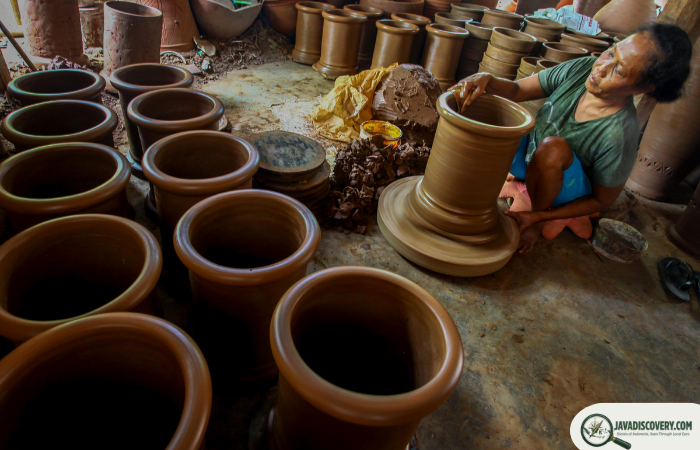
javadiscovery.com – A warm, earthy aroma of damp terracota clay, river silt, and wood ash permeates the morning air in Kasongan, a renowned pottery village situated along the banks of the Bedog River in Bantul Regency, Yogyakarta. Long before dawn breaks over the volcanic plains of Central Java, the rhythmic sound of wooden kick-wheels turning and damp clay being kneaded on smooth wooden benches echoes through open-air village courtyards. For generations, Kasongan was celebrated across Java as the home of the pengrajin anglo—master clay stove weavers and potters who crafted rustic charcoal cooking stoves (*anglo*), water storage jars (*gentong*), and simple cooking pots (*kuali*) that fueled everyday life in traditional Javanese kitchens. Today, as gas stoves and electric appliances replace charcoal fires in modern homes, these master clay weavers are undergoing a remarkable artistic evolution. By blending centuries-old hand-coiling and throwing techniques with contemporary architectural aesthetics, Kasongan’s artisans are reinventing their craft for high-end international interior design.
Historical Roots: The Sacred Earth of Kasongan
The pottery tradition of Kasongan carries deep historical and cultural roots tied directly to the land and political history of the Yogyakarta Sultanate. According to local oral history, the village became a sanctuary for pottery artisans during the 19th century following the Java War (1825–1830):
- Subterranean Clay Quality: The alluvial soils deposited along the Bedog River basin offer a rich mixture of fine volcanic ash and plastic river clay. Highly elastic and rich in iron oxide, this local red clay (*tanah liat merah*) provides exceptional structural stability and heat resistance when fired.
- Utilitarian Beginnings: Early Kasongan potters focused almost exclusively on functional domestic ware needed by agrarian communities. The traditional clay stove (*anglo*) was engineered to hold burning wood charcoal efficiently, distributing steady heat for slow-cooking Javanese stews like *gudeg*.
- The Cultural Touch of Sapto Hoedojo: In the early 1970s, legendary Indonesian artist Sapto Hoedojo recognized the untapped artistic potential of Kasongan’s potters. He introduced local craftsmen to decorative motifs, encouraging them to expand beyond functional cooking stoves into sculpting ornamental animal figures, massive urns, and intricate wall reliefs.
From Charcoal Stoves to Architectural Sculptures
The transition from utility cooking stoves to sophisticated interior decor represents a masterclass in artisanal adaptation. While the physical products have transformed, the core hand-shaping techniques passed down through generations remain pure and unhurried:
- Hand-Coiling and Weaving (*Teknik Pilin*): Larger architectural pieces, such as tall geometric planters and curved light fixtures, are built without molds using the ancient coil-and-weave method. Artisans roll long snakes of soft clay and layer them in continuous spirals, smoothing and pinching the walls by hand to achieve organic, sculptural forms.
- Burnishing and Natural Texture Finish: Rather than relying on synthetic chemical glazes, modern Kasongan designers frequently utilize traditional burnishing (*pulas*). Potters polish leather-hard clay surfaces using smooth river stones or hardwood sticks, creating a soft, satiny sheen that highlights the natural, warm terracotta tones of the fired earth.
- Open Pit and Kiln Firing (*Pembakaran*): Firing processes in Kasongan balance traditional open straw-and-wood pit fires with controlled brick shuttle kilns. Pit firing exposes the clay to smoke and natural ash draft variations, producing unique, unrepeatable dark carbon blushes and rustic textures prized in minimalist wabi-sabi interior concepts.
Adapting to Global Interior Design Trends
Today, Kasongan’s pottery studios collaborate directly with interior architects, landscape designers, and luxury hotel groups from Bali to Europe and North America. The village’s workshop showrooms display an extraordinary fusion of traditional Javanese earthiness and sleek modern minimalism:
- Contemporary Lighting and Wall Reliefs: Clay that once formed the walls of kitchen stoves is now molded into oversized pendant light shades, acoustic wall panels, and intricate bas-relief tiles that diffuse ambient warm light in modern dining spaces.
- Minimalist Terracotta Furniture: Potters combine raw fired terracotta with natural rattan, teak wood, and hand-woven seagrass, creating hybrid coffee tables, garden stools, and sculptural vessel sinks that blend seamlessly into contemporary tropical homes.
- Sustainable and Zero-Waste Crafting: Clay remains one of the most environmentally sustainable materials in craft production. Unfired clay scraps from Kasongan’s workshops are completely recycled back into water vats to be kneaded again, while broken fired pieces are crushed into grog (*chamotte*) to strengthen new clay bodies.
Preserving the Soul of Javanese Craft
The transformation of Kasongan stands as an inspiring blueprint for the survival of indigenous crafts in a rapidly modernizing world. By respecting their ancestral heritage while boldly embracing new design languages, the clay masters of Kasongan prove that traditional craft is not a static museum piece, but a living, breathing art form.
Inside the quiet workshops of Bantul, as hands covered in damp red clay continue to shape raw earth on the turning wheel, the soul of Javanese pottery continues to burn bright—weaving the warmth of ancient hearths into the spaces of tomorrow.