Glass Painters Cirebon Reverse Glass Painting Lukis Kaca

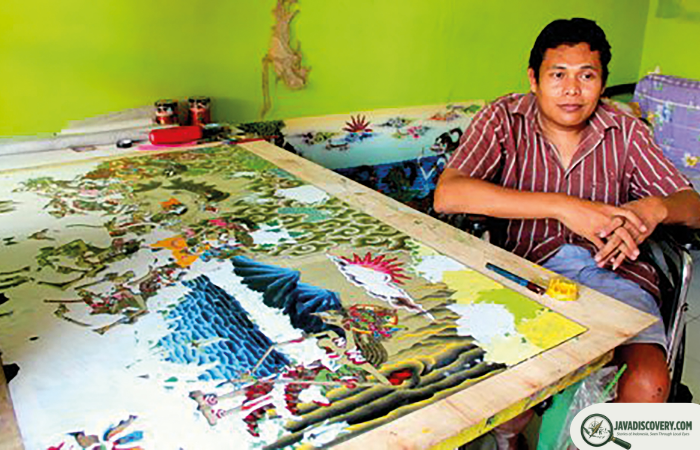
javadiscovery.com – Stepping inside a quiet, sunlit studio in the historic coastal city of Cirebon, North-Central Java, one is greeted by the delicate fragrance of oil paint, clove tobacco, and damar resin. On long wooden tables, smooth sheets of clear window glass lie flat, catching the soft tropical light. Seated over these transparent canvases, master glass painters (*pengrajin lukis kaca*) work with extraordinary concentration, holding fine bamboo brushes tipped with squirrel hair. They do not paint on the front surface of the glass; instead, they press their brushes against the underside, applying paint in a meticulous, inverted sequence where every line, contour, and highlight must be rendered backwards. Known as *lukis kaca*, this centuries-old Javanese artistic tradition represents one of the most intellectually demanding forms of folk art on the island—a delicate, endangered craft that fuses Islamic calligraphy, classical wayang iconography, and coastal Javanese mysticism.
Origins in the Sultanates: The Cultural Matrix of Cirebon
The art of reverse glass painting arrived on Java’s northern coast (*Pasisir*) during the late 17th and 18th centuries through maritime trade routes linking China, Europe, and the Middle East. While glass painting existed in Western and East Asian royal courts, it underwent a profound cultural transformation upon entering the coastal Sultanates of Cirebon—Kasepuhan, Kanoman, and Kacirebonan:
- Fusion of Royal Iconography: Cirebon’s master painters adapted European glass techniques to portray classical Javanese shadow puppet (*Wayang Kulit*) figures, Islamic calligraphy (*kaligrafi*), and sacred royal heraldry.
- The Semar and Macan Ali Motifs: Two iconic motifs defined early Cirebon glass painting: *Semar*, the revered divine clown-god representing wisdom and humility, and *Macan Ali* (the Calligraphic Tiger), a sacred Cirebon emblem composed entirely of Arabic prayers styled into the shape of a crouching tiger.
- Spiritual Talismans (*Jimat*): Traditionally, completed reverse glass paintings were hung above doorways in Cirebon homes as protective spiritual talismans (*jimat*) intended to ward off negative energy, bring household prosperity, and display religious devotion.
The Inverted Process: Painting in Reverse Logic
The defining challenge of *lukis kaca* lies in its complete reversal of conventional painting logic. On a standard canvas, an artist paints background colors first, layering mid-tones, outlines, and final highlights on top. In reverse glass painting, the artist works on the back of the glass panel, meaning the sequence must be completely inverted:
- 1. Fine Outlining (*Nyungging*): The painter begins by applying the finest, most precise black ink or oil lines directly onto the bare glass. These lines represent outer borders, eye details, and delicate lace patterns. Because they are applied first, they will appear on the top layer when viewed from the front.
- 2. Highlighting and Fine Detail: Next, tiny highlights—such as white reflections in the eyes, gold leaf on royal crowns, and intricate clothing ornaments—are painted over the initial outlines.
- 3. Color Layering and Shading: Main body colors, facial flesh tones, and gradient shading (*gradasi*) are painted over the details. The artist must visualize through the wet paint to anticipate how colors will appear from the opposite side.
- 4. Background Sealing (*Ngblok*): Finally, the entire back surface is painted over with a solid background color—often deep indigo, vermilion, or metallic gold leaf—sealing the delicate paint layers between the solid background and the protective glass face.
Because the image is viewed through the unpainted front of the glass sheet, there is zero room for error. A single misplaced brushstroke cannot be painted over or erased without destroying the layers underneath, requiring total mastery of hand control, spatial memory, and geometric inversion.
An Endangered Heritage Facing Modern Shifts
Once a flourishing artistic movement that decorated homes across West and Central Java, Cirebon’s traditional reverse glass painting faces an uncertain future in the 21st century. The number of active master painters in historical centers like Gegesik, Kapetakan, and Trusmi has dwindled significantly:
- Scarcity of Master Apprentices: The extreme patience and years of disciplined practice required to master reverse painting have made it difficult to attract younger generations raised in a digital era.
- Impact of Mass Production: Inexpensive screen-printed glass and digital vinyl reproductions have flooded commercial markets, undercutting traditional hand-painted works that require weeks of labor.
- Preservation and Modern Adaptations: In response, surviving master painters, local cultural collectives, and art historians are working to document traditional Cirebon glass patterns. Contemporary artists are introducing new abstract themes and modern framing styles to introduce *lukis kaca* to global art galleries while preserving ancestral techniques.
Preserving the Luminous Art of Cirebon
When light hits a traditional Cirebon reverse glass painting, the colors glow with an extraordinary, jewel-like brilliance that canvas paper can never replicate. Protected behind smooth glass, the vivid paints remain as bright and vibrant today as the day they were applied centuries ago.
By protecting this delicate coastal art form, the master glass painters of Cirebon ensure that Java’s rich legacy of visual storytelling, spiritual devotion, and artistic brilliance continues to shine brightly for generations to come.