Stone Carvers of Muni Hand Chiseling Volcanic Sculptures Java

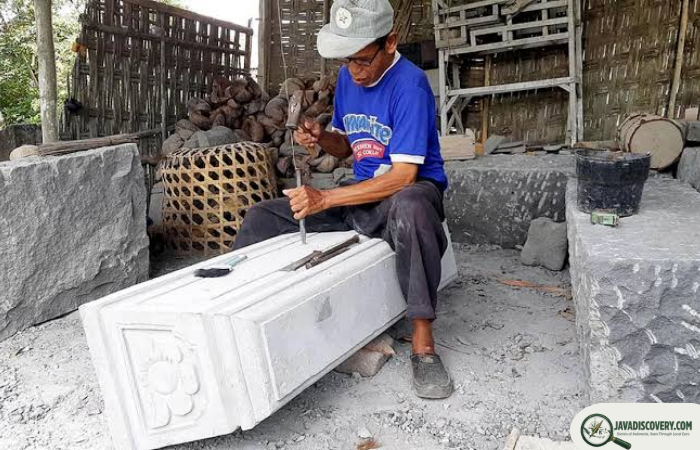
javadiscovery.com – A sharp, rhythmic metallic ringing echoes across the fertile volcanic terraces of Central Java, where the lower slopes of Mount Merapi merge into the historic plains of Magelang and Muntilan. High above the river valleys, in rural stoneworking hamlets like Muni, open-air open yards and covered bamboo sheds are filled with the fine grey dust of pulverized igneous rock. Here, master sculptors (*pengrajin batu*) sit cross-legged beside massive blocks of dark volcanic basalt and andesite. Guided only by hand-forged iron chisels (*tatah batu*), heavy wooden mallets, and an innate sense of classical Javanese iconography, these artisans transform raw, unyielding volcanic boulders into breathtaking temple-grade statues, sacred guardians, and architectural reliefs. In Muni, the ancient stone-carving traditions that built Borobudur and Prambanan continue unbroken, preserving a monumental legacy carved in fire and stone.
Geological Foundations: The Andesite of Merapi’s Lahars
The exceptional quality of Muni’s stone carving is directly tied to the volatile geology of Mount Merapi. Over millennia, periodic volcanic eruptions and cold lahar flows (*lahar dingin*) swept millions of tons of dense volcanic rock down river channels into the Magelang basin:
- Volcanic Andesite and Basalt: Unlike soft European marble or porous limestone, Javanese volcanic andesite is extremely dense, tough, and weather-resistant. Formed under extreme pressure and rapid cooling, its fine-grained matrix allows for sharp, durable detail while enduring centuries of tropical monsoon rains.
- Sustainable Quarrying from Riverbeds: Rather than blasting open pristine mountain faces, Muni’s carvers source raw stone directly from riverbeds like the Pabelan and Progo rivers. Local collectors harvest naturally weathered boulders deposited by seasonal volcanic flows, ensuring a sustainable supply of high-grade raw material.
- Selecting the Stone (*Pilih Batu*): Master carvers inspect raw boulders by striking them with iron rods. A clear, bell-like ring indicates a solid, crack-free internal structure suitable for intricate temple-grade carving, whereas a dull thud reveals internal fissures that could shatter under the chisel.
The Classical Craft: Tools, Proportions, and Technique
Creating a temple-grade sculpture—such as a serene Buddha head, a formidable *Dwarapala* temple guardian, or an intricate relief panel—demands extraordinary physical strength, patience, and strict adherence to classical Javanese aesthetic proportions:
- Roughing Out the Block (*Ngethuk*): Using heavy iron wedges and sledgehammers, artisans split massive boulders into rough geometric blocks. They mark basic contours using charcoal lines and wooden calipers.
- Chiseling the Forms (*Mahat Formasi*): Transitioning to finer hand-forged steel chisels, carvers remove excess stone layer by layer. The artisan works entirely by hand, constantly feeling the stone’s grain to prevent unwanted fractures.
- Classical Iconography (*Pakem Silpasastra*): Sacred sculptures follow traditional proportions derived from ancient Javanese and Indian architectural treatises (*Silpasastra*). The facial expressions, crown details, mudras (hand gestures), and lotus bases are carved with exact mathematical symmetry to convey spiritual tranquility.
- Natural Water Polishing (*Ngempos*): Modern chemical sealants are strictly avoided. Final surface smoothing is achieved using water, river sand, and volcanic pumice stones. Rubbing the stone wet brings out the deep, velvety charcoal-grey hue characteristic of classical Javanese temple art.
Sustaining Java’s Monumental Heritage
Muni’s master carvers do not merely create decorative garden art; they play a crucial role in preserving Southeast Asia’s greatest archaeological monuments:
- Restoration of Ancient Temples (*Candi*): When governmental conservation bodies restore ninth-century Hindu and Buddhist temples across Central Java and Yogyakarta, they frequently call upon Muni’s master sculptors to carve replacement stones, gargoyles (*makara*), and missing relief sections using identical historical techniques.
- Architectural Innovations: Beyond historical restoration, Muni’s studios collaborate with international architects to craft custom bas-relief panels, stone fountains, and sculptural installations for luxury eco-resorts and private collections around the world.
- Intergenerational Mentorship: Young apprentices learn the trade alongside veteran masters, spending years mastering basic stone-shaping tools before being trusted to carve sacred facial features or intricate floral motifs.
The Living Soul of Javanese Volcanic Rock
In a world dominated by mass-produced synthetic stone and automated CNC carving lasers, the hand carvers of Muni remain dedicated to the physical dialogue between human hands, iron chisels, and volcanic stone. Their work stands as a testament to Javanese endurance, proving that human skill and ancestral devotion can carve timeless beauty out of the earth’s fiercest materials.
Beside the flowing rivers of Magelang, as grey dust settles and the evening mist rolls down from Merapi, the rhythmic ringing of chisels in Muni continues—carving the living spirit of Java into everlasting stone.