Gold Leaf Gilders Prada Royal Court Garments Furniture Java

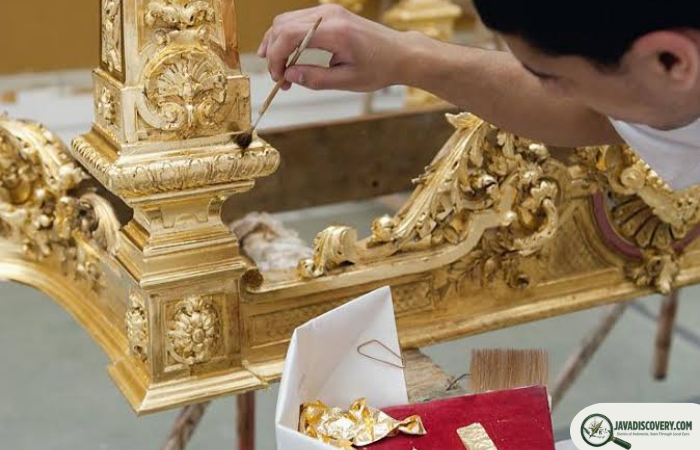
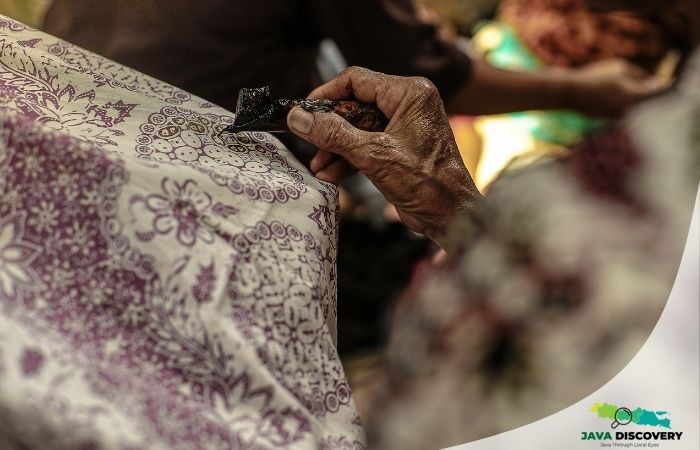
javadiscovery.com – A serene, almost reverent quiet hangs over the secluded artisan quarters of Surakarta and Yogyakarta. Inside traditional timber-frame workshops (*bengkel kriya*), shielded from sudden gusts of wind that could destroy delicate materials, master gilders (*pengrajin prada*) sit motionless over low teak worktables. Holding their breath to avoid scattering gossamer-thin sheets of beaten gold leaf (*kertas emas*), these artisans maneuver fine squirrel-hair brushes and bamboo styluses with razor-sharp focus. Known across Java as the ancient art of prada (or prado), this specialized technique involves applying real gold leaf or gold dust onto hand-drawn batik textiles, royal dance costumes, and carved wooden court furniture. Rooted in the regal grandeur of the Mataram courts, the art of *prada* transforms ordinary silk, cotton, and teak into radiant, shimmering masterpieces fit for kings, deities, and sacred royal rituals.
Regal Cosmology: Gold as Divine Light in Javanese Courts
The practice of gilding textiles and wood with real gold leaf is far more than a decorative luxury in Javanese court philosophy (*Kraton*). Gold carries profound cosmological, spiritual, and social symbolism within traditional Javanese royalty:
- Symbol of Divine Luminescence (*Sinar Ilahi*): Gold represents purity, cosmic power, and the unyielding light of the divine. When worn by a Sultan, royal bride, or sacred court dancer, gold-gilded garments (*batik prada*) reflect light in dark palace halls, symbolizing the ruler’s role as the spiritual sun of the kingdom.
- Feudal Sumptuary Codes: Historically, genuine gold leaf application was restricted strictly to royal family members, high nobility (*priyayi*), and sacred court performers. Specific classical batik patterns—such as *Parang Rusak* and *Semen Rama*—were reserved for royal gilding (*gebeng*).
- Preserving Sacral Furniture: In addition to royal textiles, master gilders covered sacred royal thrones (*dampar*), wayang storage chests (*kotak wayang*), classical gamelan frames, and palace doors with gold leaf to protect the wood while exuding divine majesty.
The Alchemy of Prada: Materials and Delicate Application
Applying gold leaf to flexible cloth or carved hardwood requires absolute mastery over specialized adhesives, environmental conditions, and delicate material handling. The traditional *prada* process demands immaculate cleanliness and patience:
- 1. Surface Preparation (*Sizing*): Before gold leaf can adhere, artisans apply a precise coat of natural adhesive size (*ancur*) onto the drawn textile line or sealed wood carving. Traditional sizes are prepared from refined fish glue, tree resins (*damar*), or egg whites mixed with fine lime water to create a tacky, smooth base.
- 2. Handling the Gold Leaf (*Nempel Emas*): Genuine 24-karat gold leaf is beaten so thin that a single breath can tear or crumple it. Using fine bamboo tweezers (*capit bambu*) or static-charged animal hair brushes, the master gilder gently lifts a floating square of gold leaf and presses it precisely over the wet adhesive size.
- 3. Burnishing and Setting (*Gosok*): Once the adhesive begins to set, the gilder uses smooth agate stones or wild boar teeth to gently burnish the gold leaf. The friction and pressure flatten the gold into a seamless, mirror-like metallic luster, fusing it permanently into the fabric fibers or wooden grain.
- 4. Detailing and Outlining (*Nyungging*): For gilded textiles (*batik prada*), fine ink outlines are drawn around the gilded borders to make the shimmering gold motifs pop against deep indigo or soga-brown batik backgrounds.
Modern Innovations vs. Classical Craft Integrity
During the late 20th century, the introduction of cheap metallic bronze powders and synthetic foil prints (*prada sintetis*) flooded commercial markets, offering inexpensive substitutes for festive wedding attire. However, classical courts, high-end batik houses, and cultural purists continue to champion authentic 24-karat gold leaf application:
- Unmatched Longevity: Synthetic metallic prints tarnish, flake, and oxidize to dull green or grey over time. In contrast, genuine 24-karat gold leaf applied with natural fish glue remains brilliant, untarnished, and radiant for centuries.
- Soft Textile Drape: Authentic gold leaf is so extraordinarily thin that it conforms to the natural weave of cotton and silk without stiffening the cloth, allowing royal dance garments to flow fluidly during performances.
- Restoration of Court Heirlooms: Master gilders play a crucial role in preserving national heritage by restoring antique palace thrones, centuries-old wayang puppets, and historic royal garments preserved inside court museums.
Preserving the Golden Glow of Java’s Heritage
The art of *prada* stands as a glowing bridge between classical Javanese metallurgy, textile design, and royal court aesthetics. Inside the quiet gilding rooms of Solo and Jogja, as master artisans lay paper-thin gold over hand-waxed batik lines and intricate wooden carvings, they preserve more than just metal on wood and cloth—they keep the radiant, golden soul of Java’s royal heritage alive for the world to behold.