The Crater Lakes of Mount Papandayan

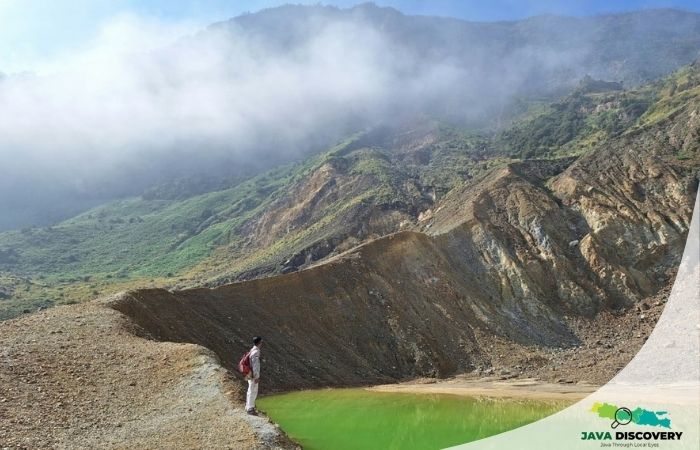
javadiscovery.com – Deep in the highlands of Garut, West Java, lies one of Indonesia’s most fascinating volcanic landscapes — Mount Papandayan. Rising to 2,665 meters above sea level, this semi-active volcano is a natural amphitheater of steaming craters, sulfur-streaked cliffs, and hauntingly beautiful crater lakes. It is both a place of fire and silence, a reminder of how destruction can be reborn into beauty.
The Living Volcano of Garut
Mount Papandayan is among Java’s most accessible active volcanoes, attracting hikers, photographers, and scientists alike. As you approach the mountain from the town of Cisurupan, the smell of sulfur becomes stronger, mingling with the scent of pine forests. The trail opens to a vast, otherworldly plain of gray ash and fumaroles, where the earth breathes through countless vents of steam and heat.
Locals call this area the “Kawah Papandayan,” a living crater complex constantly reshaped by volcanic energy. Every hiss, every wisp of smoke, feels like the mountain whispering ancient secrets beneath its crust.
The Heart of the Crater: Kawah Mas and Beyond
The main attraction, Kawah Mas, is the largest and most active crater of Papandayan. The air is filled with a low rumble, and plumes of vapor dance against the pale sky. The rocks shimmer in tones of gold and white, painted by layers of sulfur crystals that sparkle under the sun. Just nearby lie smaller craters — Kawah Baru, Kawah Nangklak, and Kawah Manuk — each with its own rhythm and personality. Together, they form a natural orchestra of boiling mud, gurgling vents, and echoing gas bursts that seem alive.
The Crater Lakes: Nature’s Mirror in a Fiery Land
Among these craters, pools of water shimmer in shades of turquoise, jade, and milky green. These crater lakes are the result of rainwater mixing with volcanic minerals — a fusion of water and fire that creates surreal colors and textures. Steam rises from their surface like veils of mist, drifting with the wind as the sun’s reflection ripples over the acidic waters.
Standing at the edge of a crater lake, you can feel both awe and unease. The beauty is hypnotic, yet every bubble that breaks the surface reminds you that this mountain is still alive, still dreaming beneath your feet.
From Destruction to Rebirth
In 1772, a catastrophic eruption tore through Mount Papandayan, destroying dozens of nearby villages and reshaping the entire mountain. What was once a single towering peak collapsed into a wide caldera, birthing the landscape seen today. But nature’s resilience has since rewritten that tragedy. Ferns and wildflowers now cling to the slopes, while the upper meadows — especially the famous Tegal Alun — bloom with Edelweiss, the “eternal flower” of Java’s highlands.
The contrast is striking: from the barren, steaming craters below to the green, misty meadows above — Papandayan is a mountain of duality, both fierce and gentle, deadly and nurturing.
A Hiker’s Reward
The trail to the crater area begins from the Papandayan basecamp near Cisurupan. The route is relatively moderate, suitable for both beginners and experienced hikers. Within an hour, visitors can reach the crater complex, while the journey to Tegal Alun takes several more hours through forest trails and steep volcanic ridges. The view at the summit rewards every step — a vast alpine plateau covered in Edelweiss, surrounded by clouds rolling over the volcanic basin below.
It’s best to visit during the dry season, from May to October, when the trails are firm and visibility clear. Due to sulfur gases, it’s important to stay on designated paths and bring a mask or scarf to filter the air.
Where Fire Meets Peace
Mount Papandayan’s crater lakes are living testaments to Java’s volcanic soul — places where the earth reveals both its fury and grace. To stand by their shores is to witness the balance of creation and destruction, a timeless dance that continues beneath the surface of this enchanted island.