House of Sampoerna Surabaya Where Cigarettes Became History

javadiscovery.com – Most people arrive in Surabaya expecting heat, traffic, business districts, and the fast rhythm of Indonesia’s second-largest city.
But hidden inside the historic area of Old Surabaya stands a building that feels frozen in another era entirely.
A place where colonial architecture still whispers stories from the Dutch East Indies.
Where the smell of clove cigarettes drifts softly through old wooden halls.
Where history, industry, culture, and memory collide in surprisingly emotional ways.
Welcome to House of Sampoerna.
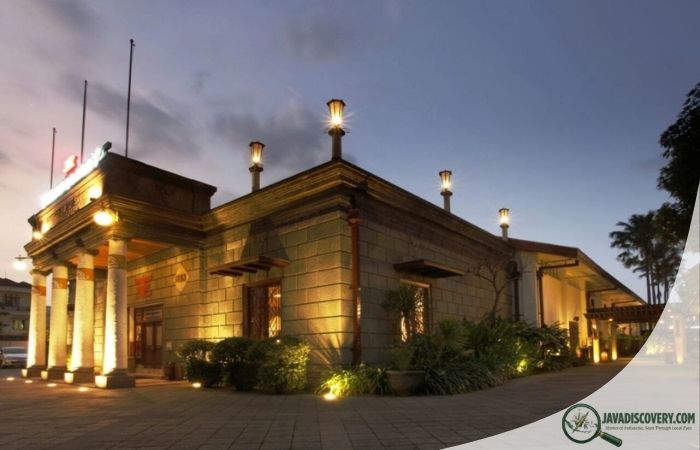
Located inside a beautifully preserved Dutch colonial complex built in 1862, House of Sampoerna is not merely a museum about cigarettes.
It is a museum about Indonesia itself.
Because to understand kretek — Indonesia’s famous clove cigarette — is also to understand labor, culture, economics, family traditions, colonial history, and the everyday life of millions of Indonesians across generations.
The moment visitors step through the entrance gate, the atmosphere changes immediately. Vintage lamps hang from high ceilings. Dark teakwood furniture reflects warm yellow lighting. Old photographs line the walls like silent witnesses from another century.
Outside, Surabaya moves fast.
Inside, time slows down.
A Colonial Building With a Long Journey
Long before becoming one of Surabaya’s most famous museums, the building itself already carried a remarkable history.
Originally constructed during the Dutch colonial period, the complex once functioned as an orphanage managed by the Dutch government.
Decades later, it was transformed into the first major production facility of Sampoerna, one of Indonesia’s most iconic kretek companies.
The architecture still reflects strong European influences, with tall arched windows, thick walls, symmetrical layouts, and elegant interior details rarely found in modern Indonesian buildings.
Walking through the halls feels strangely cinematic.
At certain moments, it almost feels like stepping into an old historical film set rather than a museum.
And perhaps that atmosphere is exactly what makes House of Sampoerna so memorable.
It does not simply display history.
It allows visitors to physically walk inside it.
The Story of Indonesia’s Kretek Culture
At the heart of the museum lies the story of kretek itself.
For international visitors unfamiliar with Indonesia, kretek is a traditional clove cigarette made from a mixture of tobacco and cloves.
The crackling sound created when burning cloves is what inspired the name kretek.
For over a century, kretek has become deeply woven into Indonesian social life.
It appears in street cafés, village gatherings, harbor towns, roadside warungs, and conversations lasting late into the night.
Inside the museum, visitors can explore antique cigarette-making equipment, old advertisements, vintage packaging, historical documents, and photographs showing the evolution of Indonesia’s tobacco industry.
Some displays feel artistic.
Others feel surprisingly personal.
There are old family portraits, handwritten records, and artifacts that reveal how one family business slowly grew into a nationally recognized company.
Even for visitors who do not smoke, the museum remains fascinating because the storytelling extends far beyond cigarettes themselves.
This is ultimately a story about Indonesian identity, entrepreneurship, labor, and survival across changing political eras.
The Famous Hand-Rolled Cigarette Production Area
One of the most fascinating experiences inside House of Sampoerna is watching the traditional hand-rolled kretek production process.
Behind large glass windows, rows of workers sit side by side rolling cigarettes with astonishing speed and precision.
Their hands move almost mechanically.
Fast.
Consistent.
Rhythmic.
For many visitors, this becomes the most unforgettable part of the museum.
Not because of the cigarettes themselves, but because of the human skill involved.
Each worker can produce hundreds of hand-rolled kretek cigarettes every hour using techniques refined through years of experience.
There is something strangely mesmerizing about watching the process.
It feels repetitive yet deeply artistic at the same time.
In an age dominated by automation and digital technology, seeing craftsmanship performed manually on such a scale feels increasingly rare.
Vintage Cars and the Lifestyle of Another Era
Beyond the museum galleries, House of Sampoerna also displays a collection of vintage automobiles that once belonged to the Sampoerna family.
Classic luxury cars stand elegantly beneath colonial ceilings, reflecting another chapter of Indonesian history.
Some vehicles look like they came directly from old European films.
Long body lines.
Chrome accents.
Timeless silhouettes from the mid-20th century.
Together with the surrounding architecture, the cars help create an atmosphere that feels nostalgic without becoming artificial.
Every corner of the museum seems carefully designed for storytelling.
And for photographers, the location is honestly a dream.
The combination of colonial textures, warm lighting, vintage artifacts, and cinematic interiors creates endless opportunities for visual exploration.
The Art Gallery and Cultural Space
House of Sampoerna is not only about preserving the past.
It also functions as an active cultural space.
Temporary exhibitions, art displays, cultural performances, and creative events are regularly held throughout the complex.
This creates an interesting contrast inside the museum.
One side celebrates history.
The other continues evolving with contemporary Indonesian creativity.
That balance makes the entire experience feel alive rather than static.
Visitors are not simply observing old objects trapped behind glass.
They are witnessing how history continues interacting with modern Indonesian culture today.
A Free Surabaya Heritage Bus Experience
Another unique feature of House of Sampoerna is its famous Surabaya Heritage Track.
This free bus tour allows visitors to explore historical parts of Surabaya using classic-style buses operated by the museum.
The tour passes colonial buildings, historical districts, and important landmarks connected to Surabaya’s identity as one of Indonesia’s oldest trading cities.
For travelers visiting Surabaya for the first time, this becomes an excellent introduction to the city’s layered history.
Many tourists are surprised to discover how rich Surabaya’s colonial architecture and heritage actually are.
Because outside Indonesia, Surabaya is often overshadowed by Jakarta, Bali, or Yogyakarta.
Yet historically, Surabaya played a massive role in trade, revolution, industry, and Indonesian independence.
More Than Just a Museum
What makes House of Sampoerna special is that it never feels one-dimensional.
It is simultaneously a museum, historical site, cultural center, architectural landmark, photography destination, and social space.
Some visitors come because they love history.
Others come for architecture.
Some arrive simply out of curiosity.
And many leave unexpectedly emotional.
Because beneath all the exhibits and artifacts, House of Sampoerna quietly tells a much larger story about Indonesia’s transformation through time.
Colonialism.
Industry.
Family business.
Urban growth.
Traditional craftsmanship.
Modern identity.
All connected inside one remarkable building.
House of Sampoerna Opening Hours
- Every Day: 09:00 – 18:00
- Entrance Fee: Free
A Hidden Historical Gem in Surabaya
In a rapidly modernizing city filled with malls and traffic, House of Sampoerna offers something increasingly rare.
A sense of continuity.
A reminder that cities are built not only from concrete and glass, but also from stories, labor, memory, and culture.
Whether you are interested in architecture, photography, Indonesian history, cultural exploration, or simply searching for unusual places in Surabaya, House of Sampoerna deserves a place on your itinerary.
Because this is not simply a museum about cigarettes.
It is a museum about Indonesia’s journey through time.