Kejawen Understanding Java Quiet Spiritual Philosophy

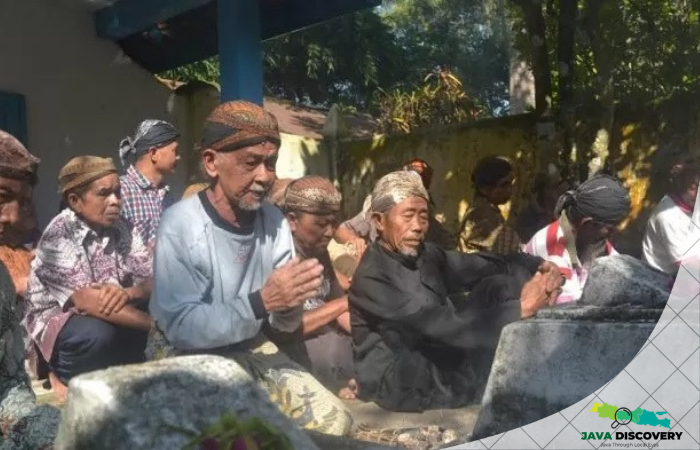
javadiscovery.com – At dawn in a Javanese village, when mist clings to rice fields and roosters call across narrow lanes, spirituality is already present. It moves quietly through gestures, through pauses in conversation, through the way elders sit cross-legged facing the morning light. This is the world of Kejawen — a spiritual philosophy shaped not by doctrine, but by lived balance.
Kejawen is not announced. It does not demand allegiance or conversion. It is felt in restraint, in harmony, and in the discipline of knowing one’s place within the universe. For centuries, it has guided how Javanese people walk, speak, farm, govern, pray, and endure.
A Spiritual Philosophy, Not a Religion
Kejawen is often misunderstood as a religion, yet those who practice it insist otherwise. It has no prophets, no holy book, no formal congregation. Instead, Kejawen is best understood as a philosophical framework — a way of perceiving existence.
Rooted in pre-Islamic Javanese belief systems, Kejawen absorbed influences from Hinduism, Buddhism, and later Islam, not by replacing earlier layers but by weaving them together. Animism and dynamism — the belief that spirits inhabit natural and man-made objects — form its oldest foundation.
Over time, these beliefs were refined into a worldview that values inner awareness over outward expression. Kejawen teaches that spiritual truth is not proclaimed, but discovered.
Sangkan Paraning Dumadi
Understanding Origin and Return
At the heart of Kejawen lies the concept of Sangkan Paraning Dumadi — an inquiry into where humans come from and where they ultimately return. This philosophy encourages constant reflection on life’s purpose, urging individuals to recognize their origin in the divine and their responsibility to return in spiritual clarity.
God is understood as singular and absolute, yet beyond rigid description. Rather than debating theology, Kejawen focuses on alignment — aligning thought, action, and intention with cosmic order.
In this sense, morality is not enforced externally. It is cultivated internally.
Harmony as the Highest Virtue
Harmony, or rukun, is the central pillar of Kejawen. Social conflict is avoided not out of fear, but out of respect for balance. Words are chosen carefully. Emotions are restrained. Silence is often more valued than speech.
In daily life, this philosophy manifests subtly. A disagreement may never be voiced directly. Advice is offered through parables. Correction is delivered with gentleness. Maintaining collective harmony is considered more important than asserting individual truth.
This quiet discipline is often misinterpreted as passivity. In reality, it requires immense self-control.
Inner Discipline and Spiritual Refinement
Kejawen emphasizes the refinement of the inner self through discipline. Practices such as fasting, meditation, and silent contemplation are common, though rarely performed publicly.
One of the most well-known practices is tirakat — a form of spiritual restraint that may involve abstaining from food, sleep, or speech. The purpose is not punishment, but purification.
Through self-restraint, individuals learn to listen — not only to their inner conscience, but to the subtle rhythms of the universe.
Living With the Seen and the Unseen
For followers of Kejawen, the world is layered. The physical realm exists alongside the unseen — ancestral spirits, guardians of land and water, and forces that cannot be measured but are deeply felt.
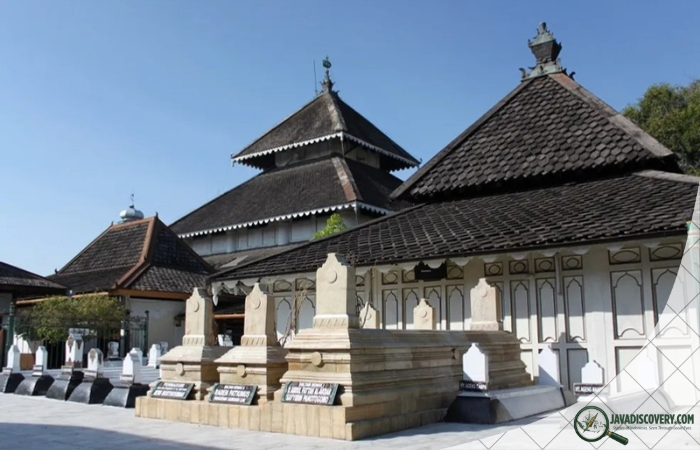
Sacred places are not marked by grandeur. A banyan tree at a crossroads, a quiet spring near a hill, or an old grave shaded by bamboo may hold profound spiritual significance.
Respect is shown through offerings, silence, and mindful behavior rather than ritual spectacle.
Kejawen and Organized Religion
Contrary to popular assumption, Kejawen does not reject organized religion. Most Javanese who follow Kejawen are also devout practitioners of Islam, Christianity, Hinduism, or Buddhism.
This coexistence has given rise to expressions such as Islam Kejawen or Hindu Kejawen — not separate faiths, but cultural interpretations that preserve Javanese values alongside formal religious practice.
Prayer is performed as prescribed by religion, while Kejawen provides the ethical and philosophical lens through which life is lived.
Rituals as Cultural Memory
Many Javanese rituals still practiced today originate from Kejawen philosophy. Nyadran, a communal grave-cleaning ritual before the fasting month, reflects respect for ancestors and continuity between generations.
Mitoni, held during the seventh month of a woman’s first pregnancy, symbolizes protection and hope for harmony in the child’s future life.
Tedhak siten marks a child’s first steps on the earth, acknowledging life as a sacred journey requiring guidance and balance.
Kejawen in the Modern World
In contemporary Java, Kejawen faces both neglect and revival. Urbanization, formalized religion, and digital life have distanced many young Javanese from its philosophical roots.
Yet in moments of crisis, uncertainty, or personal struggle, Kejawen quietly returns — in reflection, in restraint, in the search for inner calm.
It survives not as a system to be defended, but as wisdom to be remembered.
A Quiet Path That Endures
Kejawen does not promise salvation. It offers understanding. It does not chase transcendence. It cultivates balance.
In a world increasingly defined by noise, assertion, and division, Kejawen remains a quiet reminder that spirituality can exist without spectacle — and that sometimes, the deepest truths are spoken softly.