Religious Harmony Shaped the Legacy of Sojiwan Temple in Klaten

javadiscovery.com – When the British ruled Java under Thomas Stamford Raffles in the early 19th century, the island’s ancient temples once again stirred scholarly curiosity. Raffles, captivated by Java’s timeless grandeur, sent his surveyor Colonel Colin Mackenzie to document the remnants of the Prambanan complex. Among his findings stood a little-known Buddhist sanctuary — Candi Sojiwan.
Rediscovering a Forgotten Temple
Mackenzie’s 1813 report to Raffles mentioned twin dwarapala statues guarding the site, a main temple adorned with sixteen animal reliefs, and an inscription written in Devanagari script — evidence of strong Indian influence. Later Dutch scholars such as Brumund, Hoepermans, and Verbeek debated its name, alternately calling it Candi Kalongan, Candi Assu, and finally Candi Sojiwan — a designation that endures today.
The temple, built in the mid-9th century by King Balitung of the Mataram Kingdom, was dedicated to his grandmother, Nini Haji Rakryan Sanjiwana, a devout Buddhist noblewoman. This devotion is immortalized in the Rukam Inscription dated 907 CE, which records Balitung’s offering of a sacred Buddhist monument in her honor.
A Testament to Interfaith Unity
Located in Kebon Dalem Kidul village, Prambanan District, Klaten, Sojiwan Temple stands as a graceful witness to religious coexistence. As noted by cultural researcher Yosep Riva Argadia in the Profil Budaya dan Bahasa Kabupaten Klaten (2020), the temple sits within the “Siwa Plateau,” a region rich with both Hindu and Buddhist sanctuaries — proof that Java’s ancestors lived in harmony long before modern concepts of tolerance emerged.
This harmony found its grandest symbol in the 9th-century royal marriage between Pramodhawardhani, a Buddhist princess, and Rakai Pikatan, a Hindu prince. Their union not only united two faiths but also inspired artistic collaborations such as the construction of Candi Plaosan — a Buddhist complex built by a Hindu ruler for his beloved Buddhist queen.
Shared Symbolism in Stone
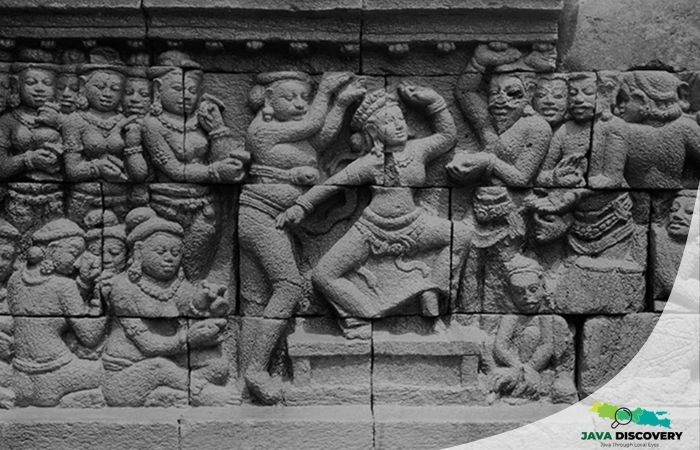
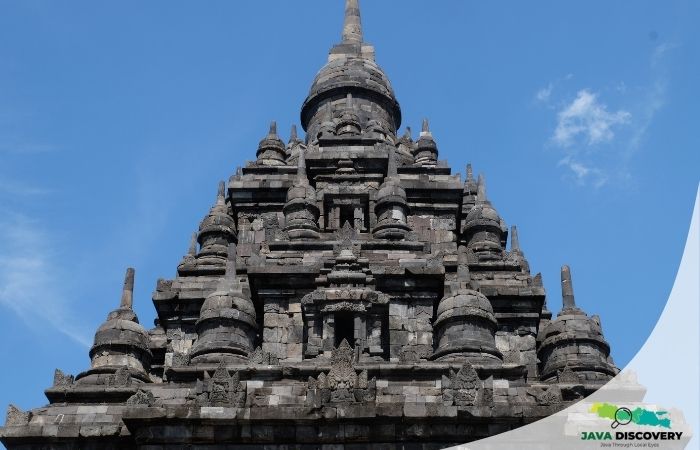
Although Sojiwan is architecturally Buddhist, traces of Hindu aesthetics remain visible in its structure. The arupadhatu level — crowned with small stupas — reflects Buddhist cosmology, yet certain reliefs reveal motifs from Hindu epics. As art researcher Choirulnisah Trisnayanti noted in her 2015 thesis at ISI Surakarta, the temple’s panels depict stories from both the Jataka (Buddhist fables) and the Panchatantra (Hindu moral tales), merging two moral worlds into one sacred narrative.
Such syncretism defined the Mataram period, giving birth to a landscape of temples that echo shared devotion rather than division. Candi Sojiwan, framed by the nearby Hindu shrines of Prambanan, remains one of the clearest embodiments of that spirit.
Living Harmony Around the Temple
Today, Sojiwan’s surroundings still pulse with the same sense of coexistence. Daru Purnomo, secretary of Kebon Dalem Kidul village, describes how local Muslims and Buddhists continue to support one another. Mosques stand side by side with the ancient sanctuary, and each year, when Vesak is celebrated at Sojiwan by the Sangha Mahayana Indonesia, the community works together — Muslims providing food stalls, public facilities, and homestays for visiting pilgrims.
On the day of Vesak, the air fills with both the gentle chant of mantras and the melodic call to prayer — a soundscape that perfectly captures the enduring balance between faiths.
Sojiwan Temple is more than stone and reliefs — it is a living reminder that harmony, not hegemony, built the cultural soul of Java.