How Jakarta’s Public Transit System Earned Global Recognition

javadiscovery.com – At Dukuh Atas station, the handoff happens in seconds. A commuter steps off a commuter rail carriage, taps a single card at the gate, and climbs toward a waiting MRT platform. No second ticket, no separate queue — just one motion between two different transit systems.
That small transaction is part of why Jakarta now appears on a list most Indonesian cities have never come close to: the Oliver Wyman Forum’s 2024 Urban Mobility Readiness Index, which ranks 70 major cities worldwide on how well they move people. According to the index, Jakarta placed 28th globally and 7th among Asian cities on the report’s Public Transit sub-index.
It is worth being precise about what that means. Twenty-eighth out of seventy is a mid-table position, not a top-tier one — and in earlier editions of the same index, Jakarta placed considerably further down. The improvement is real, but it is a trajectory, not a finished achievement.
What the Index Actually Measures
The Urban Mobility Readiness Index is compiled annually by the Oliver Wyman Forum in partnership with the University of California, Berkeley. Its Public Transit sub-index looks at metrics like transit commute speed, station density, and how well different modes connect into a single network.
Jakarta’s score, reported at 52.6 percent on this sub-index, reflects a system built from pieces that used to operate in isolation: TransJakarta’s bus corridors, the MRT’s north-south line, the LRT, and a commuter rail network that once felt like a separate city unto itself.
The Machinery Behind the Score
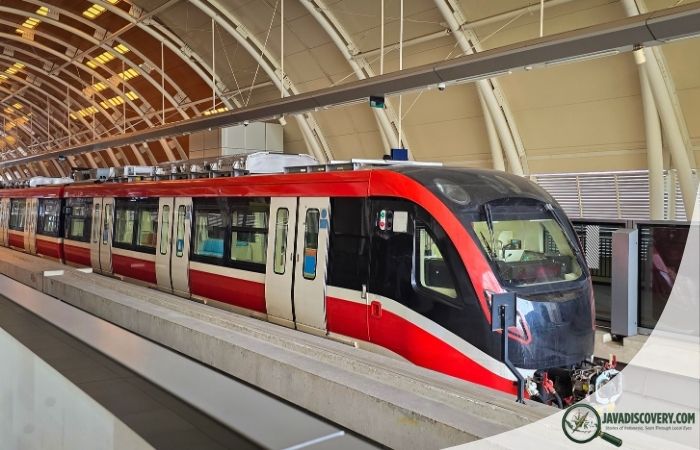
TransJakarta remains the backbone — a bus rapid transit network of dedicated corridors that carries the largest share of daily riders. The MRT, still expanding, threads through the city’s densest business districts. The LRT connects newer residential corridors on the eastern edge of the city.
Public transit in Jakarta reportedly operates for close to 19 hours a day, according to the same report, a window long enough to serve both the early market crowd and the last commuter home from a late shift.
One Card, One Fare
JakLingko, the city’s integrated payment platform, is the connective tissue behind these numbers. Riders plan a multimodal trip and pay for it in a single transaction, rather than juggling separate tickets for separate operators — a detail that matters more to daily commuters than any global ranking.
What the Ranking Doesn’t Show
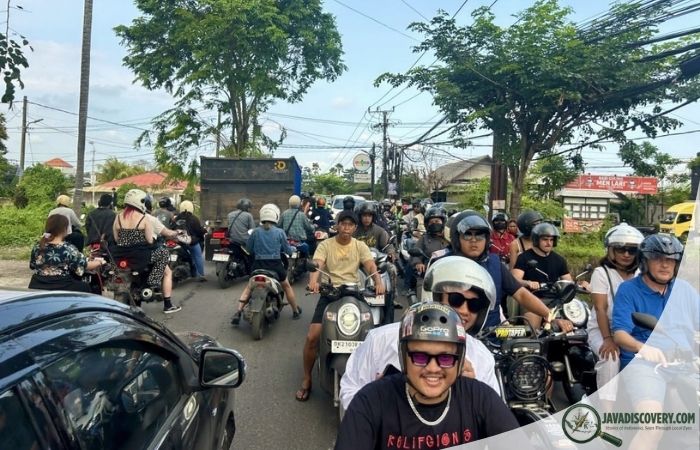
None of this erases what riders still contend with every day. Jakarta’s roads remain some of the most congested in Southeast Asia, and the transit network’s reach thins out quickly once you leave the central corridors. A commuter in South Jakarta might glide through an efficient MRT ride only to spend twenty minutes navigating a motorbike taxi to reach the nearest station.
The index measures infrastructure and system design. It does not measure the gap between a well-run trunk line and the unpredictable last mile that surrounds it.
Tunnels, Fare Policy, and the Fight for Road Space
Some of Jakarta’s more visible interventions sit below street level. An underground pedestrian tunnel now links six different transit modes at once, cutting down the chaotic street crossings that once separated one station from another.
Above ground, the city’s odd-even license plate policy restricts private vehicle access on major roads during peak hours, an attempt to nudge commuters toward the public system rather than adding another car to the jam. Ticket subsidies keep fares low enough that switching from a private vehicle is a real financial choice, not just an environmental one.
The Unfinished 15-Minute City
Jakarta’s transit authorities have also begun talking about a 15-minute city — a model where work, school, healthcare, and green space all sit within a short walk, bike ride, or transit hop from home. The city’s MRT expansion, backed by a mix of private investment and foreign loans, is partly framed around this goal.
It remains an ambition more than a reality. Jakarta’s density and its traffic patterns mean the 15-minute city cannot simply be layered onto the current street grid — it would require the city to be rebuilt around people rather than roads, a process that has barely begun.
A rising number on a global index is easy to publish. What it actually costs to close the gap between Dukuh Atas station and a random alley in Tebet is the harder story, and Jakarta hasn’t finished writing it.