How Faith and Art Intertwine in Javanese Life


javadiscovery.com – In Java, art has never been merely decoration — it has always been a language of the soul. From the delicate strokes of a batik artisan to the resonant clang of a gamelan gong, every creation carries the vibration of belief. Here, faith and art do not stand apart; they are woven together, forming the very fabric of Javanese identity.
The Sacred Roots of Creativity
Centuries before the arrival of modern religions, the Javanese had already viewed the world as a sacred continuum between the seen and unseen realms. Every tree, stone, and shadow possessed a spirit. This animistic worldview became the foundation for artistic expression — art was not made for fame or commerce, but as a form of communication with the divine.
When Hinduism and Buddhism arrived in Java around the 4th century, they found a land already deeply spiritual. Rather than replacing local beliefs, these new faiths merged with them, producing temples like Borobudur and Prambanan that are both architectural marvels and spiritual mandalas carved in stone. Each relief tells a moral story — the triumph of virtue, the cycle of rebirth, the eternal pursuit of balance.
Batik: The Prayer in Patterns
Perhaps nothing captures the union of art and faith better than batik. To outsiders, batik may seem like a textile art of geometric beauty, but to the Javanese, it is a prayer drawn in wax. Every motif — parang, kawung, truntum — carries philosophical meaning. The parang pattern, once reserved for kings, symbolizes unending spirit and moral strength. The kawung, resembling a cross-section of a palm fruit, represents purity and self-control. The process itself, from chanting mantras before beginning to the meditative repetition of dots and lines, is a spiritual act of devotion.
Wayang: Shadows of the Soul
As night falls in a Javanese village, shadows dance on a white cotton screen. The dalang, or puppet master, sits behind it, manipulating leather puppets known as wayang kulit. The audience watches stories from the Mahabharata and Ramayana unfold, yet each story is localized, imbued with Javanese philosophy. Here, wayang is not mere entertainment — it is a sermon, an allegory of the inner battle between light and darkness within the human heart.
“Wayang speaks to our conscience,” said Ki Purbo Asmoro, a renowned dalang from Surakarta. “The puppets are not characters from India; they are mirrors of our own souls.” Indeed, the moral lessons of patience, humility, and harmony echo through every performance, bridging art, philosophy, and faith.
Temples and the Architecture of Devotion
The physical landscape of Java itself is a canvas of faith expressed through architecture. From the towering spires of Prambanan to the serene terraces of Borobudur, these temples are not simply places of worship — they are stone scriptures. Each carving is deliberate, each angle aligned with cosmic geometry. The walls of Candi Jago and Candi Sukuh even depict syncretic stories where Hindu deities coexist with local ancestral spirits and Tantric symbols, illustrating the inclusiveness of Javanese spirituality.
Kejawen: The Living Philosophy
Beyond institutional religion lies kejawen — the indigenous Javanese spiritual path that emphasizes harmony between the self, society, and the cosmos. For many Javanese, art becomes the medium to maintain this harmony. Dance, for instance, is more than movement; it is a meditation. The slow, graceful gestures of a court dancer in Yogyakarta reflect self-control and inner balance. The rhythm of gamelan music, too, is seen as a model for cosmic order — no single instrument dominates; all coexist in unity, mirroring the Javanese ideal of rukun (harmony).
Modern Expressions, Timeless Spirit
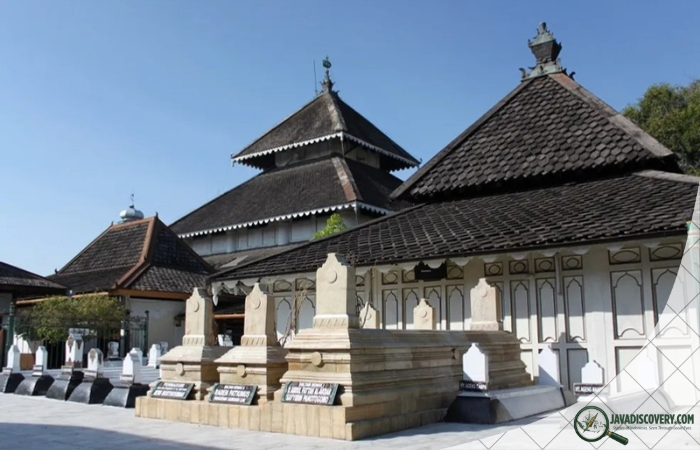
Even in modern Java, where skyscrapers rise beside ancient mosques and temples, the dialogue between art and faith continues. Contemporary artists like Heri Dono reinterpret wayang into surreal installations, blending humor and spirituality. Young batik designers infuse old motifs with new narratives, speaking of environmental ethics or social change. Street murals in Yogyakarta and Bandung, painted with divine symbols and mythic figures, show that the Javanese spirit of blending the sacred and the creative endures through time.
The Eternal Dance Between Seen and Unseen
In Javanese thought, there is no rigid boundary between the spiritual and the artistic — both emerge from the same quest to understand existence. Whether carved in stone, sung in gamelan notes, or traced in molten wax, each artistic expression becomes a humble offering to the universe. To create is to pray; to appreciate beauty is to witness the divine.
Perhaps that is why art in Java never truly grows old. It is not a relic of the past, but a living pulse of faith — still breathing, still whispering, still reminding the island of who it is and what it believes.