Hidden Shores of Banten and Java’s Untouched Coastal Beauty

javadiscovery.com – On the far western rim of Java, where the island exhales into the Sunda Strait, lies a coastline that moves at the pace of tides, not traffic. Banten has always been a threshold—between ocean and rainforest, kingdoms and trade winds—yet its shores remain strangely quiet. Here, beaches arrive without fanfare, villages keep their rhythm, and history sleeps beneath the whisper of casuarina trees.
The Hidden Shores of Sawarna
Approaching Sawarna, the road narrows into swaying coconut groves and limestone hills. The sea reveals itself in a sudden sweep: turquoise pools carving through volcanic rock, long crescents of pale sand, cliffs that catch the last copper light of afternoon. Beyond the postcard, a fishing village hums—a wooden jetty, salted nets drying on bamboo, the thrum of small engines returning at dusk.
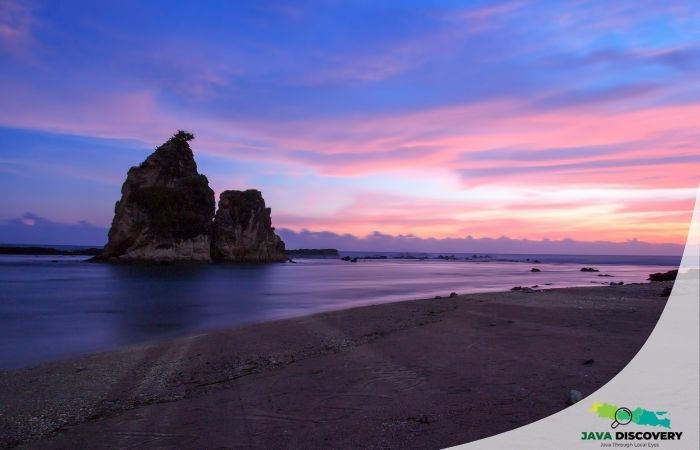
Waves break cleanly along Tanjung Layar’s iconic twin rocks, sculpted like sails by centuries of wind. On quieter mornings, the lagoon lies glassy, and the reef flashes with darting fish. Locals steer visitors toward gentler coves and keep heavier footprints away from vulnerable tide zones—a small, steady choreography of care that keeps Sawarna unspoiled.
Ujung Kulon: Where Wilderness Meets the Sea
Beyond the last village tracks, the forest of Ujung Kulon leans into the ocean. It is one of Southeast Asia’s rare places where lowland rainforest kisses a coral-bright coast. Trails run under canopies threaded with lianas; hornbills cross the sky like dark punctuation. On the sandy edges, macaque prints mingle with the delicate stitching of shorebirds.
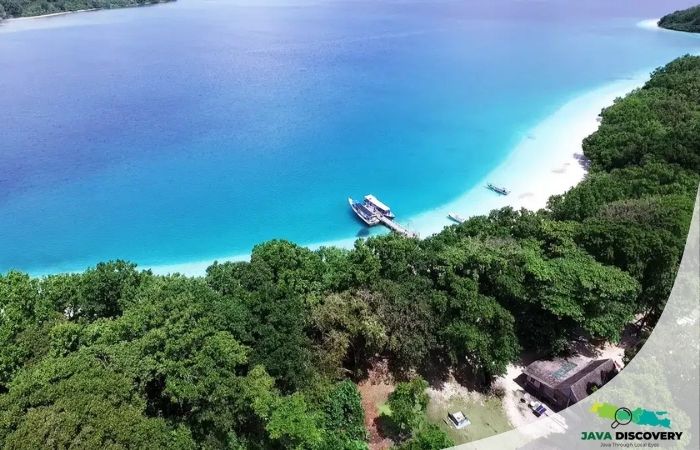
Ujung Kulon is best known as a sanctuary—the last refuge of the critically endangered Javan rhinoceros. Visitors will never chase them; protection here is defined by distance and restraint. Instead, the park opens other doors: island-dotted bays, beaches where turtle tracks ribbon the night, mangrove creeks where water mirrors the forest. Boats skim toward Peucang and Handeuleum, anchoring at shallows as clear as blown glass. The sea is quiet, but the wilderness is not; it breathes in waves and leaf-rush and the sudden splash of a monitor lizard slipping from a root.
Tanjung Lesung: A Quiet Window to Krakatoa
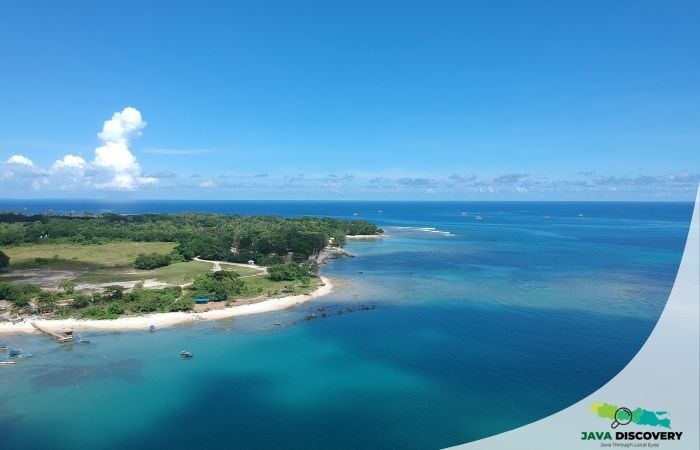
On calm days, the silhouette of Krakatoa stands like a charcoal sketch on the horizon, a reminder that this coast is drawn by both time and eruption. Tanjung Lesung spreads along soft, white-sand coves where coral gardens rest just offshore. Inlets cradle small boats, and some resorts sit back from the beach behind living green buffers—frangipani, pandanus, and sea pine—an architecture of restraint that lets the coast remain itself.
Walk the shoreline and the air smells faintly of salt and sun-warmed limestone. In the late afternoon, the strait shifts from jade to pewter, and the islands sharpen into view. Community initiatives have grown with the tide: beach clean-ups after storms, reef-safe practices for divers and snorkelers, and craft markets that turn local skills into livelihood. The reward is not spectacle but serenity.
People of the Edge: Work, Ritual, and the Sea
Banten’s coast is a mosaic of communities knit together by fishing seasons, market days, and tidal calendars. The men launch before dawn; the women sort, smoke, and spice; children learn the names of currents before they memorize the alphabet of cities. In some markets you will hear Makassar words traded with Sundanese intonations—echoes of sailors and migrants who once stretched sails across these same waters.
Food is a shoreline language. Grilled stingray brushed with sweet-spicy sambal, ikan asin crisped to a briny crackle, coconut-laced vegetables bright with kemangi. Meals are simple, quick, and tethered to the catch. Even rituals tilt toward the sea: offerings of flowers and rice set adrift, prayers murmured into the wind, gratitude folded into work.
Echoes of an Ocean-Facing History
Long before highways mapped Java, the sea mapped Banten. The Old Banten Port once tied the island to the world—Arab dhows, Chinese junks, and European ships riding anchor where the river met the tide. Today, the ruins of Surosowan and Kaibon palaces stand inland like weathered epilogues. Moss softens the stones; herons perch on broken arches. Walk these sites and you feel the old geometry: how power and trade radiated outward to the coast, and how the coast, in turn, drew the world in.
Harbors of Memory
Every shoreline keeps its own archive. In Banten, it’s in the names of headlands, in the stories exchanged over coffee in roadside kiosks, in the way boatbuilders still read timber for strength and grain. The present is not a rupture but a tide that returns different and the same.
Travel Gently, Listen Closely
To visit Banten’s coast is to step into a quieter register of travel. There are places to swim and wander, reefs to float above, ruins to contemplate—but the true gift is pace. Here the sea writes the itinerary. The best thing a visitor can bring is attention: to reef etiquette, to village rhythms, to the fragile edges where forest, sand, and tide meet.
Stand on the evening shore and you will feel it—that hush just before the first stars appear. Banten’s beauty is not hidden; it is simply unhurried. Keep it that way.