Why a Cup of Tea in East Java Is Never Just a Cup of Tea

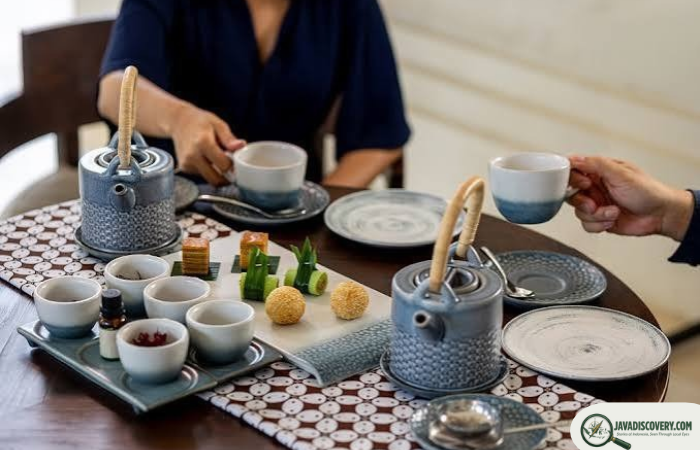
You have barely sat down when the glass arrives. It is often tea, often sweet, sometimes still steaming, and it is set in front of you before you have asked for anything or your host has learned why you came.
To a first-time visitor, it looks like a small courtesy. In much of East Java, it is closer to a sentence spoken without words: you are seen, you are welcome, and for now you are under this household’s care.
Understanding that sentence is the difference between passing through East Java and being received by it.
The Guest Who Is Never Just a Guest
Across Java, many residents speak of guests with a seriousness that can surprise outsiders. Welcoming a visitor is widely regarded as a matter of honor and belonging, not merely good manners.
Two ideas sit beneath much of this. Rukun is commonly translated as social harmony, the effort to keep relationships smooth and quarrels quiet. Unggah-ungguh refers to etiquette, the accepted code of proper conduct toward others according to age, status, and setting.
Neither idea is a rigid rulebook. They are better understood as habits of attention. Foreign guests are rarely expected to master them, but effort is noticed, and it is remembered.
One Island, Many Ways of Welcoming
“Javanese hospitality” is a convenient phrase, but East Java resists convenient phrases. The province holds several distinct cultural regions, and a welcome in one can feel very different from a welcome in the next.
What follows are broad tendencies, not laws. Individual households, generations, and families vary.
Arek Country: Surabaya and Malang
Arek culture, centered on Surabaya, Malang, and their surroundings, is known for being egalitarian and direct, and it has its own dialect. Hospitality here tends to be warm, quick, and unceremonious.
Expect questions, banter, and a lively table rather than hushed formality. Visitors used to reserved politeness may mistake this directness for bluntness, but in Arek settings it is usually simply how people talk.
Mataraman Towns: Kediri, Madiun, Ponorogo, Blitar
In the western part of the province, known as Mataraman, culture sits closer to that of Central Java. Here a visitor is more likely to meet layered courtesy: softer voices, slower conversation, and closer attention to who is older and who is younger.
A guest who lowers their voice, waits to be invited to sit, and lets an elder speak first will feel the difference in how the household responds.
Pandalungan and Osing Communities
Along the Tapal Kuda, or “Horseshoe” region, which includes Jember, Bondowoso, Situbondo, Probolinggo, and Lumajang, Javanese and Madurese cultures have blended into what is often called Pandalungan. Hospitality here carries influences from both traditions.
Banyuwangi is home to the Osing, who have their own language and traditions and should not be folded into either category. In these communities, asking about local custom is wiser than assuming it.
The Tengger Highlands
Around Bromo, the Tengger are a distinct community with their own customs and faith practices. A visitor here is a guest of a living tradition, not an audience for a performance.
Follow the guidance of local hosts and guides, ask before photographing homes or ceremonies, and treat sacred spaces with restraint.
Madura: A Different World
Madura is not a corner of Java. It has its own language, culture, and identity, and Madurese hospitality deserves to be understood on its own terms. A traveler who calls it “Javanese” may well be gently corrected.
In communities where Islam shapes public life, as it does across much of Madura, modest dress and respect for prayer times are generally appreciated.
Reading the Ritual of the Table
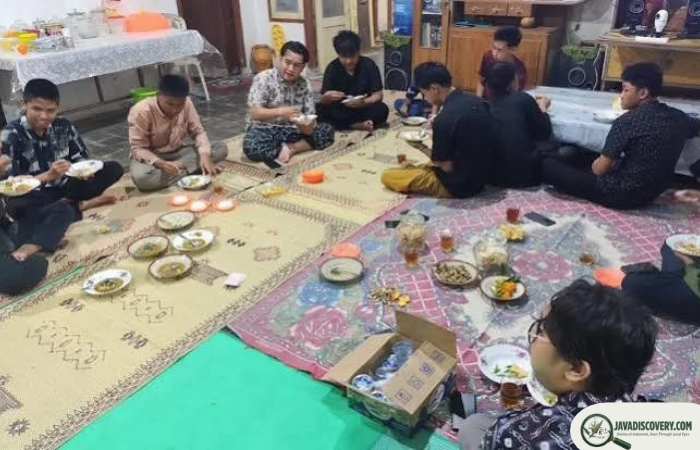
Refreshments offered to a guest are not decoration. A host who brings out drinks and snacks is practicing hospitality, and to leave them untouched can feel, to some hosts, like a small refusal.
Many residents and travelers describe a familiar rhythm: the host offers more than once, and the guest is expected to hesitate before accepting. Taking the offer graciously the second time is usually read as a sign of respect, not greed.
If you have dietary or religious restrictions, say so warmly and early, and express gratitude for the offer. A sincere reason is received far better than a flat refusal.
Customs about finishing everything on the plate vary from home to home. When in doubt, watch your host and follow their lead.
The Language of Softness
Directness is not always the currency of politeness in Java. Many residents avoid a blunt “no,” preferring a vague answer, a smile, or a change of subject.
Sungkan describes a feeling of reluctance mixed with deference, an unwillingness to impose on or embarrass someone. A guest can feel it, a host can feel it, and both may leave an important request unspoken.
Open questions and gentle phrasing help. Give your hosts an easy way to say no, and listen carefully to what is not said.
Javanese also has speech levels. Ngoko is the informal register used among close friends and toward juniors, while krama is the polite, refined register used toward elders and respected people.
These levels are strongest in Mataraman areas and more relaxed in Arek regions, while Madurese and Osing speakers use their own languages. Foreigners are not expected to speak any of them perfectly, and Indonesian is widely understood.
What Foreigners Can Do to Be Welcomed Twice
Begin with a smile and a slight nod. If a hand is offered, a gentle handshake is usually better received than a firm grip. Some people prefer not to shake hands across genders, so let the other person lead.
Many Indonesians consider the right hand the proper one for giving and receiving, and the left less polite for passing things. Many hosts also consider pointing with a finger or a foot rude, so an open hand is safer.
Look for shoes lined up at the threshold. In many homes, removing yours is expected, and doing so before being asked is a quiet sign of respect.
Dress modestly, especially in villages and near mosques and temples. Covered shoulders and knees are a simple way to show that you take your surroundings seriously.
A small gift from your own country, such as sweets or fruit, is a warm gesture when offered simply. A host may decline it once or twice before accepting.
Learn a few greetings in Indonesian and, if you can, in the local language, and ask your host to teach you more. Then relax into the pace of things, since visits in East Java are often unhurried and schedules loose.
When Hospitality Has Limits
Generosity is not a service. Hosts who feed and shelter a guest in their own home are not running a transaction, and pressing money on them can cause offense. A paid homestay is different, and there payment is part of the arrangement.
Ask before photographing people, homes, or ceremonies. Do not expect alcohol to be offered or available in every household, and follow the dress and conduct rules of any religious space you enter.
If you cannot accept an invitation, say so warmly, give a reason, and suggest another time. A kind, specific decline is easier for a host to receive than silence.
In the end, the glass of tea is not really about the tea. It is a small invitation to slow down, to listen for what is unsaid, and to leave a household a little better than you found it, and the guests who understand that are often the ones invited back.
Writer: Sari Mahendra