Informal Lending and Trust Systems in Javanese Society


javadiscovery.com — In the flickering amber light of a roadside angkringan in Solo, the steady exchange of crumpled banknotes happens without a single signature, witness, or digital trail. This quiet transaction is the heartbeat of informal lending and trust systems, a subterranean economy that sustains millions across the island of Java. While the glass towers of Jakarta’s financial district hum with the cold precision of algorithms and credit scores, the Javanese heartland relies on a far more ancient currency: kepercayaan (trust). Informal lending and trust systems are not merely financial stopgaps; they are profound social contracts rooted in the Javanese concept of paseduluran (brotherhood). Here, a loan is not an asset to be leveraged, but a bridge of “roso” (feeling) between neighbors. To understand informal lending and trust systems is to witness the ultimate defiance of modern bureaucracy, where the weight of one’s word and the visibility of one’s character in the “kampung” provide a security more ironclad than any collateral. It is a journey into a world where debt is a dialogue and repayment is a ritual of honor.
The Arisan: Social Rotating Credit as Community Glue
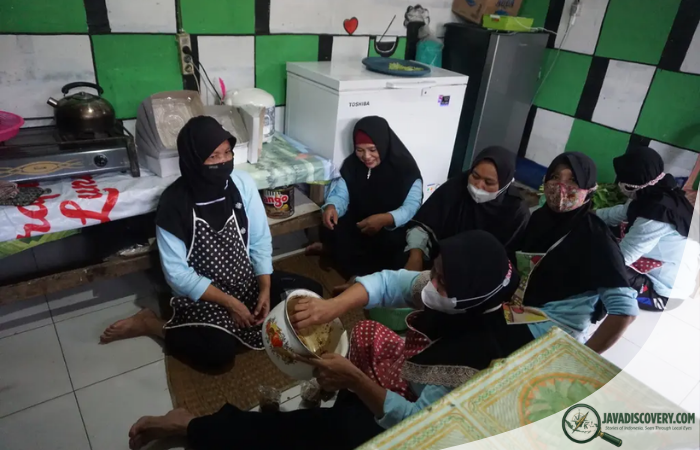
At the center of informal lending and trust systems is the ubiquitous Arisan. More than just a rotating savings and credit association, the Arisan is a vibrant social institution found in almost every Javanese neighborhood, office, and family circle. Participants contribute a fixed amount of money into a central pot, and at each meeting, a name is drawn—often by shaking a small plastic bottle—to determine who receives the lump sum. For the winner, it is an interest-free loan; for the others, it is a disciplined form of savings. However, the true value of the Arisan within informal lending and trust systems is the mandatory “kumpul” (gathering) it requires.
The Arisan ensures that members meet face-to-face, sharing tea and snacks while reinforcing the “rukun” (harmony) of the group. Within informal lending and trust systems, the Arisan acts as a primitive but effective credit bureau. If a member is struggling, the group knows immediately, not through a late-payment notification, but through the subtle shift in their “wajah” (expression) during the meeting. This visibility creates a powerful social incentive to remain “amanah” (trustworthy). To default on an Arisan is not just a financial failure; it is a social suicide that severs one’s ties to the community. In this way, informal lending and trust systems use social pressure as a far more effective regulator than any legal contract.
Kasbon: The Micro-Credit of the Neighborhood Warung
If the Arisan is the communal bank, then the local warung (small shop) is the neighborhood’s primary lender. The practice of kasbon—informal credit for daily necessities—is a cornerstone of informal lending and trust systems. Behind the counter of most Javanese warungs lies a small, worn notebook, often stained with coffee or palm oil, containing a list of names and running totals. This notebook is a testament to the “guyub” (togetherness) of the Javanese people. A mother can take rice, eggs, or cooking oil today and pay when her husband receives his “harian” (daily wage) or at the end of the month.
This element of informal lending and trust systems operates on a profound level of local intimacy. The warung owner knows the financial health of every household in the “gang” (alley). They are not calculating interest; they are facilitating survival. The social meaning of kasbon is rooted in “tepo seliro” (tolerance). The lender understands that life is “mubeng” (cyclical), and today’s provider might be tomorrow’s borrower. Informal lending and trust systems like kasbon transform a simple purchase into a long-term relationship, ensuring that even in times of extreme “prihatin” (hardship), no kitchen in the neighborhood goes cold.
“I don’t need a certificate from the bank to know who is honest. I see them every day at the mosque, I see how they treat their children. If they need a million rupiah for school fees, I give it. Their face is their collateral.” — Haji Mansur, 72, a retired merchant in Kudus.
Bank Thitil and the Shadow of the Money Lender
Not all aspects of informal lending and trust systems are purely altruistic. The Bank Thitil—named for the “thitil-thitil” sound of the lender’s motorcycle arriving daily—represents the more complex, sometimes predatory, side of these systems. These mobile lenders provide instant cash with no paperwork, but at high daily interest rates. For many Javanese “pedagang pasar” (market traders), the Bank Thitil is a necessary evil, providing the “modal” (capital) to buy fresh produce before dawn when formal banks are still closed.
Within informal lending and trust systems, the relationship with a Bank Thitil is surprisingly personal. The lender often knows the names of the trader’s children and brings small gifts during “Lebaran.” This personal touch blurs the lines between a business transaction and a social bond. Even when the interest is high, the “kemudahan” (ease) of the transaction is valued above the cost. Informal lending and trust systems like these thrive because they operate at the speed of the street, accommodating the “ritme” (rhythm) of the informal economy that formal financial institutions often fail to understand.
| Feature | Formal Banking | Informal Trust Systems |
|---|---|---|
| Collateral | Land Titles / Vehicles | Reputation / Social Standing |
| Documentation | Extensive Paperwork / IDs | Verbal Agreement / Handshake |
| Interest | Standardized Market Rates | Zero (Arisan) to High (Thitil) |
| Enforcement | Legal Action / Debt Collectors | Social Shaming / Ostracism |
The “Hutang Budi” and the Debt of the Soul
A unique dimension of informal lending and trust systems in Java is the concept of hutang budi—a debt of gratitude. Unlike a financial debt, hutang budi can never be fully repaid with money. If a neighbor lends money without interest during a family crisis, the recipient carries a spiritual obligation to support that neighbor in the future, regardless of the amount. Within informal lending and trust systems, hutang budi is the ultimate insurance. It creates a perpetual cycle of “balas budi” (returning the favor) that binds generations together.
This spiritual accounting ensures that informal lending and trust systems are more resilient than modern credit markets. A financial crisis might devalue the Rupiah, but it cannot devalue hutang budi. In the Javanese worldview, to ignore a debt of gratitude is to lose one’s “kemanusiaan” (humanity). This belief acts as a powerful stabilizer; people will go to extraordinary lengths to fulfill their obligations within informal lending and trust systems because they are guarding their “jiwa” (soul), not just their bank balance.
Digital Trust: The Evolution of the “Jimpitan”
As Java embraces the digital age, informal lending and trust systems are migrating to platforms like WhatsApp and local fintech apps. In many “perumahan” (housing complexes), the traditional jimpitan (collecting small amounts of rice or money for community security) has been digitized. Residents contribute via mobile transfers, and the funds are managed by a trusted “bendahara” (treasurer) who posts screenshots of the balance for transparency. This “digital trust” is a modern layer atop the ancient foundation of informal lending and trust systems.
However, the transition is not without friction. The “dingin” (cold) nature of a digital transaction can sometimes erode the “kehangatan” (warmth) of face-to-face trust. Informal lending and trust systems are fundamentally about “silaturahmi” (maintaining social ties). If the technology becomes a barrier to interaction, the system loses its “roso.” The most successful communities are those that use technology to handle the “angka” (numbers) while keeping the “kumpul” (gathering) alive to handle the “nyawa” (spirit) of the trust.
Conclusion: The Resilience of the “Tanpa Nama”
Informal lending and trust systems are a testament to the Javanese genius for communal survival. They prove that in a world of volatile markets and faceless institutions, the most reliable security is found in the “rukun” of the neighborhood. These systems represent a “ekonomi moral” (moral economy) that prioritizes the dignity of the person over the efficiency of the transaction. Informal lending and trust systems remind us that money is merely a tool, but trust is the foundation of civilization.
As the “adzan” of the evening calls out and the “pasar” begins to wind down, a thousand small debts are being settled and a thousand more are being made. No lawyers are present, no contracts are signed. Yet, the system holds. Informal lending and trust systems are the invisible architecture of Java, a journey through faith and humanity that ensures the island’s heart continues to beat in time with the needs of its people. In the quiet nod of a lender and the humble “matur nuwun” of a borrower, the authentic soul of Java is preserved—one “kepercayaan” at a time.