Two Slow Days in Malang, the Cool Highland City of East Java

Before the sun clears the ridgeline, Malang is already awake. Vendors wheel steaming carts past shuttered shopfronts, the air carries a chill the coastal plains of Java rarely know, and the volcanic highlands around the city slowly emerge from the haze.
Set at roughly 450 metres above sea level in a basin of East Java, Malang is a city built for lingering. Its pleasures are small and cumulative: a bowl of soup on a cool morning, a colonial facade at golden hour, a temple stone worn by centuries of weather. Two days will not exhaust it, but they are enough to understand why people keep coming back.
Meet the City That Speaks Backwards
Malang belongs to the Arek cultural region of East Java, which it shares with Surabaya. Arek culture is often described as egalitarian and direct, favouring plain speech over the elaborate levels of politeness associated with the courts of Yogyakarta and Surakarta. Locals wear that frankness with pride.
That pride has a playful side in bahasa walikan, or “reversed language”, a slang in which words are flipped backwards. Malang becomes Ngalam, makan (“to eat”) becomes nakam, and an arek Malang, a person of Malang, becomes a kera Ngalam. Local accounts commonly link the slang to the independence struggle of the 1940s, when it is said to have served as a code among fighters, though accounts differ on the details.
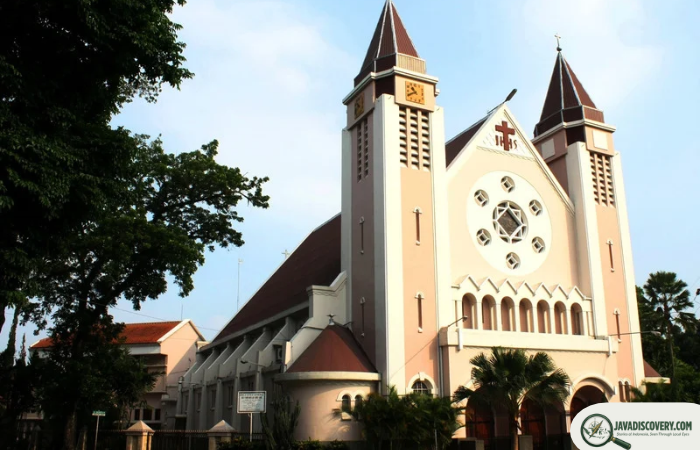
The city’s layout adds another layer. The Dutch developed Malang as a hill town in the early twentieth century, and it received municipal status in 1914. Broad avenues, shaded residential districts and civic squares from that era still shape the centre, giving it a spaciousness that sets it apart from many Javanese cities.
Day One: Colonial Streets, Color and Slow Evenings
Morning in Kayutangan and the Old Town
Begin early in Kayutangan, a stretch of Jalan Basuki Rahmat lined with old shops and Dutch-era buildings, revitalised in recent years as a heritage corridor. Before traffic builds, the soft light picks out faded arches, tall shuttered windows and ornamental gables that reward a slow walk.
From there, drift towards Alun-Alun Tugu, the central square. The Tugu monument and the city hall stand amid trees and flower beds, a legacy of the colonial-era town plan. Residents jog, stroll and gather here from dawn, and it is the most natural place to feel the everyday rhythm of Malang.
Breakfast and Lunch, the Malang Way
Food is one of the best reasons to slow down here. Bakso, a meatball soup, is the city’s best-known dish, usually served in a clear beef broth with noodles, tofu and fried wontons. Choose a family-run stall over a showpiece restaurant and you will soon see why locals argue so passionately over their favourites.
For something heartier, try rawon, an East Javanese beef soup turned black by keluak, the seeds of the kepayang tree. It arrives with rice, bean sprouts and often a salted egg, and is rich and earthy rather than spicy.
Tahu campur is a savoury bowl of fried tofu, rice cake and vegetables in a beef broth seasoned with petis, a dark, sweet-salty paste made from shrimp or fish. Cwie mie is a noodle dish associated with the city’s Chinese-Indonesian community, typically topped with seasoned minced chicken and served with fried wontons and a bowl of broth on the side.
Afternoon in the Hillside Kampung
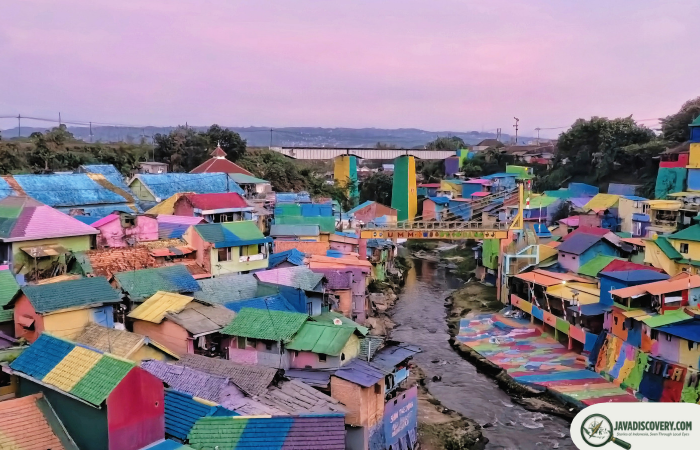
In the afternoon, cross towards the Brantas River, where Kampung Warna-Warni Jodipan climbs the slope in bands of bright paint. A kampung is an urban neighbourhood, and this one was transformed in 2016 through a collaboration between residents, university students and a paint company, turning a once-overlooked riverside settlement into a landmark of community-led renewal.
A footbridge links it to neighbouring Kampung Tridi, where painted murals play with three-dimensional effects. The lanes are narrow and the houses are lived in, so walk quietly and ask before photographing anyone.
An Evening of Old-School Cafés
As the day cools, head to Toko Oen, a café that has served customers since 1930 and is among the best-known survivors of the colonial-era ice cream parlour tradition. Rattan chairs, high ceilings and a menu of ice creams and Dutch-Indonesian pastries preserve a slower, older rhythm.
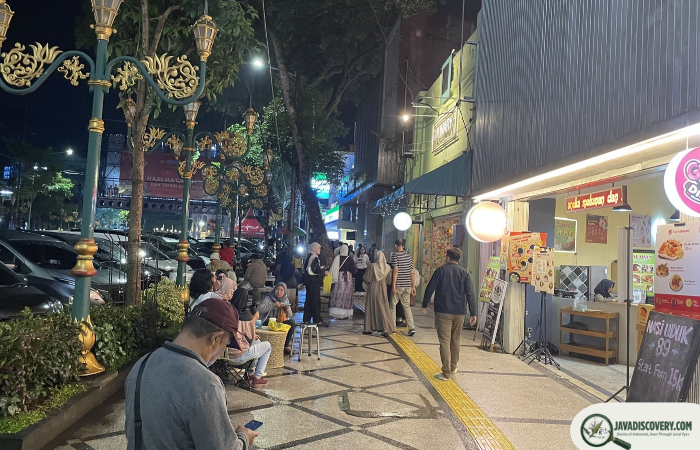
Later, follow the glow of street stalls around the central square. On a cool Malang night, a cup of wedang ronde, a warm ginger drink with glutinous rice balls, is hard to beat.
Day Two: Temples, Mountains and Apples
Singosari and the Stones of a Lost Kingdom
Drive north to Singosari, once associated with the Singhasari kingdom. According to the Pararaton, Singhasari was founded by Ken Arok, a figure whose rise is wrapped in legend. The Negarakertagama, a court poem completed in 1365, records Kertanegara as its last ruler, who died in 1292.
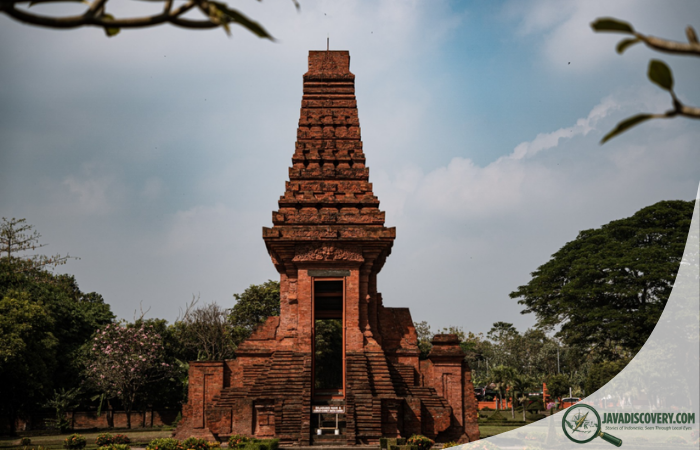
Candi Singosari, a Hindu-Buddhist temple of the thirteenth century, is traditionally linked to Kertanegara, though historians debate its exact purpose. Its upper levels appear unfinished, a detail that has invited speculation about the kingdom’s sudden fall. A short drive away, two colossal guardian statues called dwarapala still stand watch.
Travellers with extra time can continue east to Candi Jago in Tumpang, a terraced temple whose stone reliefs depict episodes from ancient Javanese narratives. Closer to the city, Candi Badut is associated with the Dinoyo inscription, dated to 760 CE. Historians believe it points to an earlier kingdom in the Malang basin, linked to the name Kanjuruhan.
Into the Highlands of Batu
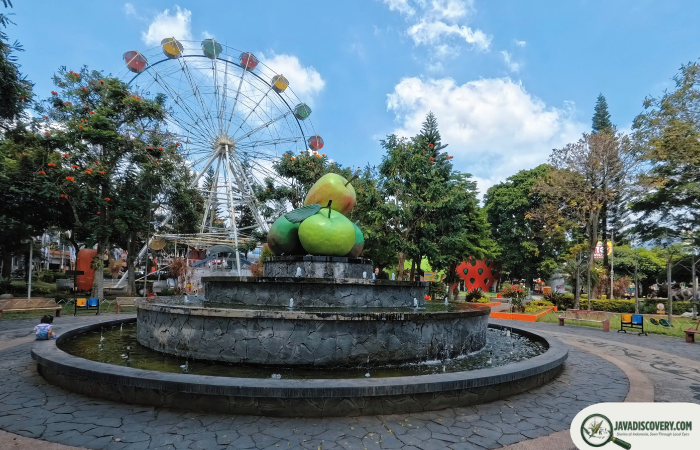
By midday, the road climbs towards Batu, a separate city since 2001, and the air cools further. Orchards on the slopes are known for apples, including the Manalagi and Rome Beauty varieties, and in season some farms let visitors pick their own.
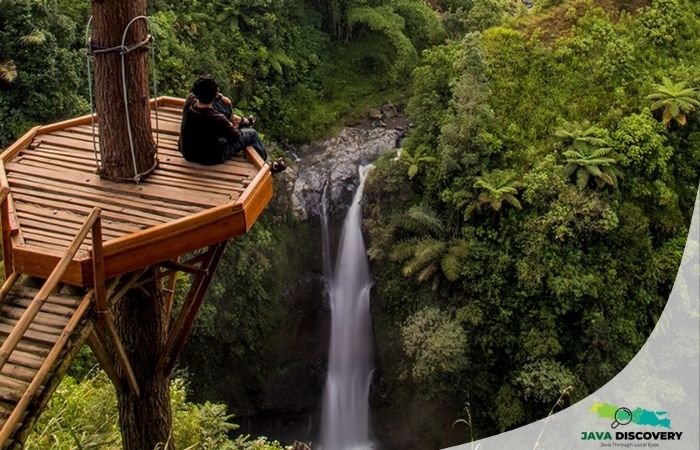
Beyond the orchards, forest and falls await. At Coban Rondo, in the Pujon highlands, a waterfall drops through pine forest. Coban is the local word for waterfall, and rondo means widow in Javanese; local legend ties the name to a newlywed couple. Batu also hosts many family theme parks, but the real appeal of the highlands lies in the landscape itself.
A Last Taste Before You Go
On the way back, stop in Sanan, a neighbourhood known for small producers of keripik tempe. Tempe is a fermented soybean cake long associated with Java, and here it is sliced paper-thin, coated in batter and fried until it shatters at a touch.
Buy a bag still warm and eat it slowly. It is a fitting final taste of a city that does not hurry.
Before You Go: Seasons, Getting Around and Respect
The dry season, roughly May to October, brings clearer skies and easier temple visits. The wet season, roughly November to April, turns the highlands lush green but often brings afternoon downpours. Pack a light rain jacket in either season, and bring a layer for evenings, which are noticeably cooler than elsewhere in East Java.
The old centre can be explored on foot in clusters, while Singosari and Batu are best reached by car with a driver or by ride-hailing apps. Shared minibuses called angkot run fixed routes across the city. Trains arrive at Malang Kota Baru, a station dating to the colonial era.
At temples, dress modestly, avoid climbing on the stonework and keep your voice low. In the kampung, remember that you are walking through people’s homes. A friendly greeting and a direct, unpretentious manner will suit Malang’s Arek spirit well.
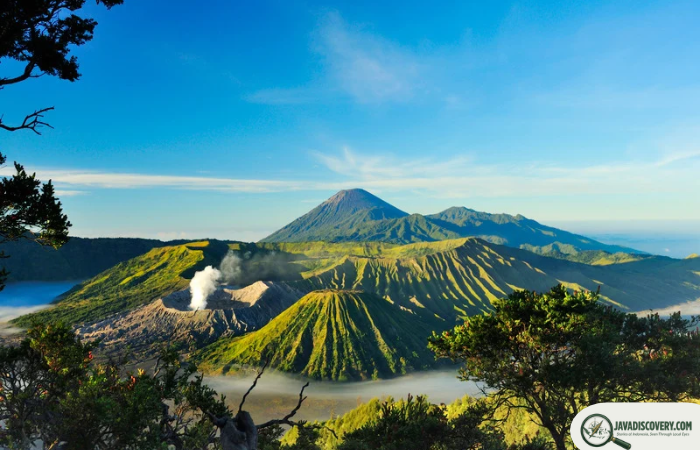
Mount Bromo and the highlands of the Tengger people lie farther east. The Tengger have their own customs and faith practices, and the journey is a long day trip from Malang, better treated as a separate chapter than squeezed into these two days.
Malang does not reward those who rush. Its best moments come between destinations: a conversation over a steaming bowl, light falling across an old wall, cool air drifting down from the mountains. Give it two unhurried days, and it will give you something to return for.
Writer: Sari Mahendra