The Malang Ice Drink Named for Insects That Have Vanished

Before the first glass is served, there is a sound: a dry, rhythmic scraping, “srek, srek, srek,” as a block of ice is grated by hand over a bowl. It is the opening note of Es Tawon Kidul Dalem, a traditional iced drink in Malang whose history, according to published accounts, reaches back to 1955.
What has changed is what once accompanied that sound. The insects that gave this drink its name no longer come.
A Glass of Many Layers
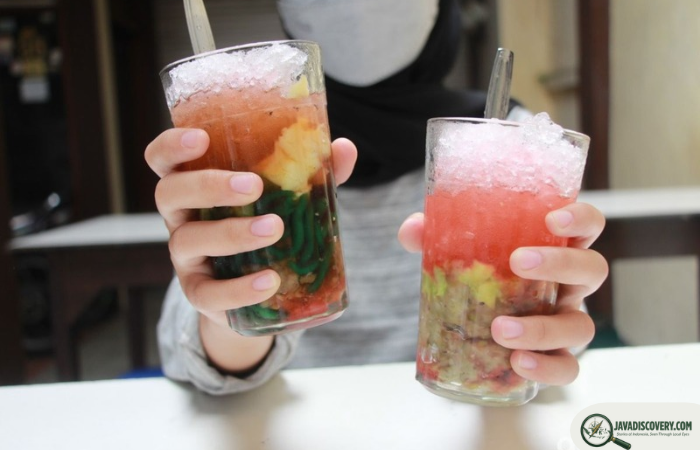
Es Tawon belongs to the broad family of Indonesian mixed iced drinks, yet it follows its own recipe. A glass holds cincau hitam, black grass jelly, a dark, soft jelly made from plant leaves. Beside it sit tapai, a fermented sweet snack traditionally made from cassava or glutinous rice, green mung beans, slices of avocado and chewy tapioca pearls.
Over everything goes a signature red syrup, poured onto a drift of shaved ice. The result is cold and sweet, creamy from the avocado, with the gentle tang of fermentation underneath.
Cousin to Es Campur
The Good News From Indonesia report compares it to es campur, literally “mixed ice,” a name given to iced desserts with assorted toppings across the archipelago. Versions differ from city to city and from stall to stall.
What sets Es Tawon apart in Malang is less its list of ingredients than the story told about its name.
The Cart Under the Tamarind Tree
According to that account, the drink was first sold from a cart parked beneath an asem, a tamarind tree, where a tawon nest hung from the branches.
The scent of sugar and syrup drew insects to the cart, and they often hovered around it. The drink was nicknamed Es Tawon, and the name has endured for generations.
What Is a Tawon?
The source translates tawon as “bee,” giving that as its Javanese meaning. In everyday Javanese and Indonesian, however, the word can also refer to wasps and hornets, and the report does not say which insect built the nest.
Without a species identification, the question stays open. What the story preserves is the image: a sweet-scented cart, a hum in the air, and a name earned almost by accident.
Moving Along Jalan Zainul Arifin
Over the decades the stall has shifted but stayed close to home. It began at Jalan Zainul Arifin No. 15, according to the source. In 2010 it moved into the front garage of a house on the same street.
At the end of 2022 it moved again, a short distance to a spot near Ronde Titoni, a neighbouring food business. Despite the changes of address, the report says the flavour has remained authentic and the regulars have stayed loyal.
The Second Generation
Sri Utami represents the second generation of the family to run the stall, a role she has held since 1996, according to the source. She still prepares the drinks by hand, grating the ice and assembling each glass herself.
When the reporter asked about the insects that once made the stall famous, she answered with a smile. “The tawon are gone now, Mas!” she said, using the Javanese form of address for a young man or an older brother. The quote is translated from the Indonesian original.
When the Insects Stopped Coming
The disappearance of the insects is more than a loss of decoration. The report reads it as a sign of environmental change in Malang.
It cites Netralnews in saying that the city’s air temperature has risen as green open space gave way to malls, housing and shops. It also cites Republika on the effect of a warming climate on bee populations worldwide.
These are plausible threads, but the article offers no evidence tying them to this particular nest. It does not say what became of the tree or the colony, and insects can leave a site for many reasons.
A Cooler City Remembered
The report recalls that Malang was once known for its cool air and is noticeably hotter now. A shift like that is the kind of change that long-term records from BMKG, Indonesia’s meteorological agency, can confirm or refine.
Whatever the cause, the missing insects have become a quiet marker of how the city around the stall has changed.
Old Flavours in a Viral Age
Another change is easier to see. The stall now looks quiet, the source says, as newer drinks, often photographed and shared on social media, compete for the attention of younger customers.
Those drinks win people with modern concepts and polished looks. Es Tawon offers something different: the taste of a classic, for regulars who never stopped coming and for anyone looking back with nostalgia.
The tawon that once circled the cart have gone, yet their name remains in every glass. It is a small, cold record of a tree, a street and a city that keeps changing around them.
Writer: Sari Mahendra