Sacred Water and Ancient Bathing Rituals Across East Java

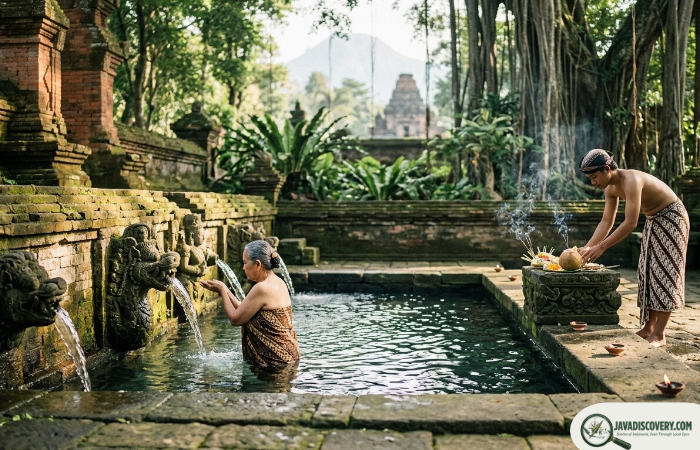
Across the volcanic spine of East Java, water has long served as more than a physical resource. For centuries, natural mountain springs, geothermal streams, and stone-carved bathing pools (petirtaan) have functioned as sacred spaces where physical cleansing intersects with spiritual purification (manembah).
From the classical kingdoms of Singhasari and Majapahit to modern highland villages, the veneration of water remains deeply woven into regional life. These ancient pools were built not merely for royal leisure, but as sacred portals connecting the human realm with the unseen energy of mountains and ancestral spirits.
The Sacred Cosmology of Water in East Java
In traditional Javanese cosmology, sacred water sources are known as tirtamerta—the elixir of life and spiritual renewal. Volcanic mountains like Penanggungan, Arjuno, and Welirang are regarded as sacred axes, feeding subterranean aquifers that emerge as natural springs.
Ancient architects harnessed these springs, constructing elaborate stone conduits, spouts (jaladvara), and sunken bathing basins. The flow of water through these sacred monuments represented the continuous stream of divine grace, washing away physical impurities and spiritual disharmony.
Royal Purification Baths of the Ancient Kingdoms
Petirtaan Belahan and Jolotundo: Sacred Mountain Springs
On the sacred slopes of Mount Penanggungan, classical bathing monuments showcase the height of ancient hydraulic engineering and spiritual artistry. Structures like Petirtaan Jolotundo, built in the 10th century, and Petirtaan Belahan (Tetek), dating to the 11th century, channel mountain springs through intricate stone carvings.
According to local belief and historical tradition, King Airlangga and his royal predecessors used these sanctuaries for ritual purification and meditation. Even today, pilgrims gather at Jolotundo to collect water or immerse themselves in the cool mountain pools, seeking spiritual clarity, vitality, and inner peace.
Sacred Waters Beneath Candi Songgoriti
In the Arek cultural basin near Batu, the history of sacred bathing meets subterranean geothermal heat at Candi Songgoriti. Built in the 9th century during the Central Mataram era, this stone temple sits directly over a natural hot sulfur spring.
Side by side beneath the temple’s ancient foundation, cold spring water and steaming mineral water bubble up together. Regional tradition holds that early builders sanctified the site to balance thermal energies and create a sanctuary for healing, purification, and spiritual realignment.
Living Rituals and Modern Water Veneration
The ancient reverence for sacred water remains an active, living culture across East Java. During annual village cleansing rites (bersih desa), community members gather near local springs and ancestral graves (punden) to offer prayers of gratitude for abundant water and successful harvests.
Before major sacred observances, many locals undertake padusan or ruwatan—traditional bathing rituals intended to cleanse negative influences (tolak bala) and prepare the spirit for prayer. In these quiet moments beside ancient stone spouts, the modern world fades, reconnecting practitioners to centuries of ancestral wisdom.
In the shade of mossy temple walls and mountain forests, East Java’s ancient bathing sanctuaries continue to offer a timeless ritual of spiritual reset and harmony.
Writer: Sari Mahendra