Night Flora of Mount Slamet Nocturnal Botanical Life Tallest Peak

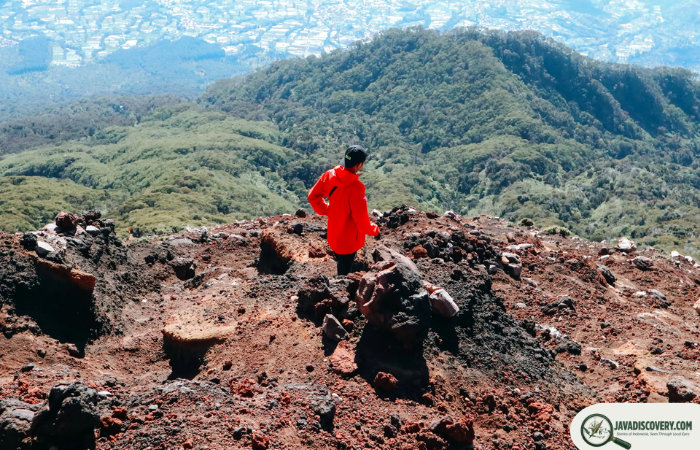
javadiscovery.com – Soaring to an imposing 3,428 meters above sea level, Mount Slamet stands as the undisputed titan of Central Java—the highest peak in the province and the second-highest mountain on the entire island of Java. Unlike heavily traversed volcanic massifs like Merapi or Bromo, Slamet’s sprawling flanks, stretching across the five regencies of Banyumas, Purbalingga, Pemalang, Tegal, and Brebes, host vast swathes of primary montane and cloud forests (*hutan lumut*) that remain strikingly untamed. While daylight hikers marvel at the sweeping vistas of mountain ridges, the volcanic peak undergoes a profound ecological transformation after sunset. Under the cover of heavy mountain darkness and shifting mist, a specialized community of high-altitude night flora comes alive. From bioluminescent fungi and nocturnal-pollinated epiphytic orchids to giant night-blooming rhododendrons, Mount Slamet harbors an extraordinary botanical world adapted specifically to the darkness, cold winds, and nocturnal pollinators of Java’s tallest peak.
Exploring the night flora of Mount Slamet reveals the delicate ecological mechanics of high-altitude nocturnal botany and the deep conservation value of Java’s remaining wilderness corridors.
The Nocturnal Cloud Forest: Microclimates at 3,000 Meters
As dusk falls over Mount Slamet, ambient temperatures drop sharply toward freezing, particularly in the high sub-alpine zones above the tree line. The interaction between cold mountain winds and lingering tropical moisture creates a dense blanket of high-humidity fog that envelops the canopy:
- Thermal and Moisture Buffering: The dense moss cover (*Sphagnum*) coating the ancient, twisted branches of oak and laurel trees acts as a natural sponge, trapping ambient moisture and shielding sensitive nocturnal flora from sudden temperature swings.
- The Dark Canopy Ecosystem: Shielded from solar UV radiation, the understory of Slamet’s cloud forest creates an ideal low-light environment where specialized plant species open their blossoms, release heavy essential oils, or emit biological light exclusively after nightfall.
Bioluminescent Fungi and Luminous Undergrowth
Among the most mesmerizing sights along the dark trails of Mount Slamet—particularly along the eastern ascent routes like Bambangan and Guci—is the presence of naturally glowing bioluminescent organisms nestled in decaying forest litter:
- Foxfire and Mycena Species: Rare bioluminescent mushroom species (such as *Mycena chlorophos* and species of *Panellus*) emit a pale greenish-blue glow (*foxfire*) through a chemical reaction involving the pigment luciferin and the enzyme luciferase.
- Ecological Purpose: Far from being a mere aesthetic marvel, this nocturnal illumination attracts nocturnal beetles, gnats, and arthropods in the pitch-black understory, encouraging them to crawl across the fruiting bodies and distribute fungal spores across the forest floor.
- Glow-in-the-Dark Mycelium: On damp nights following afternoon rains, vast subterranean networks of fungal mycelium woven through rotting logs cast an eerie, luminous web across the forest floor, guiding nocturnal forest creatures along the damp soil.
Moth-Pollinated Orchids and Night-Blooming Rhododendrons
Plant life on Mount Slamet’s upper slopes faces a critical challenge: high-altitude daytime pollinators like bees and butterflies are scarce in cold, windy environments. To survive, several endemic plant species evolved to partner with nocturnal pollinators, including hawkmoths (*Sphingidae*), micro-bats, and nocturnal beetles:
- Highland Epiphytic Orchids: Deep within Slamet’s montane zones, rare wild orchid species—such as high-altitude *Coelogyne* and *Dendrobium* varieties—remain closed during the day. As night falls, their pale white or cream-colored petals open fully, reflecting moonlight to stand out against the dark foliage.
- Olfactory Signaling: To attract pollinators across long distances in thick fog, these night-blooming flowers emit powerful, sweet, and spicy fragrances rich in benzyl acetate. Hawkmoths, guided by their sensitive antennae, follow these scent plumes through the dark forest to feed on nectar, transferring pollen in the process.
- Volcanic Rhododendrons (*Rhododendron retusum*): In the sub-alpine dwarf forests just below Slamet’s rocky summit crater, hardy mountain rhododendrons display thick, waxy petals designed to hold nectar overnight without freezing, offering a vital energy source for nocturnal fauna braving the mountain cold.
Preserving the Dark Wilderness of Mount Slamet
Because Mount Slamet lacks a paved road crossing its high interior, its upper cloud forests have avoided the severe habitat fragmentation seen on other Javanese mountains. However, expanding agricultural borders on its lower slopes and rising light pollution from expanding urban centers below threaten the delicate nocturnal cycles of its flora and pollinators.
Recognizing this, local forestry groups, indigenous guides, and environmental collectives across Purbalingga and Banyumas are advocating for strict conservation measures to protect Mount Slamet’s high-altitude night ecology. Preserving the dark, undisturbed quietude of Slamet ensures that Central Java’s tallest peak remains a sanctuary where the ancient, nocturnal rhythms of tropical botany continue to thrive undisturbed under the stars.