Tan Malaka Madilog and the Rise of Indonesian Thought


javadiscovery.com – Tan Malaka Madilog is more than just the title of a difficult book; it is a doorway into one of the boldest intellectual projects ever attempted by an Indonesian thinker. Written while he was hunted, exiled, and constantly on the move, this work captures Tan Malaka’s urgent desire to transform how his people understood reality, power, and freedom.
For readers today, Tan Malaka’s ideas feel surprisingly contemporary. In an age of viral misinformation and emotional politics, his call for reason, science, and critical thinking sounds almost prophetic.
A Revolutionary Mind on the Margins of Empire
Tan Malaka was born in 1897 in West Sumatra, far from the political centers of Batavia or the colonial capitals of Europe. He grew up under Dutch colonial rule, in a world where traditional customs met modern schooling. That tension shaped him: he could see both the spiritual richness of local culture and the hard, cold power of an empire built on bureaucracy and industry.
As a young man, he studied in the Netherlands, absorbing socialist and Marxist ideas while observing how European societies organized themselves. When he returned to the Dutch East Indies, he did not come back merely as a student or teacher. He returned as someone who had tasted alternative models of politics and thought, and who believed that Indonesia deserved its own path to liberation.
Life Across Borders: From Teacher to Underground Thinker
Tan Malaka’s life quickly became a series of crossings: borders, identities, and roles. He taught in schools, organized workers, and joined radical political circles. Repression pushed him into exile, and he moved through the Philippines, China, Thailand, and other parts of Asia.
Each move added new layers to his thinking. In the port cities of Asia, he saw how colonial capitalism connected mines, plantations, and factories into one global system. In underground meetings, he met revolutionaries from different countries who were also searching for a language of freedom.
But Tan Malaka did not simply copy European theories. He became increasingly critical of imported dogmas that ignored local realities. What Indonesia needed, he believed, was not a ready-made ideology, but a deeper transformation in how people used their minds. That conviction would eventually crystallize in Madilog.
How Tan Malaka Madilog Was Born
The book we now call Tan Malaka Madilog was written in a setting that could not be more different from a quiet university office. Tan Malaka drafted it while hiding in Sumatra, frequently changing locations, often short of paper and ink, always under the shadow of arrest.
Yet in that pressured environment, he began to lay out a new intellectual framework: Materialisme, Dialektika, Logika—Materialism, Dialectics, Logic. Together, these three pillars formed what he hoped would be a guide for Indonesians to think more clearly about their world.
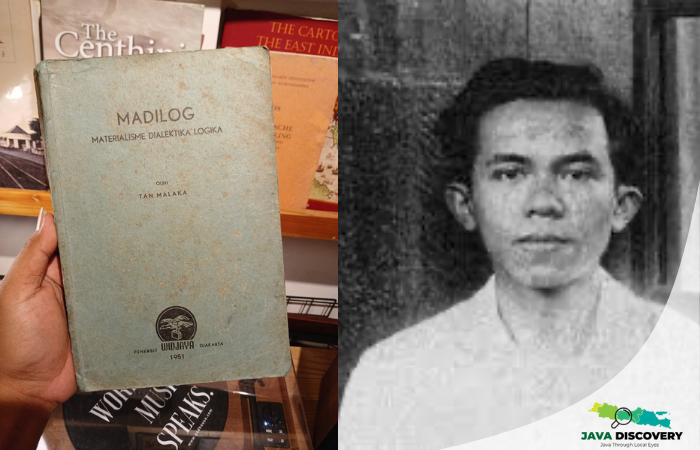
What Tan Malaka Madilog Tried to Change
At its core, Madilog is a book about how to think. Tan Malaka believed that political independence would be fragile if the people remained trapped in superstition, blind obedience, and fatalism. Freedom of the body, he argued, meant little without freedom of the mind.
Materialism: Seeing the World as It Is
Materialism, in Tan Malaka’s hands, did not mean a love of wealth. It meant grounding thought in observable reality. Instead of explaining events through unseen forces or mystical signs, he urged Indonesians to look at real causes: land ownership, labor conditions, economic structures, and state power.
By encouraging a materialist perspective, Tan Malaka Madilog invited readers to ask uncomfortable questions. Why are some regions poor and others rich? Who benefits from certain laws? What lies behind religious or cultural slogans when they are used to justify inequality?
Dialectics: Understanding Change and Contradiction
The second pillar, dialectics, gave Tan Malaka a way to talk about movement and conflict. Societies, in his view, are not static. They are full of tensions—between rulers and ruled, old ideas and new realities, tradition and modernity. These contradictions do not simply coexist; they push history forward.
In Madilog, he used dialectical thinking to show how Indonesian society was being reshaped by colonial capitalism, nationalist awakening, and global ideological struggles. Rather than accepting the world as “just the way it is,” he encouraged readers to see it as a field of forces, always in motion.
Logic: The Discipline of Clear Thinking
The third component, logic, might seem obvious, but for Tan Malaka it was revolutionary. He felt that many decisions in politics and daily life were driven by emotion, authority, or habit—rarely by carefully structured reasoning.
In Tan Malaka Madilog, he repeatedly stresses the importance of learning basic logical principles: avoiding contradictions, checking evidence, recognizing fallacies. For him, logic was neither dry nor academic. It was a daily tool for survival in a complex, often deceptive world.
Challenging Mysticism and Feudal Habits of Mind
One of the most daring aspects of Madilog is its sharp critique of mystical thinking and feudal mentality. Tan Malaka did not attack spirituality itself, but he warned against using it as an excuse to avoid critical reflection. When misused, mysticism could justify submission, discourage questioning, and keep people from investigating real causes.
Similarly, he opposed the feudal habit of glorifying leaders as near-sacred figures. For a modern Indonesia to grow, he argued, citizens had to evaluate leaders based on actions and results, not lineage or charisma. In this sense, Tan Malaka Madilog is also a book about democratic culture: the courage to ask, “Why?” even of those in high positions.
Science as a Pathway to Liberation
For Tan Malaka, science was not a distant abstraction. It was a method for uncovering truth in a world full of illusions. He believed that scientific reasoning—testing ideas, observing patterns, revising conclusions—could help Indonesians break free from manipulation, whether by colonial administrators, local elites, or dogmatic ideologues.
This vision places him alongside other global thinkers who saw education and critical thinking as foundations of liberation. In this way, Madilog sits in the same broad conversation as works of rationalist and enlightenment thought, yet it grows from the soil of Java and the wider Indonesian archipelago.
Why Tan Malaka Madilog Still Matters Today
Reading Tan Malaka Madilog today can feel uncannily relevant. Many of the issues he worried about—conspiracy thinking, blind trust in charismatic figures, the spread of untested claims—are amplified in the digital era. His insistence on logic and evidence seems almost tailor-made for a time when information travels faster than verification.
His work also connects to wider explorations of Indonesian knowledge and landscape. When we look at how scientists study volcanic lakes in West Java, for example, such as those around Mount Papandayan, we see the same spirit of observation and investigation that he valued so deeply. Articles like The Crater Lakes of Mount Papandayan echo this curiosity toward nature and its processes.
On a global level, scholars continue to study Tan Malaka’s life and thoughts, placing him among the significant anti-colonial intellectuals of the twentieth century. Resources such as modern biographical entries on Tan Malaka help new readers trace how his ideas developed over time.
Ahead of His Time, Rooted in His Land
Tan Malaka died in 1949, in a turbulent period when the young Republic was still fighting for recognition and stability. For years, his name was contested, eclipsed by other narratives, or pushed to the margins of official history. Only later was he formally recognized as a National Hero.
Yet the true measure of his legacy lies not only in titles, but in the questions he forces us to ask. How do we distinguish truth from comforting illusion? How do we build a society that respects both tradition and critical inquiry? And how do we prepare future generations to think with both courage and clarity?
In the end, Tan Malaka Madilog is a reminder that the struggle for independence did not end with flags and declarations. It continues every time someone chooses to examine, to question, and to understand the world with an open, disciplined mind.