How Traditional Farming Calendars Predict Climate in Java

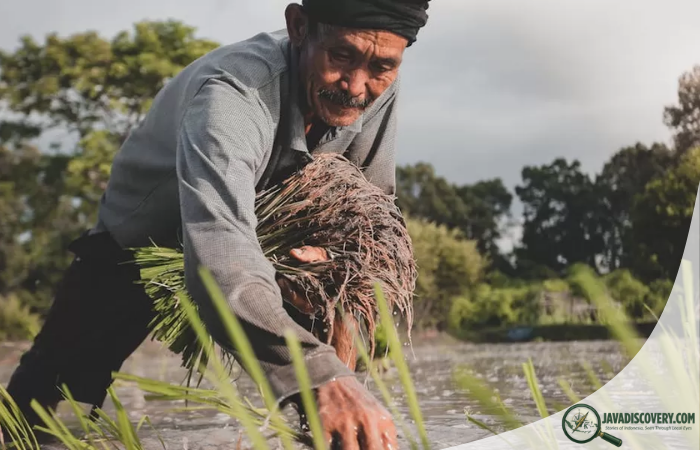
javadiscovery.com – Before satellites traced cloud movements and meteorological stations measured atmospheric pressure, Javanese farmers stood barefoot in their rice fields and looked to the sky. They studied the tilt of constellations, the direction of coastal winds, the calls of insects at dusk, and the subtle scent of wet soil carried from distant hills. Time was not counted only in months, but in signs. Seasons were not simply dates on a page, but living patterns embedded in nature.
Across Java, traditional farming calendars have long guided agricultural life. These systems do more than schedule planting and harvest. They interpret climate, anticipate rainfall, and encode centuries of environmental observation into cultural memory.
The Pranata Mangsa System
At the heart of Javanese agricultural knowledge lies the Pranata Mangsa, a traditional seasonal calendar refined during the era of the Mataram kingdom in Central Java. Unlike the Gregorian calendar, which divides the year into twelve equal months, the Pranata Mangsa organizes time into distinct seasonal periods based on ecological changes.
Each mangsa, or season, carries its own character. Mangsa Kasa marks the height of the dry season, when cracked earth signals preparation for planting drought-resistant crops. Mangsa Kapat announces the arrival of early rains, when farmers begin sowing rice seedlings in anticipation of steady monsoon showers.
The system does not rely solely on fixed dates. It draws from observations of rainfall patterns, wind direction, flowering cycles, and animal behavior. Farmers read these cues as carefully as written text.
Reading the Sky and the Soil
In a village near Klaten, Pak Suyono kneels beside his rice paddies, pressing a handful of soil between his fingers.
“If the soil crumbles too easily in Mangsa Katiga, the rains will come late,” he explains. “But if ants begin moving their nests higher and the wind shifts from the southeast, we prepare the seedbeds.”
Such knowledge is inherited through generations. Elders pass down lessons learned from years of watching the horizon darken before a storm or noticing when certain bamboo species flower. The blooming of the randu tree, for instance, may signal changing humidity. The chorus of frogs at night often precedes sustained rainfall.
These indicators are not superstition. They are empirical observations shaped by long-term familiarity with local ecosystems.
Monsoon Rhythms and Rice Cycles
Java’s agricultural life revolves around the monsoon. The wet season, typically arriving between October and March, replenishes rice fields that define much of the island’s landscape. Traditional calendars help farmers time planting to coincide with reliable rainfall, minimizing crop failure.
The Pranata Mangsa divides the agricultural year into phases aligned with these climatic rhythms. During Mangsa Kalima, heavy rains encourage rice transplantation. Mangsa Kapitu often brings peak rainfall, requiring careful water management to prevent flooding.
In the dry months, farmers shift to secondary crops such as corn, cassava, or peanuts. This rotation reduces soil exhaustion and maintains household food security.
Astronomy and Agricultural Timing
Traditional calendars also incorporate celestial observation. The appearance of certain stars in the eastern sky before dawn historically guided planting schedules. Orion’s belt, visible during specific months, served as a seasonal marker for some communities.
While modern light pollution obscures many constellations near urban centers, rural farmers continue to rely on star positions as supplementary guidance. The sky becomes both clock and compass.
Javanese cosmology views harmony between earth and sky as essential. Agricultural timing thus reflects a broader philosophical belief that human activity must align with cosmic order.
Local Variations Across Java
Although the Pranata Mangsa is widely recognized in Central Java and Yogyakarta, regional adaptations exist across the island. Coastal communities incorporate tidal patterns and sea winds into their agricultural calculations. In mountainous areas near Mount Merapi or Mount Lawu, altitude affects rainfall timing, prompting slight adjustments to planting schedules.
Farmers in East Java’s drier zones often observe different ecological cues compared to those in the wetter western highlands. The core principle remains consistent: climate prediction arises from close attention to environmental signals.
Knowledge Under Pressure
In recent decades, climate variability has intensified. Unpredictable rainfall patterns and extended dry spells challenge traditional forecasting systems. Some younger farmers question whether ancestral calendars remain reliable in an era of global climate change.
Yet many elders argue that adaptation is built into the system itself.
“The calendar is not rigid,” says Ibu Sri, a rice farmer in Bantul. “It teaches us to observe. If the signs change, we adjust.”
This flexibility reflects the calendar’s foundation in observation rather than fixed doctrine.
Blending Tradition and Meteorology
In parts of Java, agricultural extension officers now encourage farmers to combine traditional indicators with modern weather forecasts. Radio broadcasts and mobile applications provide rainfall predictions, while farmers cross-check this data against local signs.
The blending of systems reflects pragmatic adaptation rather than cultural abandonment. For many communities, traditional calendars remain culturally meaningful even as scientific forecasting tools expand.
The integration also fosters dialogue between generations. Younger farmers adept with smartphones discuss rainfall charts alongside grandparents who interpret insect behavior.
Ritual and Seasonal Markers
Traditional calendars are not purely practical. They intersect with ritual life. Ceremonies such as wiwitan, marking the start of harvest, align with seasonal transitions. Offerings of rice cones, flowers, and incense express gratitude for favorable weather and fertile soil.
These rituals reinforce communal bonds and reaffirm respect for natural cycles. Climate prediction thus becomes both agricultural strategy and spiritual practice.
An Archive of Climate Memory
Embedded within traditional calendars is a long record of climate memory. Oral histories recount years of severe drought or devastating floods, linking them to particular seasonal anomalies. Over time, these narratives accumulate into collective knowledge.
Unlike written meteorological records, which span only recent decades in many rural areas, traditional calendars preserve insights across centuries. They document how communities endured variability and adjusted cropping strategies accordingly.
Fields at Dusk
As evening settles over a rice-growing village in Central Java, dragonflies hover above irrigated paddies reflecting the fading sky. Farmers gather near field edges, discussing cloud formations that drift in from the south.
Some consult printed weather forecasts. Others glance toward distant hills, noting the color of approaching clouds. Both forms of knowledge coexist.
The rhythm of planting, tending, and harvesting continues as it has for generations, guided by calendars that blend observation, memory, and belief.
Continuity in an Uncertain Climate
Traditional farming calendars in Java do not claim perfect prediction. Rather, they cultivate attentiveness. They train farmers to read subtle environmental shifts and respond with flexibility. In a time of accelerating climate change, such attentiveness may prove increasingly valuable.
The Pranata Mangsa and related systems represent more than agricultural tools. They embody a worldview in which humans are participants in ecological cycles, not detached observers.
As long as farmers continue to watch the sky at dawn, listen for the first frogs after a dry spell, and feel the texture of soil before sowing seeds, the dialogue between climate and culture will endure across Java’s fertile fields.