Batik as Language Reading Stories in Javanese Cloth

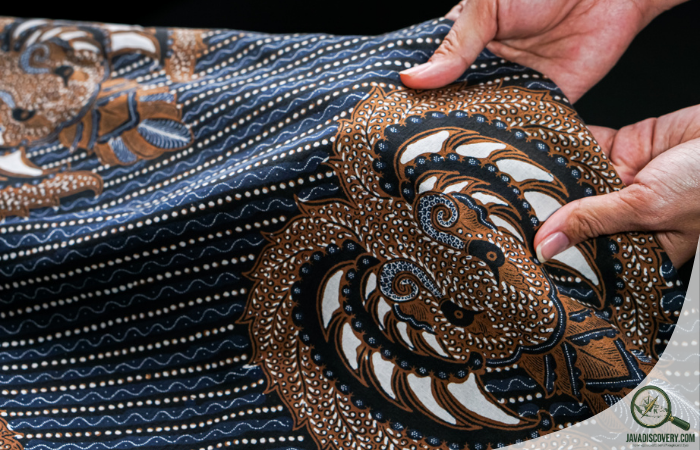
javadiscovery.com – Before a single word is spoken, batik has already begun to speak. In Java, cloth is never just cloth. A length of batik draped around a waist, folded across a shoulder, or wrapped carefully in a ceremonial setting carries meanings that extend far beyond decoration. Its patterns speak of lineage, ethics, cosmology, and social order. To those who know how to read it, batik functions as a language—quiet, intricate, and deeply embedded in daily life.
Long before literacy spread across the island, visual systems carried memory. Motifs became sentences. Colors became punctuation. The body became a moving manuscript. In courtly halls, village rituals, weddings, funerals, and markets, batik has long communicated who a person is, where they stand, and what moment in life they are passing through.
Unlike spoken language, batik does not demand attention. It waits. It reveals itself only to those willing to slow down and observe—much like Java itself.
Origins of a Visual Vocabulary
From Ritual Marks to Narrative Motifs
The earliest batik patterns likely emerged from ritual markings on cloth, influenced by animist beliefs that saw the world as layered with visible and invisible forces. Repetition, symmetry, and restraint were not aesthetic choices alone; they were methods of balance. A motif was not designed—it was composed with intention.
As Hindu-Buddhist kingdoms flourished across Java, these visual traditions absorbed new symbolism. The cosmic mountain, the lotus, the wheel, and the mandala found their way into textile expression. Later, Islamic influence reshaped batik again, introducing abstraction, geometry, and an emphasis on endless patterns that reflected ideas of divine infinity.
Batik did not replace earlier meanings; it layered them. Like language shaped by centuries of contact, its vocabulary expanded without erasing its roots.
Motifs as Words in Cloth
Parang and the Grammar of Power
Among the most recognizable motifs in Javanese batik is parang—a diagonal pattern resembling a continuous blade or wave. Its rhythm is firm, directional, and disciplined. Historically, parang was reserved for royalty and nobility, particularly within the courts of Yogyakarta and Surakarta.
Parang speaks of authority, resilience, and moral control. The diagonal line suggests forward movement and unbroken effort. Wearing it was not an act of fashion but a declaration of responsibility. For commoners to wear certain variations of parang was once forbidden, not as a matter of elitism alone, but because symbols were believed to carry consequences.
To wear a motif meant to carry its values. Cloth, in this sense, was ethical as much as visual.
Kawung and the Language of Restraint
The kawung motif—four oval shapes arranged symmetrically—appears simple at first glance. Its inspiration comes from the sugar palm fruit, but its meaning reaches further. Kawung represents self-control, purity, and balance between worldly desire and spiritual duty.
Traditionally associated with court officials and elders, kawung conveyed a readiness to lead through moderation. Its emptiness at the center was not a lack, but a space for reflection. In Javanese philosophy, what is left unsaid—or undrawn—is often as important as what is present.
Color as Social Signal
Earth, Indigo, and Sacred White
Color in batik operates like tone in speech. Deep indigo suggests introspection, maturity, and inner depth. Sogan brown—derived from natural dyes—became closely associated with court culture, restraint, and refinement. White is not neutrality but spiritual openness, often used in rituals marking transition.
In traditional settings, bright colors were not universally celebrated. Excess vibrancy could be read as emotional imbalance or lack of refinement. Harmony, not visibility, was the goal.
To choose color carelessly was to risk miscommunication.
Batik and Social Hierarchy
Who May Wear What
For centuries, batik served as a visible system of social order. Certain motifs were restricted by custom, not law. A glance at someone’s cloth could reveal whether they belonged to the court, the administrative class, or the village community.
This was not merely about control. In a society that valued harmony over confrontation, batik allowed social boundaries to be expressed without words. Everyone knew how to read the signals.
Even today, echoes of this system remain. Formal ceremonies often still follow strict motif conventions, especially in royal contexts.
Life Stages Written in Wax
Birth, Marriage, and Death
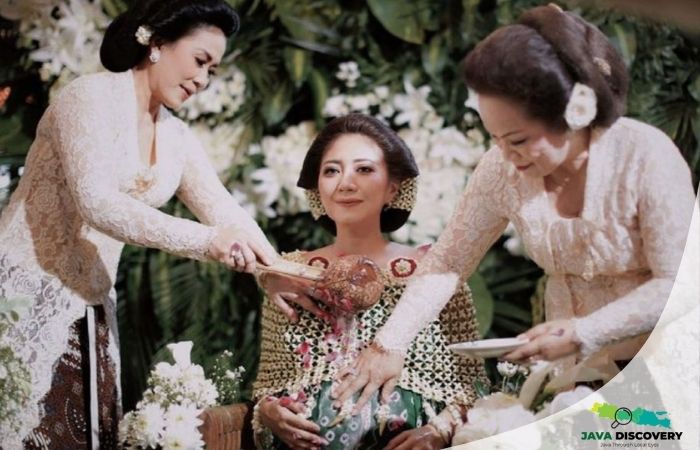
Batik accompanies a Javanese individual from before birth to after death. Certain motifs are worn by expectant mothers to invoke protection and balance. Wedding batik carries layered meanings—hopes for fertility, loyalty, patience, and mutual respect.
Funeral batik tends toward restraint, often dominated by subdued colors and repetitive motifs that reflect the cyclical nature of existence. Death is not an ending, but a return to pattern.
In this way, batik functions as a biography written in cloth.
Artisans as Storykeepers
The Silent Authors
The women and men who draw hot wax onto cloth are not simply craftsmen. They are authors working in a medium that resists haste. Each line must be steady; each pause deliberate. A mistake cannot be erased without consequence.
In traditional workshops, stories are rarely explained aloud. Knowledge is transferred through observation, repetition, and patience. A young artisan learns to read before learning to create.
In this quiet transmission, batik preserves not just form but worldview.
Batik in a Changing World
Modern production methods have made batik widely accessible, but they have also flattened some of its language. Printed patterns can imitate form, but they often lack narrative depth. Still, hand-drawn batik persists, especially where cultural meaning remains central.
In contemporary Java, batik continues to speak—sometimes softly, sometimes in protest. Artists reinterpret old motifs to address environmental loss, identity, and social change. The language evolves, but it does not disappear.
Reading Before Wearing
To wear batik without understanding is not wrong, but it is incomplete. Each motif invites attention. Each pattern asks a question: Who are you today? What do you carry? What do you wish to say without speaking?
In Java, the most powerful messages are rarely shouted. They are worn, folded, and passed on