Gamelan, Music That Mirrors the Order of the Universe

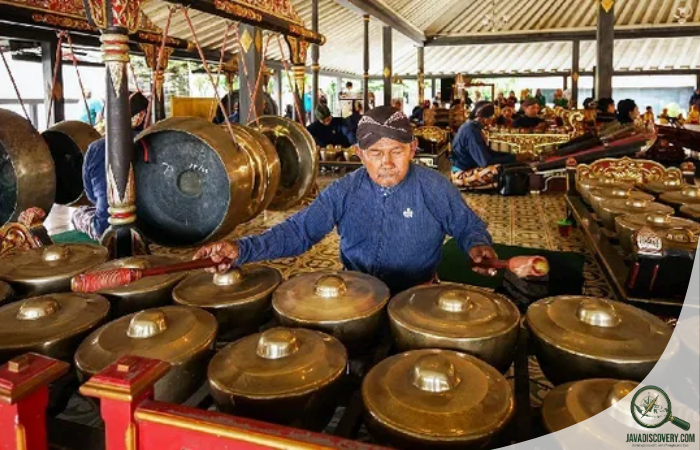
javadiscovery.com – At dawn in a quiet Javanese village, the air is still cool and heavy with moisture. Roosters crow in uneven rhythms, bamboo leaves rustle softly, and somewhere behind the walls of a pendopo, bronze begins to breathe. A single mallet touches a metal key. The sound does not rush outward. It settles, expands, and lingers, as if the morning itself is listening.
This is gamelan. Not merely music, but a way of hearing the universe.
The First Resonance
The earliest notes of gamelan rarely announce themselves loudly. They arrive patiently, one tone at a time, allowing silence to exist between strikes. The instruments—metallophones, gongs, drums, and zithers—are arranged like a small cosmos, each with a defined role, each dependent on the others. No instrument claims dominance. Meaning emerges only through relationship.
To sit near a gamelan ensemble is to feel sound physically. Bronze keys shimmer with heat absorbed from the day. Large hanging gongs sway almost imperceptibly after being struck, their low frequencies traveling through the wooden floor and into the bones of those nearby. The music does not chase melody in the Western sense; instead, it circles time.
For centuries, Javanese people have understood gamelan not as entertainment alone, but as a reflection of how existence itself is ordered.
Instruments Forged With Intention
Each gamelan set is unique. Instruments are never mixed between ensembles, because they are tuned together as a single body. The bronze is melted, poured, hammered, and polished by master craftsmen whose work blends metallurgy with ritual discipline. During the forging process, silence is observed at certain moments. Words are chosen carefully. Intention matters.
The instruments themselves carry names and functions that mirror cosmic layers. The gong ageng, the largest and deepest-sounding gong, anchors the entire musical cycle. Its voice marks the completion of time, the return to origin. Smaller gongs divide time into phrases. Metallophones weave melodic frameworks, while the kendang drum guides tempo and emotional contour.
Nothing is ornamental. Everything exists for balance.
Time as a Circle
Gamelan music unfolds in cycles known as gongan. Unlike linear compositions that progress toward a climax, gamelan moves in rotations. The music departs, wanders, and always returns. Listeners familiar with the structure can anticipate the arrival of the great gong long before it sounds, feeling its approach like a distant tide.
This circular sense of time aligns closely with Javanese cosmology, where life is understood as a continuous process rather than a straight line. Birth, death, seasons, and spiritual states all rotate through recurring phases. Gamelan does not dramatize struggle. It teaches patience.
As one elderly musician in Surakarta once explained, “The gong does not hurry. Neither should people.”
Tuning Between Worlds
Unlike standardized Western tuning systems, gamelan uses scales known as slendro and pelog, each with subtle variations between ensembles. There is no universal pitch. What sounds harmonious in one village may feel slightly foreign in another.
This intentional imperfection reflects a deeper worldview. Absolute precision is not the goal. Harmony arises from adjustment, listening, and mutual sensitivity. Musicians do not read sheet music in performance. They memorize patterns, internalize structures, and respond to one another in real time.
To play gamelan well is not to stand out, but to disappear into the collective sound.
Music for the Seen and Unseen
In many traditional contexts, gamelan is performed not only for human audiences. During rituals, offerings are placed near the instruments. Incense smoke drifts upward as musicians play slowly, deliberately. The music is believed to create a welcoming atmosphere for ancestral spirits and unseen guardians.
At royal courts in Yogyakarta and Surakarta, gamelan historically accompanied sacred ceremonies marking cosmic balance between ruler, land, and people. Certain pieces were reserved for specific times of day or particular rituals, never played casually.
The music functioned as a bridge—between worlds, between silence and speech.
The Body Learns Before the Mind
Young gamelan players begin by sitting quietly, absorbing the sound. Instruction often starts without explanation. A teacher demonstrates a pattern. The student imitates. Correction is gentle, sometimes wordless.
Over time, hands learn where to strike. Ears learn when to wait. Ego softens. In a culture where restraint and emotional control are valued, gamelan becomes both musical and ethical training.
Mistakes are not punished. They dissolve into the larger texture, teaching humility rather than fear.
Gamelan and Wayang Shadows
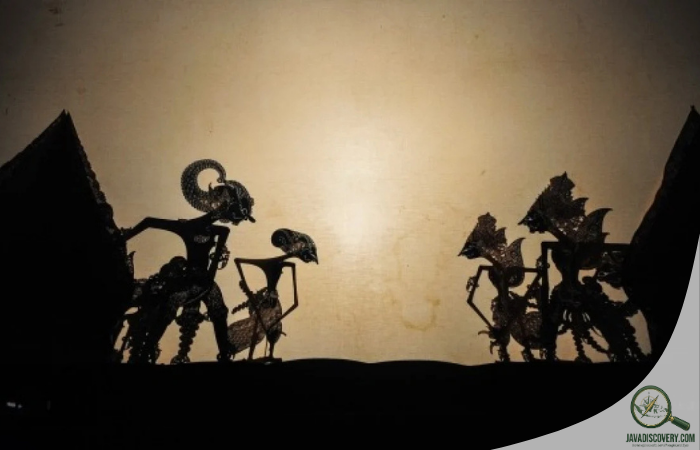
One of gamelan’s most intricate relationships is with wayang kulit, the classical shadow puppet theater of Java. Throughout an all-night performance, the gamelan responds to shifting scenes—battle, comedy, meditation—guiding the emotional undercurrent of the story.
The puppeteer cues musicians through subtle gestures and vocal signals. The music breathes with the narrative, amplifying tension or calming the air. Without gamelan, the shadows would feel weightless. Without shadows, the music would lack direction.
Together, they form a complete cosmological theater.
Silence as Structure
Perhaps the most striking feature of gamelan is its relationship with silence. Pauses are not empty. They are shaped, expected, and meaningful. Space allows resonance to bloom and fade naturally.
In these moments, listeners become acutely aware of their surroundings—the chirping of insects, distant traffic, wind passing through trees. Gamelan does not attempt to dominate soundscape. It converses with it.
The universe, too, is never truly quiet.
Modern Echoes
Today, gamelan exists beyond palaces and villages. It is studied in universities across the world, adapted into contemporary compositions, and explored by experimental musicians. Yet within Java, traditional ensembles continue to play for weddings, communal rituals, and local celebrations.
Despite modern pressures, the core philosophy remains intact. Musicians still gather, sit cross-legged, and tune themselves to one another. The bronze still vibrates with warmth. Time still circles.
Gamelan has never been frozen in the past. It moves slowly, deliberately, always listening.
Listening as a Way of Being
To truly hear gamelan is to adjust one’s expectations. It asks listeners to slow down, to release the need for climax or resolution. The reward is subtle but profound—a sensation of being held within sound rather than entertained by it.
In Java, music has never been separate from life. It reflects how people farm, speak, pray, and grieve. Gamelan mirrors a universe where balance matters more than brilliance, and harmony arises not from sameness, but from attentive coexistence.
As the final gong sounds and fades into morning air, the silence that follows feels fuller than before. The universe continues its quiet rotation. Somewhere, bronze waits to speak again.