The Role of Facial Expression in Javanese Communication

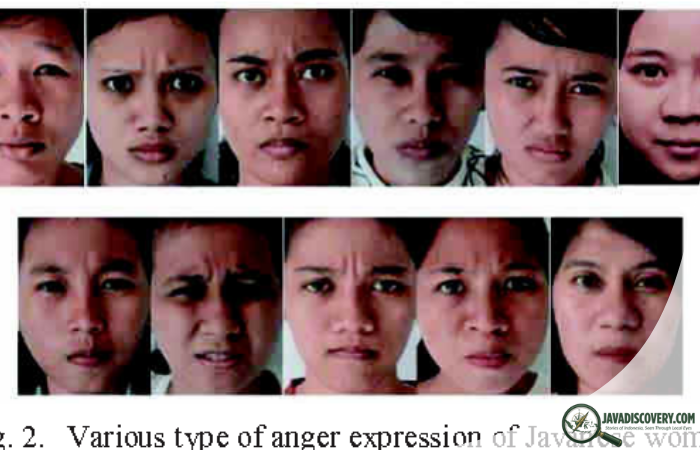
javadiscovery.com – In a quiet conversation beneath a shaded terrace, two individuals sit facing each other. Their voices are low, their words measured. Yet much of the exchange unfolds without speech. A slight smile appears and fades, a pair of eyes soften briefly, a brow tightens almost imperceptibly. These small movements pass quickly, but they carry meaning that words alone do not fully express.
In Javanese culture, communication is not limited to spoken language. Facial expression plays a significant role in conveying emotion, intention, and social awareness. It operates subtly, often in harmony with tone and gesture, forming a complex system of nonverbal communication.
To understand interaction in this context is to learn how to read the face as carefully as the spoken word.

Expression Within Restraint
Javanese communication values emotional restraint. Strong, exaggerated expressions are generally avoided, especially in public or formal settings.
This restraint does not eliminate expression. Instead, it refines it into smaller, more controlled movements.
A slight shift in the eyes or mouth can signal what might otherwise be expressed more openly in other cultures.
Meaning becomes concentrated in subtle detail.
The Gentle Smile
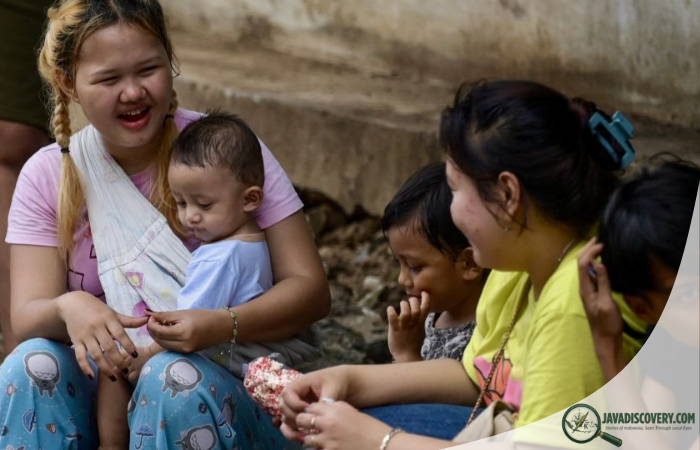
One of the most recognizable facial expressions in Javanese interaction is the gentle smile. It appears in many situations, sometimes reflecting warmth, other times serving as a way to ease tension.
The smile does not always indicate happiness. It can also signal politeness, agreement, or even a soft response to discomfort.
Its meaning depends on context.
This flexibility makes it a versatile communicative tool.
Eyes as Indicators
The eyes play a central role in conveying emotion. A brief glance, a lowered gaze, or a softened look can communicate respect, hesitation, or understanding.
Direct, prolonged eye contact may be moderated, particularly when interacting with elders.
This careful use of gaze reflects social awareness.
It balances attention with respect.
Subtle Signals of Discomfort
Discomfort is rarely expressed through overt facial reactions. Instead, it may appear through slight changes, such as a tightened expression or a momentary pause.
These signals are often brief and easily overlooked.
However, within the cultural context, they are meaningful.
They allow individuals to communicate unease without disrupting harmony.
Coordination with Tone and Gesture
Facial expressions do not operate in isolation. They are closely coordinated with tone of voice and physical gestures.
A soft tone combined with a calm expression reinforces politeness, while a pause accompanied by a subtle look may convey reflection.
This integration creates a layered form of communication.
Each element supports the others.
Learning to Read the Face
The ability to interpret facial expressions is developed through experience. From a young age, individuals observe how others express themselves in different situations.
They learn to notice small changes and connect them to meaning.
This skill becomes intuitive over time.
It allows for deeper understanding in interaction.
Maintaining Social Harmony
Facial expressions contribute to the maintenance of social harmony. By controlling visible reactions, individuals avoid creating discomfort or drawing unnecessary attention.
This control supports a calm and balanced environment.
Expression is shaped not only by personal feeling, but by consideration for others.
It becomes a social act.
Contextual Variation
The use of facial expression varies depending on context. In informal settings, expressions may be slightly more open, reflecting familiarity and comfort.
In formal or public situations, they tend to remain more controlled.
This adaptability demonstrates awareness of social boundaries.
It ensures that expression aligns with the situation.
Modern Influences
Exposure to global media and diverse communication styles has introduced more expressive forms of facial behavior, particularly among younger generations.
Despite this, traditional patterns of restraint remain influential.
Individuals often navigate between these styles.
This creates a dynamic balance between change and continuity.
Misinterpretation by Outsiders
For those unfamiliar with Javanese communication, subtle facial expressions may be difficult to interpret. A restrained expression might be seen as lack of emotion, or a gentle smile misunderstood.
In reality, these expressions carry meaning shaped by cultural context.
Understanding them requires attention to nuance.
It involves learning to observe more closely.
Silence and Expression
Silence often enhances the role of facial expression. In moments without speech, the face becomes a primary channel of communication.
A look, a slight movement, or a shift in expression can convey what words do not.
This interplay between silence and expression deepens interaction.
It allows meaning to emerge gradually.
Emotion Beneath the Surface
Although expressions are restrained, emotions remain present. They exist beneath the surface, revealed through subtle cues rather than overt display.
This approach reflects a cultural preference for balance and control.
It allows individuals to experience emotion without disrupting social harmony.
Expression becomes measured rather than absent.
The Face as Communication
In Javanese society, the face serves as a key medium of communication. It carries signals that complement words, tone, and gesture.
These signals require careful attention to interpret.
They form part of a broader system of meaning.
The face becomes a space where emotion and awareness meet.
A Quiet Exchange
As the conversation under the terrace continues, words remain few, but understanding grows. Each expression, however small, contributes to the exchange.
In this quiet interaction, communication is not driven by volume or intensity, but by precision and sensitivity.
Facial expression, subtle and controlled, becomes a powerful tool, shaping how individuals connect, respond, and maintain harmony within the shared space of everyday life.