Knowing Your Place in Javanese Social Life and Culture

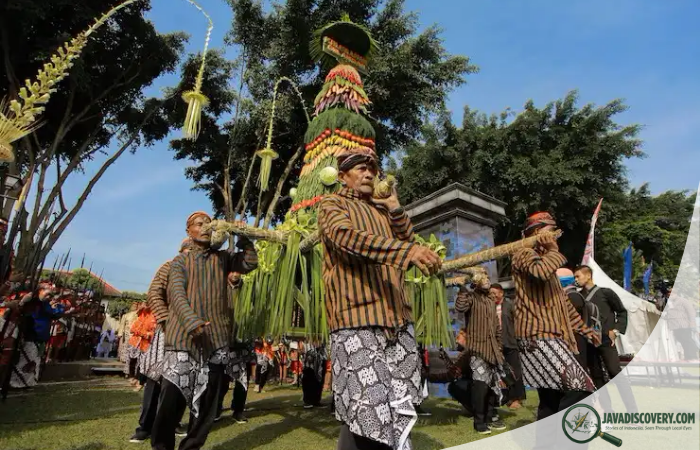
javadiscovery.com – In a family gathering held in a modest home, chairs are arranged in a loose circle. Without instruction, each person chooses where to sit. The elders take positions slightly elevated or at the center, younger members settle along the edges, children remain close to their parents. No one directs this arrangement. No one questions it. Yet the pattern emerges with quiet precision, guided by an understanding that does not need to be spoken.
In Javanese culture, the concept often described as “knowing your place” is not about restriction, but about awareness. It reflects an understanding of one’s role within a social environment, shaped by age, experience, relationship, and context.
This awareness influences behavior in ways that are subtle, continuous, and deeply embedded in daily life.

Position as Awareness, Not Limitation
To know one’s place is not to be confined, but to be aware of context. It involves recognizing how one’s presence relates to others in a given situation.
This recognition guides how individuals speak, move, and interact.
It allows for smooth coordination within social settings.
Position becomes a form of orientation rather than constraint.
Hierarchy as Fluid Structure
Javanese social life includes a sense of hierarchy, but it is not rigid. Roles shift depending on context. A person may hold authority in one setting and defer in another.
This fluidity requires constant adjustment.
Individuals read situations and adapt accordingly.
Hierarchy becomes dynamic rather than fixed.
Age and Experience
Age often plays a central role in determining position. Elders are given priority in seating, speaking, and decision-making.
This respect is not imposed, but offered naturally.
Younger individuals adjust their behavior in response.
This creates a rhythm of interaction based on experience.
Language and Levels of Speech
Awareness of place is reflected in language. Different levels of speech are used depending on the relationship between speakers.
These variations signal respect and understanding.
Choosing the appropriate level requires sensitivity.
Language becomes a tool for maintaining balance.
Movement and Physical Position
Physical movement also reflects this concept. When entering a room, passing in front of others, or joining a group, individuals adjust their posture and position.
They may lower their body slightly or choose a less central space.
These actions communicate awareness without words.
Space becomes part of social expression.
Speaking at the Right Time
Knowing when to speak is as important as knowing what to say. In conversations, individuals often wait for the appropriate moment, especially in the presence of elders or authority figures.
This timing reflects respect and attentiveness.
It ensures that communication flows smoothly.
Silence becomes part of participation.
Learning Through Observation
Children learn this concept by observing others. They watch how adults position themselves, how they speak, and how they respond in different situations.
Over time, these patterns become internalized.
No formal instruction is required.
The learning process is gradual and continuous.
Social Harmony as Outcome
The awareness of one’s place contributes to social harmony. When individuals understand their roles, interactions become more predictable and balanced.
This reduces conflict.
It creates a sense of order.
Harmony emerges from shared understanding.
Internalized Guidance
Rather than relying on external rules, this concept operates internally. Individuals regulate their own behavior based on their understanding of context.
This self-regulation is consistent and subtle.
It reduces the need for correction.
Behavior aligns naturally with expectation.
Misinterpretation by Outsiders
From an outside perspective, knowing one’s place may be misunderstood as passivity or lack of individuality. In reality, it reflects a sophisticated awareness of social dynamics.
Individuals are not losing their identity.
They are expressing it within a relational framework.
Understanding this requires cultural perspective.
Modern Shifts in Perspective
In contemporary settings, especially in urban environments, expressions of hierarchy may become less visible. Younger generations may adopt more egalitarian forms of interaction.
However, the underlying awareness often remains.
It adapts to new contexts.
This creates a blend of tradition and change.
Balance Between Self and Others
Knowing one’s place involves balancing personal identity with social awareness. Individuals express themselves while considering their impact on others.
This balance is not static.
It shifts with context.
It reflects ongoing adjustment.
A Shared Understanding
The effectiveness of this concept depends on shared understanding. When everyone operates with similar awareness, interactions become fluid and coordinated.
This shared perspective strengthens community bonds.
It creates consistency in behavior.
Understanding becomes collective.
A Quiet Order
As the gathering continues, conversations flow, laughter appears and fades, and movement within the room remains balanced. No one directs the scene, yet it unfolds with quiet order.
In Javanese life, knowing one’s place is not enforced or announced. It is practiced through awareness, shaped by context, and sustained through shared understanding.
Within this subtle system, individuals find their position not through instruction, but through a continuous reading of the social world around them.