Bantargebang and the Invisible Fire Beneath Jakarta

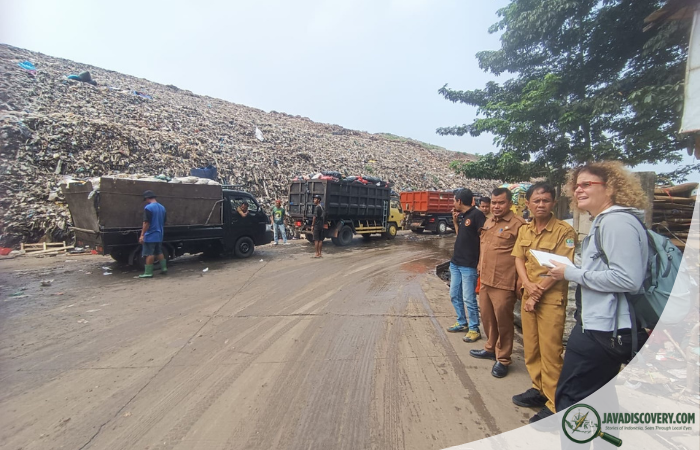
javadiscovery.com – Long before sunrise, the trucks begin arriving.
They crawl slowly through the eastern edge of Jakarta toward Bekasi, carrying the leftovers of a megacity that never truly sleeps. Plastic bags dripping with food waste. Broken furniture. Expired products. Disposable packaging used for only minutes before being thrown away forever.
At the end of that journey stands TPST Bantargebang — a vast artificial landscape of garbage rising like hills from the flatlands of West Java.

For decades, Bantargebang has been known as Jakarta’s final dumping ground. But in recent years, scientists discovered something far more alarming hidden beneath its mountains of waste: one of the largest methane emissions ever detected from a landfill anywhere on Earth.
The Mountain of Waste Outside Jakarta
Located in Bekasi, just outside the Indonesian capital, TPST Bantargebang receives thousands of tons of waste every single day from Jakarta’s urban sprawl.
Seen from a distance, the landfill resembles a strange industrial mountain range. Layers of compacted trash stretch across massive zones, while excavators move slowly over the surface like insects crawling across a wounded landscape.
The smell arrives long before the entrance gate.
For nearby residents, the landfill is both a source of livelihood and a permanent environmental burden. Hundreds of scavengers work among the piles each day, collecting recyclable materials under extreme conditions.
Above them, flocks of birds circle endlessly through the haze.
The Discovery of a Massive Methane Leak
In 2025 and 2026, satellite monitoring conducted by Carbon Mapper, supported by research involving UCLA and NASA, identified Bantargebang as one of the most significant methane emission sources ever recorded from a landfill.
During one observation period, the site was estimated to release around 6.3 metric tons of methane per hour into the atmosphere.
The discovery shocked many environmental observers because methane leaks are often invisible to the human eye. The landfill appeared ordinary from the ground, yet from space, enormous plumes of gas were escaping continuously into the air above Jakarta.
The findings placed Bantargebang among the largest methane hotspots globally, highlighting how rapidly growing cities in developing countries are becoming major contributors to climate-related emissions.
Why Methane Is More Dangerous Than Carbon Dioxide
Methane may not receive as much public attention as carbon dioxide, but scientists consider it one of the most dangerous greenhouse gases in the short term.
Chemically represented as CH₄, methane traps heat in the atmosphere far more effectively than CO₂ over a twenty-year period.
At Bantargebang, methane forms naturally as organic waste decomposes deep beneath the landfill surface. Food scraps, plant matter, paper, and other biodegradable materials slowly rot without oxygen, producing large volumes of gas over time.
When released unchecked into the atmosphere, the environmental impact becomes enormous.
Some climate comparisons estimate that emissions from major landfill methane leaks can rival the warming impact of hundreds of thousands of fossil-fuel vehicles operating simultaneously.
The Fires That Never Truly End
For local residents, methane is not only a climate issue. It is also linked to a recurring danger that has haunted Bantargebang for years: fire.
Landfill fires can begin underground, hidden beneath layers of waste where temperatures rise due to chemical reactions and decomposition.
Combined with dry weather and trapped flammable gases, parts of the landfill can suddenly ignite.
During major fires, thick smoke blankets surrounding neighborhoods. The air becomes heavy with toxic particles, while firefighters struggle to extinguish flames buried deep inside the waste mountain.
Even after surface fires appear extinguished, heat can remain trapped underground for days or even weeks.
Life Beside the Landfill
Despite the environmental risks, Bantargebang is also home to entire communities whose lives depend on the waste economy.
Scavengers sort through garbage searching for plastic bottles, cardboard, metal, and reusable materials that can be sold to recycling collectors.
Truck drivers spend hours moving through endless queues beneath the tropical heat. Small food stalls operate near the landfill entrance, serving workers who spend their days surrounded by the smell of decomposition.
Children grow up within sight of the trash hills.
For many families, the landfill is not a distant environmental debate discussed in conferences or climate reports. It is simply everyday life.
Turning Trash Into Energy
Ironically, the methane escaping from Bantargebang could actually become a valuable energy source.
In many countries, landfill gas is captured through pipe systems and processed into electricity or industrial fuel. Proper methane capture not only reduces greenhouse emissions but also lowers the risk of uncontrolled fires.
Bantargebang has explored several waste-to-energy initiatives over the years, yet the scale of emissions suggests that large amounts of methane are still escaping freely into the atmosphere.
The challenge is enormous. Jakarta produces waste faster than infrastructure improvements can keep up.
As the city continues growing, so does the pressure placed upon Bantargebang.
Jakarta’s Waste Problem Is Everyone’s Problem
Bantargebang exists because millions of people throw things away every day.
The landfill is not merely a local issue hidden on the outskirts of Jakarta. It reflects the deeper reality of modern urban life: endless consumption paired with limited responsibility for what happens after disposal.
Every plastic wrapper, unfinished meal, or disposable product eventually travels somewhere.
Most people never see that final destination.
But at Bantargebang, the hidden cost of convenience rises into the sky itself — not only as smoke from landfill fires, but also as invisible methane drifting into Earth’s atmosphere.
From space, the gas above Bantargebang appears as a massive invisible cloud. Yet on the ground, it begins with something far smaller: the ordinary act of throwing something away.