The History of Alun Alun Malang and the Making of a City

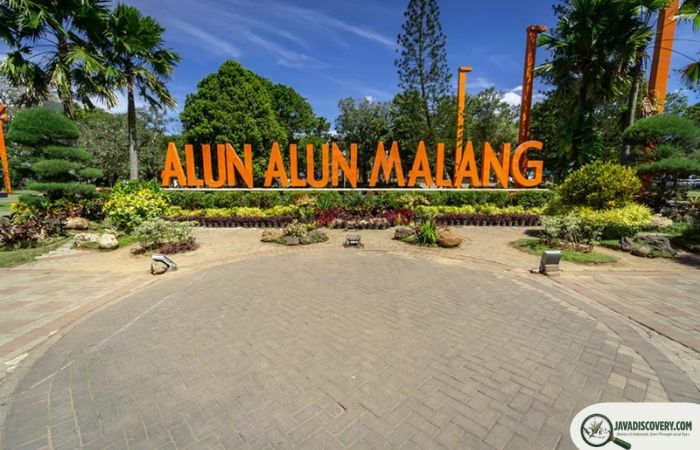
In the centre of Malang, where traffic flows around trees, pedestrians cross the square and the sounds of the city rise and fall, there is a space that has witnessed generations of change.
Today, Alun Alun Malang may appear to be an ordinary public park. Yet its history reaches back to the nineteenth century, when Malang was undergoing a profound transformation under Dutch colonial rule.
The square was established in 1882, at a time when new houses and administrative developments were beginning to reshape the western part of the city. More than a century later, the same open space remains one of the most recognizable landmarks of central Malang.
Before the Modern City of Malang
The history of Malang is considerably older than its colonial-era streets and buildings. The region has connections to ancient East Javanese kingdoms, including Kanjuruhan, although the details of Malang’s early history must be separated carefully from later traditions and legends.
By the eighteenth and nineteenth centuries, however, Malang had entered a very different political landscape. The Dutch East India Company gained control over the Malang area in 1767, while Dutch administrative influence expanded during the nineteenth century.
The Dutch government established its administrative centre around the Brantas River in 1821, and Malang had an Assistant Resident by 1824. These developments gradually transformed the area from a regional settlement into an increasingly important administrative centre.
The creation of the town square in 1882 was part of this wider transformation. The Malang City Government records the construction of houses in the western part of the city and the establishment of the alun-alun in the same year.
What an Alun Alun Meant in Java
The word alun-alun refers to a large open public space, traditionally associated with the centre of a Javanese town. In many traditional cities, the square stood near the seat of political authority and became an important setting for ceremonies, gatherings and public activity.
Its meaning was therefore more complicated than that of a modern park.
Historian Purnawan Basundoro explains that the alun-alun traditionally formed the heart of a Javanese urban network and carried symbolic associations with political power. In traditional centres, it was commonly positioned in relation to a palace or regional centre of authority.
Malang, however, did not simply reproduce the layout of the great court cities of Central Java. Its urban development took place within a different historical and colonial context.
The old Alun Alun Malang gradually became an important node in the city’s network of roads and buildings. Its significance came not only from the traditional idea of an alun-alun, but also from the way colonial administration reshaped the surrounding city.
1882 and the Birth of Alun Alun Malang
The year 1882 marks an important point in the history of the square. According to the Malang City Government, the town square was established as new development expanded in the western part of the city.
At first glance, the square might seem to represent continuity with older Javanese urban traditions. But its location and surrounding buildings reflected the changing political structure of nineteenth-century Malang.
Rather than sitting directly before a royal palace in the manner of Yogyakarta or Surakarta, the square developed as part of a colonial administrative town. Its role was therefore shaped by both local urban traditions and the practical needs of colonial government.
This distinction is important. The history of Alun Alun Malang cannot simply be understood as a continuation of the palace-centred alun-alun model found elsewhere in Java.
A Square Surrounded by a Changing City
As Malang developed, the buildings surrounding the square became a physical reflection of the city’s social and political structure.
Government offices, commercial establishments, religious buildings and residential areas emerged around the central urban space. The nearby Masjid Jami Malang became an important part of the landscape, standing on the western side of the square.
The relationship between the square and the mosque also illustrates something characteristic of historic Indonesian cities: political, commercial and religious life often existed within the same urban landscape.
For residents, the square was not simply an administrative space. It became a place where people gathered, traded, travelled through and conducted everyday activities.
Malang Becomes a Municipality
Another major turning point came on 1 April 1914, when Malang was designated a gemeente, or municipality, under Dutch colonial administration.
The change reflected the city’s rapid urban development and the increasing influence of European residents and municipal institutions.
But modernization also changed the relationship between the colonial government and the old square.
According to Basundoro’s research, the growth of the European population after 1900 contributed to a desire to develop a new urban centre with a more European character. The municipal government eventually established another major square in 1922.
Malang and Its Two Alun Alun
This is one of the most fascinating chapters in Malang’s urban history.
In 1922, the municipal authorities created a new square known during the colonial period as JP Coen Plein. Today, it is commonly known as Alun Alun Bunder, referring to its circular form.
Malang therefore developed two major spaces carrying the idea of an alun-alun.
The original Alun Alun Malang remained the historic public square in the older city centre. Alun Alun Bunder, meanwhile, became associated with the newer municipal centre and the modernizing ambitions of the colonial administration.
Basundoro’s study describes this development as a significant change in the urban structure of Malang. The relocation of municipal offices towards the newer square represented an attempt to establish another centre of governmental and urban life.
The two squares consequently acquired different meanings. One was closely connected to the older social and commercial life of the city, while the other represented the modern municipal city being developed by the colonial administration.
When the Old Square Became a People’s Space
The story of Alun Alun Malang was never controlled entirely by governments.
Ordinary residents continuously shaped the meaning of the square through their daily activities. Traders occupied parts of the area, while flower sellers became a familiar presence around the western side.
Basundoro records that the square became an important flower market and remained one of Malang’s major outlets for flowers until the 1960s.
This reveals an important tension in the history of the square. Authorities could attempt to organize and regulate the space, but residents continued to use it according to their own needs.
The alun-alun was therefore simultaneously an official space and a popular space.
War, Occupation and Independence
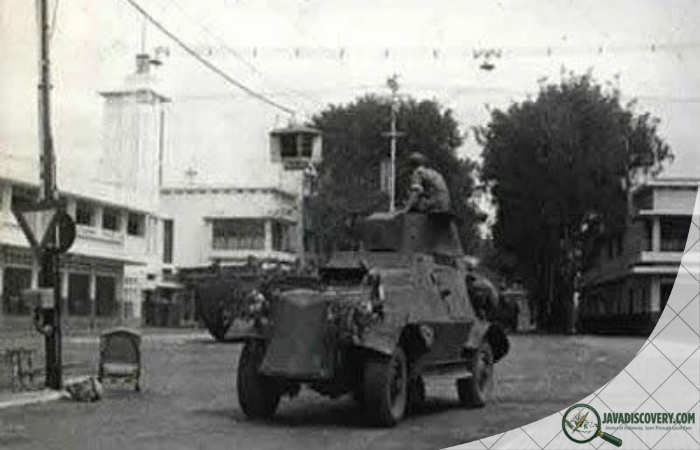
The political meaning of Alun Alun Malang changed again during the turbulent decades of the 1940s.
Japanese forces occupied Malang on 8 March 1942. The occupation interrupted the city’s previous colonial political order and brought a new system of authority.
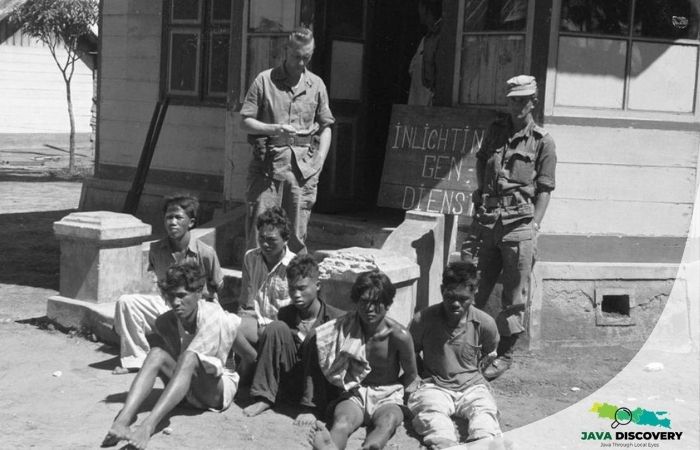
After Indonesia proclaimed independence, Malang became part of the Republic of Indonesia in September 1945. The following years were marked by conflict between Indonesian and Dutch forces.
The square became part of this broader transformation. Public spaces in Indonesian cities were increasingly used not merely for everyday activities but also for political expression, demonstrations and the display of new national symbols.
A Monument for a New Nation
One of the most striking episodes in the post-war history of the square was the appearance of an independence monument.
Basundoro’s research describes how the original monument was damaged during the revolutionary period and how efforts were later made to rebuild it. A committee established in 1950 worked for several years to raise funds, and the monument was reconstructed in 1953.
The monument carried a powerful new meaning. The square that had once existed within a colonial administrative landscape was now being used to express the identity of an independent Indonesia.
Its symbolism reflected a broader transformation taking place across Indonesian cities after independence. Colonial urban spaces were being given new meanings by the people who now inhabited and governed them.
From Political Symbol to Everyday Urban Space
As Malang entered the decades after independence, the meaning of the old square continued to evolve.
It was no longer simply a place associated with colonial administration. It became a public space used by different groups for different purposes: shopping, meeting friends, walking, resting, celebrating events and observing the movement of the city.
This transformation is common in the history of urban squares. A space created or shaped by political authority can eventually become something much broader in the imagination of its residents.
The history of Alun Alun Malang demonstrates exactly this process.
Alun Alun Malang Today
Standing in the square today, it is easy to see only the present.
Families gather beneath the trees. Pedestrians move between the surrounding streets. Shops, restaurants and religious buildings continue the commercial and social activity that has long characterized this part of Malang.
Yet beneath these ordinary scenes are several layers of urban history.
The square emerged during the nineteenth-century expansion of colonial Malang. It later witnessed the city’s transformation into a municipality, the creation of a second urban centre, the upheavals of Japanese occupation and revolution, and the symbolic reconstruction of an independent Indonesian city.
Its history also reveals something deeper about public spaces in Java. An alun-alun is never simply an empty field. Its meaning is created by the buildings around it, the authorities who attempt to control it and, most importantly, the people who continue to use it.
Reading Malang Through Its Oldest Square
Malang is often remembered for its cool climate, colonial architecture, universities and position among the mountains of East Java. But its urban identity cannot be separated from the spaces where generations of residents have gathered.
Alun Alun Malang is one of those spaces.
Its trees and pathways may belong to the present, but the ground beneath them carries traces of a much longer story. From colonial administration to independence, from commerce to public gatherings, the square has repeatedly changed meaning without losing its place at the centre of Malang’s urban life.
Perhaps that is what makes an old city square so revealing. It does not preserve history behind glass. It allows history to continue moving through it, one generation at a time.
Writer: Sari Mahendra