The Stone Guardians Protecting East Javanese Temples

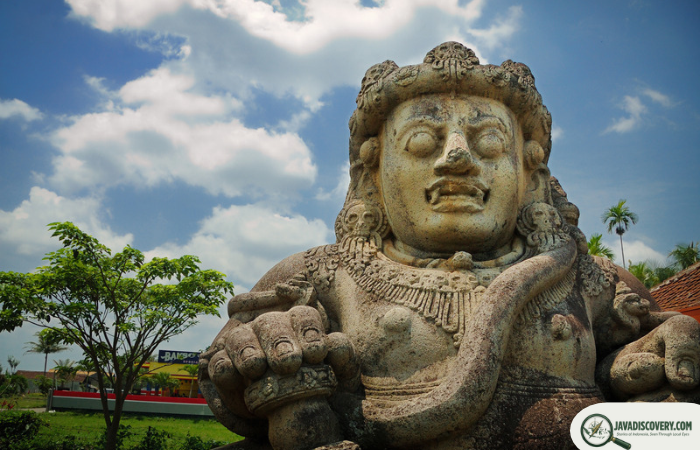
Standing at the entrance thresholds of Java’s ancient sacred sites, massive stone figures carved from dark volcanic basalt keep an eternal watch. Known as dwarapala—a Sanskrit term meaning “door guardian”—these stone sentinels have guarded the sacred architecture of East Java for over a millennium. They mark the boundary where the ordinary world ends and the sacred realm begins.
Across the historical heartlands of East Java, these monolithic gatekeepers embody a unique synthesis of art, protection, and spiritual philosophy. Rather than acting as mere passive statues, they serve as active spiritual guardians designed to absorb negative energy and ward off spiritual disharmony before a devotee steps into the inner temple grounds.
Iconography and Symbolism of the Dwarapala
The visual language of East Javanese dwarapala statues is distinct, powerful, and deliberate. Unlike the slim, serene deity statues found in sanctuary cellas, guardians are depicted with thick, muscular bodies, crouching or kneeling poses, and intensely expressive faces. Their bulging eyes (mripat kolokan) and sharp fangs protruding from wide, snarling mouths are intended to terrify malicious entities.
In their hands, these guardians usually wield a heavy wooden or stone club known as a gada, resting heavily on the ground or propped against a shoulder. Many statues are draped with slithering serpents serving as armlets or sacred cords (upavita), symbolizing control over raw nature and subterranean powers. The frightening appearance serves a dual purpose: it repels evil while reminding visitors to shed their earthly ego and ill intentions before crossing into sacred space.
Prominent Temple Guardians Across East Java
The Monolithic Giants of Candi Singosari
In the Arek cultural region near Malang, the ancient realm of the 13th-century Singhasari Kingdom holds some of the most impressive stone guardians in Southeast Asia. Located near Candi Singosari, two colossal twin dwarapala statues stand nearly four meters tall, carved from massive single blocks of solid volcanic rock.
Positioned on either side of what was once the main royal entrance avenue to the temple complex, these twin giants kneel with one hand resting on their knee and the other gripping a heavy club. Local traditions hold that these giants guarded not only the physical temple, but also the royal city of King Kertanegara, showcasing the extraordinary stone-carving mastery achieved by 13th-century East Javanese artisans.
Majapahit Guardians and Regional Variants
As power shifted eastward during the 14th-century Majapahit era, guardian iconography underwent artistic refinement across the Mataraman and surrounding regions. At Candi Penataran in Blitar—the largest Hindu temple complex in East Java—numerous dwarapala statues line the outer terraced courtyards. Dated to various periods, these figures display detailed carving, featuring elaborate hair ornaments, fine jewelry, and intricate sarong motifs.
Smaller variations of guardian figures can also be found scattered throughout the former capital region of Trowulan. Here, artisans crafted miniature stone and terracotta gatekeepers for private family shrines and royal gateways, proving that guardian veneration was embedded in both royal state rituals and everyday domestic life.
Living Heritage and Contemporary Reverence
Today, East Java’s ancient temple guardians are far more than historical artifacts or archaeological museum pieces. In many rural villages, local communities and site guardians (juru pelihara) treat these stone figures with ongoing respect, maintaining their role as local cultural protectors.
Villagers frequently visit temple guardians during local bersih desa (village cleansing) rites or communal gatherings, placing offerings of fresh flowers (kembang telon) and incense at their stone bases. Enveloped in the shade of ancient banyan trees, these stone guardians remain timeless symbols of Java’s rich artistic heritage, standing as vigilant sentinels between past and present.
In preserving these stone guardians, East Javanese communities keep alive an ancient legacy of balance, protection, and deep spiritual respect for sacred space.
Writer: Sari Mahendra