Unveiling Janger Banyuwangi and Its Hybrid Roots

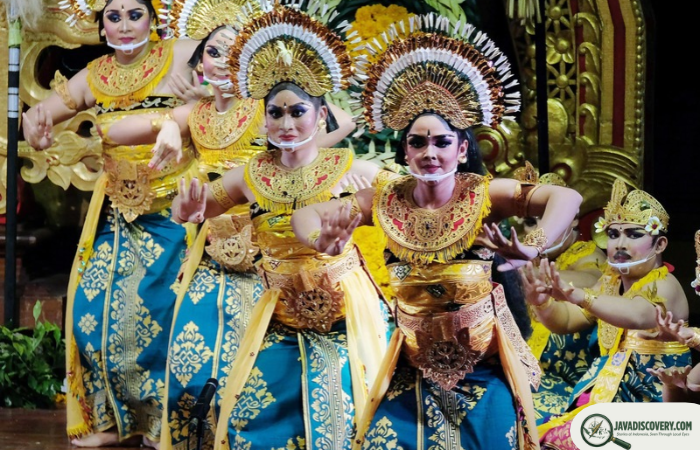
Where the volcanic slopes of Mount Ijen dip toward the narrow strait separating East Java from Bali, a rare performance art thrives in the twilight. Known as Janger Banyuwangi—or locally as Damarwulan—this folk theater tradition presents a striking visual contradiction. Dancers take the stage adorned in glittering Balinese headdresses and ornate gold-embroidered costumes, yet the words flowing from their lips are sung in sweet Osing and classic Javanese dialects.
Far from being a modern tourist fusion, this vibrant stage drama is a living artifact of centuries of cross-strait movement, cultural trade, and artistic dialogue across the Bali Strait. Rooted in the unique borderland spirit of Banyuwangi, it offers an captivating window into how distinct island traditions can merge into an entirely original expression of community identity.
A Cross-Strait Cultural Encounter
The origins of Janger Banyuwangi trace back to the late 19th and early 20th centuries, a period marked by frequent seasonal migration between East Java and North Bali. Merchants, itinerant artists, and farm laborers regularly crossed the narrow sea, carrying songs, stagecraft, and theatrical styles in their wake.
In the fertile agricultural hamlets of Banyuwangi’s indigenous Osing community, local theater troupe leaders encountered the popular Balinese Janger youth dance. Captivated by its energetic choreography and striking aesthetics, Osing artists adopted the Balinese visual style and musical accompaniment. However, instead of adopting Balinese folk tales, they grafted these artistic elements onto their own deeply cherished Javanese drama repertoire, giving birth to a unique hybrid folk theater.
Artistic Anatomy: Balinese Attire and Javanese Lore
Visual Aesthetics and Musical Fusion
Step near the village stage during a performance, and the eyes are immediately met with Balinese artistic splendor. Male and female performers wear folded cloth crowns (udeng), golden chest collars, and brilliant silk wraps that mimic Balinese dance attire. Their movements feature the sharp, expressive eye glances (seledet) and rigid arm postures characteristic of Balinese dance.
Accompanying the performance is a hybrid musical ensemble. Bright, metallic Balinese gamelan beats—punctuated by dynamic cymbal clashes (ceng-ceng)—provide an urgent, pulsating rhythm. Yet, as the music softens, lead vocalists sing melodic Javanese verse (tembang) and Osing dialogue, bridging the two musical worlds in seamless harmony.
The Folk Dramas of Majapahit and Damarwulan
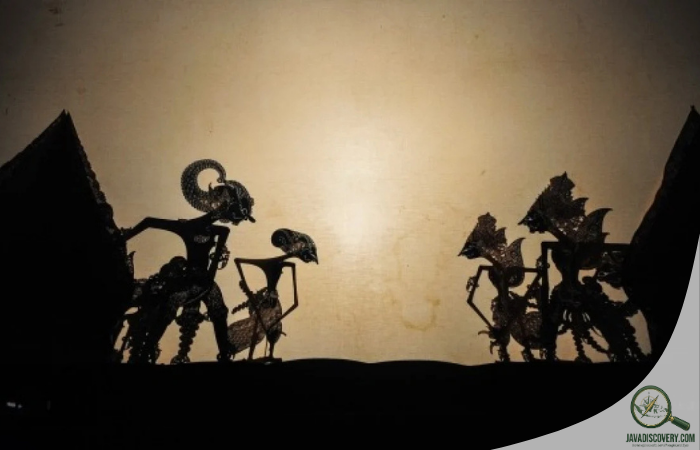
While the visual shell belongs to Bali, the heart of the narrative belongs entirely to East Javanese lore. The theatrical repertoire draws heavily from classic folk epics set during the legendary Majapahit era, most notably the tale of Damarwulan and Minak Jinggo.
In local folk tradition, the story pits the heroic grass-cutter turned paladin Damarwulan against the rebellious, iron-headed ruler of Blambangan, Minak Jinggo. On stage, actors portray these larger-than-life figures with dramatic flair, using comical interludes by clown characters (punokawan) to break high-stakes courtly drama with direct, egalitarian humor typical of Banyuwangi.
Preserving Osing Folk Identity at the Borderland
Today, Janger Banyuwangi remains an essential pillar of community celebrations across the region, performed at night during weddings, harvest festivities, and village thanksgiving rites. Troupe members are rarely full-time professionals; they are local farmers, artisans, and youth who preserve the tradition out of deep pride for their ancestral heritage.
In a rapidly modernizing world, Janger Banyuwangi stands as an enduring testament to the open-minded, adaptive spirit of the Osing people. It proves that cultural borders are not walls, but fertile meeting grounds where creative exchange can yield timeless artistic beauty.
Through the shimmering lights and booming gongs, Janger Banyuwangi continues to weave the melodies of Java and the movements of Bali into a single, breathtaking tapestry along the eastern edge of the island.
Writer: Sari Mahendra