Unveiling the Ancient History of Malangan Mask Dance

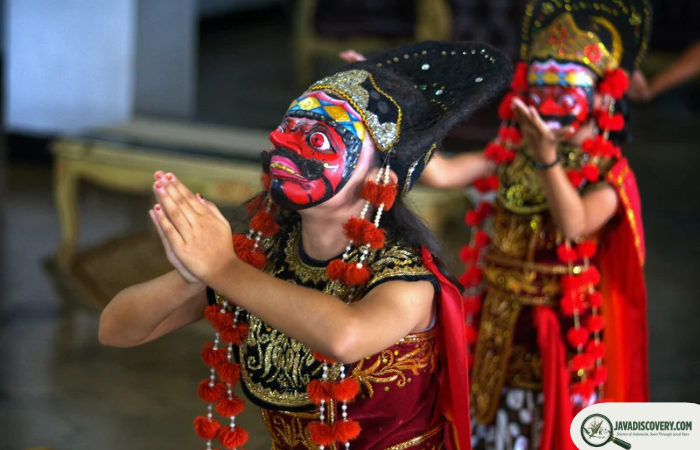
High in the cool volcanic highlands of East Java, where the Arek cultural sphere flourishes, a vibrant performance tradition breathes life into carved wood. Known locally as Wayang Topeng Malang, this intricate mask drama is far more than a visual spectacle. It is an enduring cultural narrative that bridges centuries of sacred ancestor veneration, royal courtly epics, and rural village traditions.
Through vivid facial expressions and stylized movements, the dance reveals an unseen side of Javanese heritage. While court arts in Central Java evolved with refined formality, Malang’s mask performance retained an egalitarian, expressive, and direct spirit deeply rooted in the soil and soul of the region.
Ancient Roots from Sacred Rituals to Royal Courts
The origins of mask performance in East Java predate written chronicles, tracing back to animistic rites of antiquity. Before the arrival of formalized theater, early communities carved wooden masks to invoke ancestral spirits (hyang) during seasonal harvest prayers and village cleansing ceremonies. The mask served as a sacred conduit, allowing spiritual guardians to temporarily inhabit the dancer’s body and impart wisdom or protection to the living.
As powerful Hindu-Buddhist kingdoms emerged across East Java, these sacred rites transitioned into the grand courts of Singhasari and Majapahit. Known in ancient Javanese literature as raket or topeng, mask dancing became a prestigious form of court entertainment and ritual devotion. The 14th-century epic poem Nagarakretagama records that King Hayam Wuruk himself was an accomplished mask dancer who performed within the royal precincts, blending divine symbolism with courtly artistry.
The Evolution of the Panji Cycle in Malang’s Mask Drama
From Court Epics to Folk Traditions
During the peak of the Majapahit era, a distinct native literary genre began to eclipse imported Indian epics like the Ramayana and Mahabharata. This was the Panji cycle—a rich collection of heroic romances centered on the adventures of Raden Panji Asmarabangun and his beloved, Princess Dewi Sekartaji.
Following the decline of the Majapahit empire and the shifting centers of political power, these courtly dramas moved outward into rural agricultural communities. In the highland hamlets around Malang, local performers adapted the Panji tales into public street theater and village rituals. The tales of love, exile, disguises, and political intrigue resonated deeply with local audiences, solidifying the Panji epic as the fundamental narrative backbone of Wayang Topeng Malang.
Distinctive Arek Character Aesthetics
The transition into the Arek cultural domain permanently shaped the aesthetic character of Malang’s masks. Unlike the muted pastel tones of Central Javanese court masks, Malangan masks feature bold colors, sharp geometric contours, and expressive facial carvings that convey character traits instantly.
Noble figures like Panji Asmarabangun are carved with sleek eyes and painted in gentle white or green tones to denote purity and calm authority. In contrast, antagonist figures such as the fierce King Klana Sewandana feature bulging eyes, open fangs, and vibrant red paint symbolizing unchecked passion and wrath. Dancers match these visual designs with dynamic, athletic footwork and direct gestures, echoing the frank and open communication style of the Arek people.
Preserving the Living Tradition in Highland Enclaves
Throughout the 20th century, as modern entertainment swept through urban centers, Wayang Topeng Malang survived thanks to dedicated artisan-performer lineages in rural highland enclaves. Villages surrounding Mount Kawi and Mount Bromo—such as Pakisaji, Jabung, and Tumpakrejo—became sanctuaries for the art form.
Master carvers and troupe leaders passed down sacred carving techniques, oral scripts, and dance vocabularies across generations. In these communities, crafting a mask remains a spiritual undertaking involving quiet contemplation and deep respect for the wood. Today, local studios (sanggar) continue to train young dancers and carvers, ensuring that this ancient tapestry of sacred history and folk drama continues to echo across the Malang plateau.
In every carved groove and rhythmic step of the Malangan Mask Dance lies the living memory of East Java—a tradition that continues to honor its ancient gods while telling timeless human stories.
Writer: Sari Mahendra