The Legend of Telaga Buret and the Sacred Water of Tulungagung

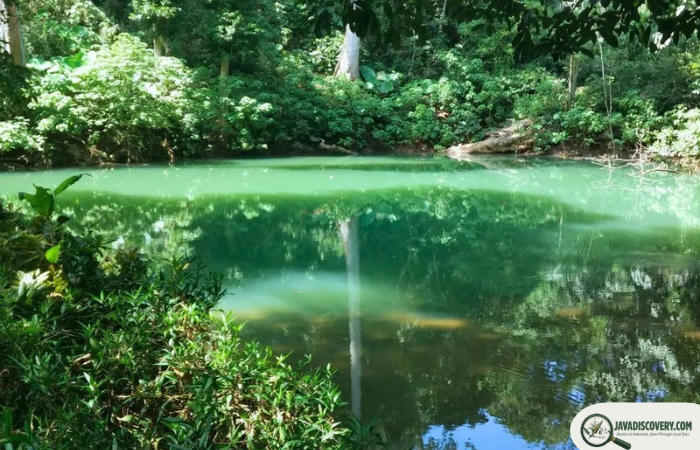
In the southern hills of Tulungagung, East Java, a small lake rests quietly among limestone landscapes and village farmland. Its surface can look deceptively ordinary: water, trees, rocks, and the sounds of rural life. Yet for generations, Telaga Buret has carried a story far larger than its size.
Local tradition tells of Eyang Jigang Joyo, a nobleman travelling with his companions when they encountered a crying baby. The child was thirsty. At the place now associated with Telaga Buret, Jigang Joyo is said to have dug into the earth in search of water. A spring emerged, and according to the legend, its flowing water eventually formed the lake.
Whether the story is understood as history, folklore, or ancestral memory, Telaga Buret reveals something deeper about East Java. Here, a source of water is not simply a natural feature. It is connected to agriculture, ritual, community identity, and an annual tradition known as ulur-ulur.
A Small Lake in the Limestone Country of Tulungagung
Telaga Buret lies in Sawo Village, Campurdarat District, in southern Tulungagung. The surrounding landscape belongs to the karst environment of the southern part of the regency, where limestone hills, caves, underground waterways, and springs shape both the geography and the lives of local communities.
Geological descriptions of Telaga Buret offer a very different explanation for the presence of its water from the traditional legend. The lake is a natural karst lake measuring approximately 30 by 40 metres. Its water is associated with an underground karst system beneath the surrounding limestone hills.
According to the Tulungagung Geopark’s geological documentation, Telaga Buret functions as an outlet of an underground water system. Water emerges through a spring before collecting in the lake, while the absence of a conventional surface outlet means water can return underground through fractures and karst channels. :contentReference[oaicite:0]{index=0}
This makes Telaga Buret more than a scenic body of water. It is part of a hidden hydrological landscape in which much of the movement of water takes place beneath the ground.
The Tulungagung Geopark also recognises Telaga Buret within its network of geological and cultural sites. It appears alongside caves, ancient volcanic formations, fossil-bearing areas, temples, inscriptions, and other places that reveal the complex natural and cultural history of the region. :contentReference[oaicite:1]{index=1}
The Legend of Eyang Jigang Joyo
The most memorable story surrounding Telaga Buret begins not with a lake, but with a child.
According to a version preserved by the Tulungagung local government, Eyang Jigang Joyo was a nobleman associated in local tradition with the Mataram kingdom. He was travelling on horseback with a group of companions when they encountered a baby crying along the way.
Moved by compassion, Jigang Joyo took the child with him.
Later, when the group stopped to rest at the location now known as Telaga Buret, the baby began crying again. This time, the reason was thirst. The travelling party reportedly became confused about where to find water.
Jigang Joyo then dug into the ground. From the hole, water began to emerge and continued flowing. In the oral tradition, this spring eventually became Telaga Buret. Before leaving, Jigang Joyo is said to have reminded local people to preserve the water source. :contentReference[oaicite:2]{index=2}
The story should be read carefully. The identity and historical background of Jigang Joyo belong to local tradition rather than securely documented political history. Different retellings may also vary in their details. For an archaeological or historical account, the legend cannot by itself establish that the events occurred exactly as described.
But folklore does not need to function as a historical document to be culturally important.
The enduring power of the story lies partly in what it teaches: water appears when people need it, and once found, it must be cared for.
Water, Rice, and the Story of Prosperity
The story of Telaga Buret is not limited to Jigang Joyo. Another strand of local tradition connects the area with Dewi Sri and Joko Sedono, figures associated with prosperity, clothing, food, and agricultural abundance.
Local accounts describe an ancient period of hardship in Glagah Wangen, an area associated with present-day Sawo. A prolonged dry period brought crop failure and hunger. In the story, the departure of Dewi Sri and Joko Sedono symbolised the disappearance of prosperity from the community.
Messengers were then sent to persuade the pair to return. Their return was associated with the fulfilment of particular conditions, including the provision of mythical animals as their mounts. :contentReference[oaicite:3]{index=3}
These stories place Telaga Buret within an agricultural worldview in which water, fertility, food, and social prosperity are inseparable.
That connection remains practical today. Water from Telaga Buret has long supported agricultural land in four surrounding villages: Sawo, Gedangan, Ngentrong, and Gamping. Local government accounts describe the water as important for irrigation and farming in these communities. :contentReference[oaicite:4]{index=4}
The result is an unusual meeting between mythology and everyday life. A story about divine prosperity is preserved beside a real water source that continues to help sustain agriculture.
Ulur-Ulur and the Ritual of Giving Thanks
Every year, the relationship between the community and Telaga Buret becomes visible through ulur-ulur, one of Tulungagung’s distinctive traditional ceremonies.
The ritual takes place during the Javanese month of Selo. Members of the local community gather around the lake to express gratitude for the water that continues to support their lives and farmland.
The ceremony is organised by the Paguyuban Sendang Tirto Mulyo, whose members include elders and representatives from the four villages connected to the water source. The gathering is therefore not the ritual of one village alone. It reflects a wider relationship between neighbouring agricultural communities. :contentReference[oaicite:5]{index=5}
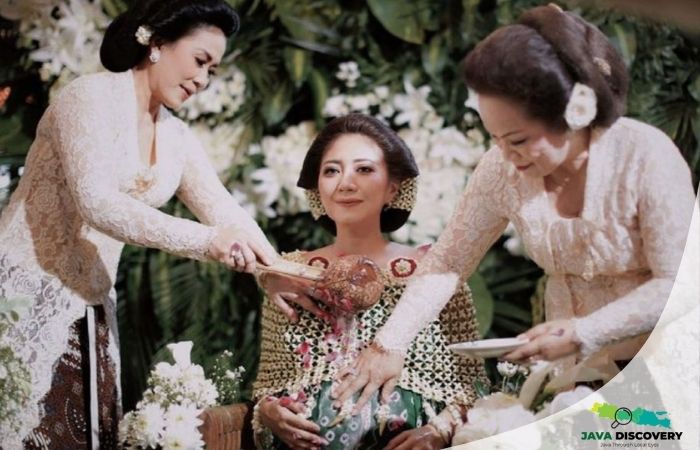
One of the best-known parts of the ceremony is the jamasan, a symbolic cleansing of paired figures representing Dewi Sri and Joko Sedono. The ritual is performed by an appointed female elder under the guidance of the community elders.
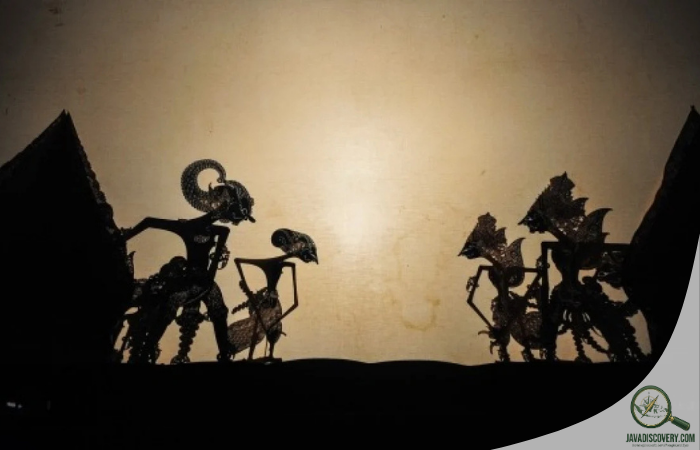
The procession can also include offerings, flowers, traditional performances, and communal gatherings around the lake. In some years, the ceremony has featured Gambyong dance, Tayub, wayang performances, and other forms of Javanese cultural expression. :contentReference[oaicite:6]{index=6}
Why the Ritual Is About More Than Tradition
At first glance, ulur-ulur might appear to be a ceremony preserved simply because it is old. But its meaning becomes clearer when viewed through the relationship between water and agriculture.
The community is giving thanks for something upon which its livelihood depends.
That makes the ceremony an expression of gratitude, but also a reminder. The lake must remain healthy if the surrounding agricultural landscape is to remain productive.
The official account of the 2026 ceremony described ulur-ulur as carrying spiritual and ecological meaning. Hundreds of residents from surrounding villages gathered at Telaga Buret, reinforcing the connection between the ritual, community cooperation, and the continuing importance of the water source. :contentReference[oaicite:7]{index=7}
The ceremony therefore offers a useful way to understand traditional environmental ethics in Java. It does not describe conservation using the language of modern hydrology. Instead, it places water inside a moral relationship between people, ancestors, nature, and the divine.
A Tradition That Nearly Faded
Like many local traditions, ulur-ulur has not existed untouched by time.
Accounts of the tradition describe periods when it faced the possibility of disappearing. Its revival was connected with local elders and the formation of the Sendang Tirto Mulyo community organisation, which helped preserve and organise the ceremony.
This history is significant because it shows that cultural preservation does not always begin in museums, universities, or national institutions. Sometimes it begins with people in a village deciding that a practice inherited from their ancestors is still meaningful enough to continue.
Government records state that ulur-ulur Telaga Buret was recognised as an Indonesian Intangible Cultural Heritage in 2020. The designation places the tradition within a much wider national effort to document and protect living cultural practices. :contentReference[oaicite:8]{index=8}
Yet official recognition is only one part of preservation. A tradition survives because people continue to perform it, teach it, attend it, and understand why it matters.
When Legend Meets Karst Geology
Perhaps the most fascinating aspect of Telaga Buret is the contrast between its legend and its geological explanation.
The legend says that Jigang Joyo dug into the earth because a thirsty child needed water. The geological explanation describes water travelling through an underground karst system before emerging at the surface.
One explanation is cultural. The other is scientific.
They do not have to compete.
For the people who inherited the story, the legend explains the human meaning of the spring. It remembers compassion, thirst, discovery, and the responsibility to protect the water. Geology explains the physical processes that allow water to move through limestone landscapes and emerge at the lake.
In this sense, Telaga Buret contains two kinds of memory. Beneath the surface is the memory written into rock and water. Above it is the memory carried through stories, ceremonies, and generations.
The Hidden World Beneath the Lake
Karst landscapes are often deceptive. What appears to be a simple hill can contain cavities, fractures, caves, and underground channels through which water moves.
Telaga Buret is part of this hidden world.
Geopark documentation describes the lake as a permanent body of water linked to an underground karst system. Water that emerges into the lake can eventually disappear back into the limestone through fractures and underground conduits. This makes the lake an example of how surface landscapes and underground systems are intimately connected. :contentReference[oaicite:9]{index=9}
For visitors, the result may be difficult to see. There is no obvious underground river to watch. There are no dramatic waterfalls announcing the movement of water. Much of the system remains invisible.
Yet that invisible movement is precisely what makes the landscape important.
Protecting a karst spring means protecting more than the water visible at the surface. The surrounding hills, underground passages, vegetation, and recharge areas are part of the same environmental system.
Four Villages and One Shared Water Source
The cultural importance of Telaga Buret becomes especially clear when looking beyond Sawo Village.
Four villages are repeatedly mentioned in local government records as communities benefiting from the water: Sawo, Gedangan, Ngentrong, and Gamping. Their connection to the lake helps explain why ulur-ulur has developed as a shared tradition rather than a private village ceremony. :contentReference[oaicite:10]{index=10}
Water has a way of crossing boundaries.
A field may belong to one family, a village may have its own administration, and each community may have its own daily concerns. But a water source connects them through the landscape.
The annual gathering at Telaga Buret makes that connection visible. Elders, farmers, residents, cultural performers, officials, and younger generations can occupy the same ceremonial space.
It is a reminder that the geography of water can create a social geography of its own.
Why Telaga Buret Matters Beyond Its Legend
It would be easy to describe Telaga Buret simply as a place with an interesting origin story. But doing so would miss the larger significance of the site.
Telaga Buret sits at the intersection of several worlds.
It is a natural karst feature. It is a water source for agriculture. It is a place associated with local legends. It is the setting for an annual traditional ceremony. It is part of Tulungagung’s wider geopark landscape. And it is a place where communities continue to negotiate the relationship between inherited customs and a changing world.
The presence of ulur-ulur also demonstrates that traditional culture is not necessarily frozen in the past. The ceremony continues to adapt to contemporary circumstances while retaining its central purpose: gratitude for water and a collective commitment to remember its importance.
In 2025, for example, the ceremony was presented under the theme Hamemayu Hayuning Bawana, a Javanese expression associated with maintaining the beauty and harmony of the world. The event again brought together the surrounding communities and featured traditional arts alongside the ritual. :contentReference[oaicite:11]{index=11}
The Story That the Water Still Tells
Standing beside Telaga Buret, the legend of Jigang Joyo can feel remarkably close to the landscape.
There is the lake itself, quietly collecting water. There are limestone hills surrounding the area. Beyond them are fields that depend on irrigation. And once a year, people return to the water carrying offerings, memories, prayers, and cultural practices inherited from earlier generations.
The scientific story tells us how water can move through the hidden architecture of karst. The traditional story tells us why the water matters to the people who live beside it.
Neither story needs to erase the other.
Perhaps that is the deeper lesson of Telaga Buret. A landscape becomes meaningful not only because of what lies beneath its surface, but because of the memories people attach to it.
The legend of Jigang Joyo may never be proven as a historical event. Its value lies elsewhere: in the fact that generations have continued to tell it, and that the story remains connected to a living tradition of gratitude.
As long as the water continues to emerge from the limestone and flow into the lives of the surrounding villages, Telaga Buret will remain more than a small lake in southern Tulungagung. It will remain a place where nature, folklore, agriculture, and cultural memory meet.
At Telaga Buret, the oldest story is not necessarily the story of how the lake was born. It may be the story of why people still believe the water is worth remembering, thanking, and protecting.
Writer: Sari Mahendra