Forts of the Java War Diponegoro Secret Outposts Menoreh Hills

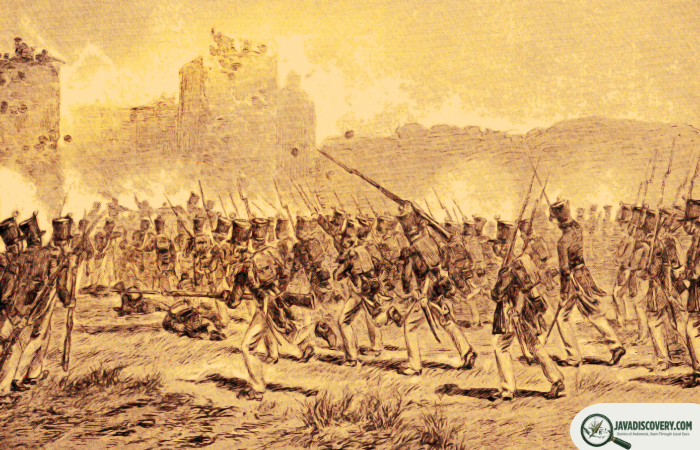
javadiscovery.com – Between 1825 and 1830, the Java War (*Perang Jawa*) brought the Dutch colonial empire in Southeast Asia to the brink of financial and military collapse. At the center of this ferocious five-year conflict was Prince Diponegoro, a charismatic royal prince of Yogyakarta who rallied Islamic scholars (*kyai*), village leaders, and local peasantry in a holy war (*Jihad*) against foreign rule and court corruption. While Dutch military commanders relied on heavy artillery, European cavalry formations, and stone fortresses, Diponegoro turned the rugged, limestone topography of Central Java into his greatest weapon. Paramount among his strategic strongholds were the mist-shrouded Menoreh Hills—a formidable ridge spanning the borders of Kulon Progo, Magelang, and Purworejo. Across these remote peaks and hidden river valleys, Diponegoro’s commanders engineered a network of concealed earthwork forts, mountain observation posts, and underground supply depots that baffled colonial forces for years.
Tracing these secret defensive outposts across the Menoreh range unveils a masterclass in pre-colonial Javanese military engineering, guerrilla strategy, and territorial defense.
Geographical Fortress: Why the Menoreh Hills Were Chosen
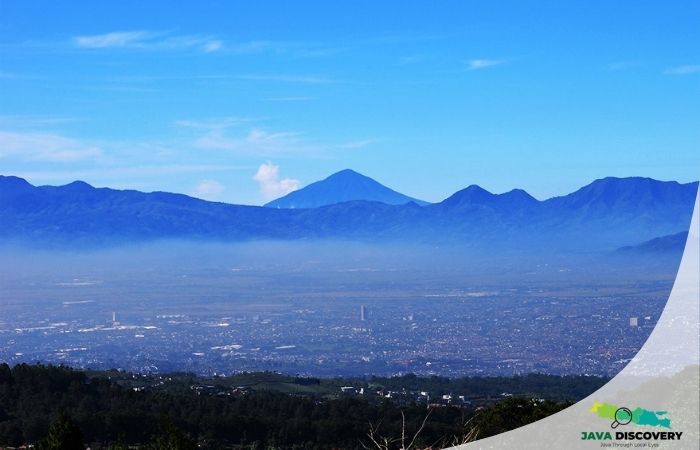
The Menoreh range presented an ideal natural sanctuary for guerrilla warfare. Soaring steeply above the fertile plains of Yogyakarta and the Progo River valley, the mountains offered impassable ravines, dense tropical canopy cover, and complex cave systems:
- Commanding Topography: From high ridge lookouts like Puncak Suroloyo and Mount Gajah, Diponegoro’s scouts monitored military movements across the entire Kulon Progo and Kedu plains, detecting advancing Dutch columns hours before they reached the foothills.
- Impenetrable Vegetation and Trails: Secret mountain paths (*jalan jalan rahasia*) cut through dense jungle and jagged karst cliffs allowed rebel forces to strike colonial supply trains along the Progo River before vanishing into the mountains without a trace.
- Abundant Water and Natural Caves: Subterranean limestone caves, such as Gua Seplawan and Gua Kiskendo, provided natural, bomb-proof hideouts, armories, and freshwater reserves that sustained rebel garrisons through long sieges.
Anatomy of Diponegoro’s Secret Outposts
Unlike European masonry fortresses, Prince Diponegoro’s defensive outposts were built to harmonize with the terrain, utilizing stealth, mobility, and local materials (*Benteng Tanah*):
- Earthen Ramparts and Bamboo Palisades: Outposts were constructed using reinforced earthwork embankments lined with dense, living bamboo thickets (*bambu duri*). These thick natural barriers absorbed cannon fire far better than rigid stone walls while providing impassable thorn defenses against cavalry charges.
- Concealed Command Posts: Key administrative bases, such as the famous stronghold at Selarong and mountain outposts in Dekso, featured subterranean bunkers, concealed tunnels, and natural stone parapets that kept command staff hidden from aerial observation and artillery spotters.
- Interconnected Signal Relay Networks: Outposts were linked by a sophisticated visual and auditory signaling network. Using traditional wooden slit drums (*kentongan*), smoke signals, and high-altitude torch fires, mountain bases communicated troop movements across the entire Menoreh range within minutes.
The Benteng Stelsel: The Colonial Counter-Strategy
Unable to lure Diponegoro’s forces into open-field battles, the Dutch commander General Hendrik Merkus de Kock realized that traditional European tactics were useless in the Menoreh wilderness. In 1827, de Kock introduced the relentless Benteng Stelsel (Fortress System)—a strategy specifically designed to dismantle Diponegoro’s mountain network:
- Encircle and Constrict: The Dutch built over 200 small, interconnected redoubts and wooden blockhouses along river crossings, valley floors, and mountain passes surrounding the Menoreh range, cutting off Diponegoro’s supply lines and village support.
- Paved Military Roads: Colonial forces conscripted thousands of local laborers to cut wide military roads directly through the Menoreh forests, allowing heavy Dutch mobile artillery units to penetrate deep into mountain sanctuaries.
- Systematic Deprivation: By systematically garrisoning every valley, colonial troops restricted access to local rice crops and salt supplies, gradually starving out the mountain strongholds.
The Legacy of the Menoreh Strongholds
Despite the overwhelming technological advantage of the colonial army and the eventual capture of Prince Diponegoro in 1830 under a false flag of truce in Magelang, the secret forts of the Menoreh Hills achieved legendary status in Indonesian military history. They proved that a highly motivated indigenous force using terrain, local intelligence, and adaptive engineering could hold a powerful European empire at bay for half a decade.
Today, as hikers and historians trek along the quiet ridge trails of Kulon Progo and Purworejo, the overgrown earthworks, hidden cave entrances, and historic lookout points across the Menoreh Hills stand as silent, enduring monuments to Java’s fierce spirit of independence.