Salt Pan Architecture of Madura Coastal Engineering Harvest History

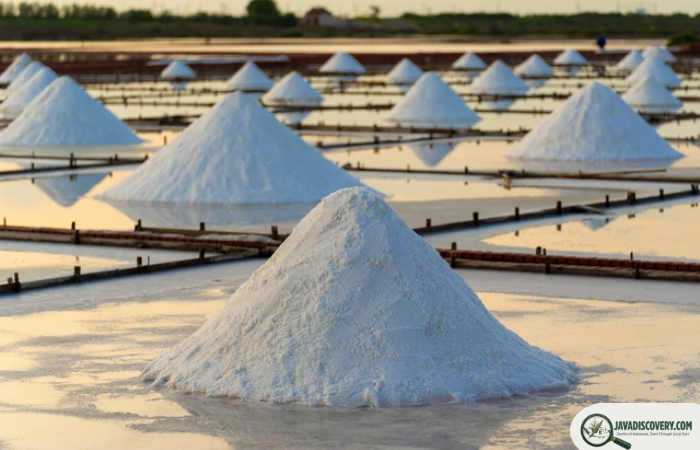
javadiscovery.com – Off the northeastern coast of Java lies Madura, an island long celebrated as Pulau Garam (the Island of Salt). Across the flat, sun-drenched coastal plains of Sumenep, Sampang, and Pamekasan, generation after generation of Madurese salt harvesters (*petani garam*) have transformed low-lying tidal wetlands into a striking geometric landscape of shallow evaporation ponds (*tambak garam*). Known historically as one of the largest sea-salt production centers in Southeast Asia, Madura’s salt pans represent an extraordinary feat of traditional coastal engineering. Driven by the dry monsoon winds sweeping across the Java Sea, this indigenous technology relies on precise hydrological management, wind-powered wooden mills, and deep communal traditions (*gotong royong*) that treat salt harvesting not merely as an industry, but as a sacred dialogue between human labor and the sea.
Exploring the salt pan architecture of Madura reveals a sophisticated ethno-engineering system designed to harness solar energy, ocean tides, and coastal geography to yield Java’s white gold.
The Hydraulic Layout: Geometry of the Salt Pans
The construction of a traditional Madurese salt pan (*ladang garam*) is a masterclass in passive solar evaporation and gravity-fed fluid dynamics. Rather than relying on modern chemical processing, the salt layout uses a stepped series of shallow earthen basins lined with clay or dark waterproof membranes:
- Bozem (Primary Reservoir): High-tide seawater is initially channeled through intake gates (*pintu air*) into large outer storage reservoirs called *bozem*. Here, heavy sediments settle out as the raw seawater begins its initial solar concentration under the tropical sun.
- Pemancingan (Evaporation Ponds): The concentrated brine is progressively moved through a succession of shallower secondary basins (*bozem kencang*). As evaporation increases the salinity level, mineral impurities such as calcium carbonate and gypsum precipitate out, leaving behind a dense, highly concentrated brine (*air tua*).
- Meja Garam (Crystallization Tables): The final, highly purified brine is transferred onto perfectly leveled crystallization beds called *meja garam*. As the remaining water evaporates, shimmering white sodium chloride crystals form across the floor, ready for manual harvesting.
Indigenous Coastal Engineering: Windmills and Wooden Wheels
To move millions of liters of heavy brine between ponds without electric pumps, Madurese salt engineers developed ingenious, eco-friendly mechanical innovations that have survived for centuries:
- Kincir Angin (Wind-Powered Pumps): Iconic sail-cloth and wooden-vane windmills dot the Madurese coastline. Crafted from local teak and bamboo, these rustic windmills harness the steady offshore breezes to turn wooden paddle wheels (*kincir air*), effortlessly lifting heavy brine from lower canals into raised evaporation beds.
- Rol (Wooden Compaction Rollers): Before the final crystallization stage, harvesters use heavy cylindrical wooden rollers (*rol*) pulled manually across the clay bed to create a dense, smooth, and leak-proof floor, ensuring that harvesting tools do not mix muddy soil with pure white salt crystals.
The Ethno-Culture of the Madurese Salt Community
The physical landscape of the salt pans is intimately tied to the social hierarchy and spiritual traditions of the Madurese coastal communities:
- Nyajeni Segara (Offerings to the Sea): Before the annual harvesting season begins during the dry monsoon (typically between July and October), salt farming communities perform rituals of gratitude along the coast. Prayers and offerings are presented to ask for clear skies, hot sun, and protection from unexpected unseasonal rains (*hujan salah mangsa*).
- Gender and Division of Labor: Salt harvesting is a deeply communal effort. Men manage heavy hydraulic repairs, dike construction, and the arduous lifting of salt baskets, while women meticulously scrape, wash, sort, and package high-grade food and industrial salt.
- Colonial Monopoly to Local Resilience: During the 19th and 20th centuries, the Dutch colonial government established a strict state monopoly over Madurese salt (*Zoutregie*), restricting private sales and enforcing fixed quotas. Following independence, Madurese harvesters reclaimed control of their ancestral lands, preserving their traditional techniques against modern industrial competitors.
Challenges and Future of Java’s Salt Island
In the 21st century, Madura’s traditional salt architects face unprecedented ecological and economic challenges. Climate change has brought unpredictable weather patterns, shortening the dry season required for solar evaporation, while cheap imported industrial salt pressures local market prices.
Yet, Madurese salt harvesters continue to adapt—combining traditional wind technology with modern geomembrane linings to increase purity while preserving their cultural heritage. Madura’s coastal salt pans remain an enduring monument to human resilience, sustainable engineering, and the timeless artistry of Java’s maritime frontier.