Skyscraper and Jakarta, Symbol of Modernity or Ecological Threat?

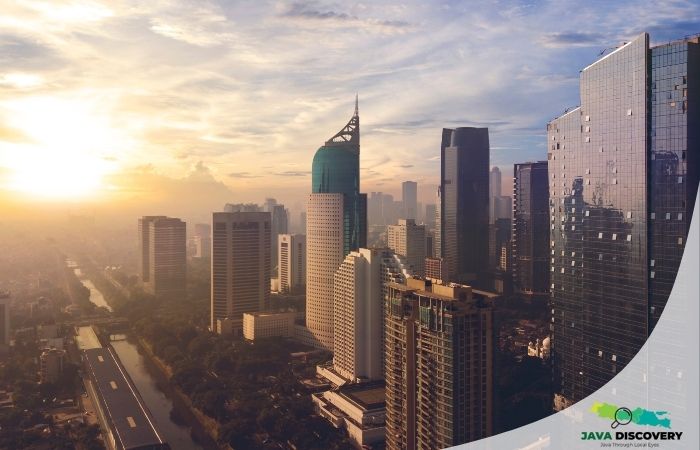
javadiscovery.com – Jakarta always finds a way to look mesmerizing. One of its recent urban fascinations is the “skyscraper experience” — admiring the city’s panorama from above, whether at rooftop bars, luxury hotel lounges, or hidden corners of office towers. From up there, Jakarta seems more organized, more radiant, as if its problems could shrink from the right perspective.
The trend of hanging out at high altitudes is not new. In major cities like New York, Bangkok, or Hong Kong, rooftop bars have long been magnets for leisure and tourism. Young crowds, executives, and foreign visitors alike chase the “best skyline view” to sip coffee, listen to live music, or capture the silhouette of a city bathed in lights.
Jakarta’s Rising Rooftop Culture
Some spots have even become urban icons. SKYE Bar & Restaurant atop the BCA Tower is famed for its sweeping view of Bundaran HI, the beating heart of the capital. Henshin at The Westin in Kuningan offers not just fine dining, but also an immersive experience from the 67th floor with a 360-degree view of the city.
Then there’s Cloud Lounge at The Plaza — a favorite for watching the sunset while waiting for the city lights to bloom. Meanwhile, K22 Bar at Fairmont Senayan creates a calmer, more relaxed atmosphere, perfect for those seeking an urban escape without leaving Jakarta at all.
The Hidden Cost Behind the Glitter
Yet beauty from above is never complete. The daylight that should be clear often turns pale and heavy, as blue skies are replaced by a persistent gray haze — pollution that quietly defines Jakarta’s daily rhythm. At night, the smog may vanish from sight, but not from existence. Darkness only softens the city’s wounds, hiding what it refuses to confront.
It reflects a paradox of rapid development that hasn’t yet aligned with environmental sustainability. In truth, rooftop spaces could serve more than lifestyle aesthetics — they could evolve into vertical gardens or pocket green zones to help Jakarta inch closer to its ideal 30% green space target, as mandated by Indonesia’s Spatial Planning Law No. 26 of 2007.
With such use, rooftops could become sources of oxygen, natural coolers, and proof that Jakarta’s modernity can harmonize with ecological responsibility.
The Vertical Paradox
Seeing Jakarta from above is not merely aesthetic; it’s philosophical. It reminds us that this city was built on a vertical logic — the higher you go, the pricier and more exclusive it becomes.
Skyscrapers are at once symbols of progress and markers of inequality. Those who sip cocktails on the 50th floor live a different Jakarta than those who breathe its exhaust fumes below. The irony deepens when we realize the same skyline we admire is also a portrait of environmental crisis.
Perhaps that’s Jakarta’s true charm — a city that enchants while concealing. It seduces with light, yet those lights serve as a cosmetic veil over the haze. Jakarta gives the illusion of grandeur to those who look from above, while millions below continue their struggle for survival.
Looking Toward a Clearer Horizon
Maybe that’s what defines Jakarta: a city forever climbing upward, chasing height as a symbol of identity, yet still failing to cleanse its sky into a guiltless canvas of blue.
From one angle, rooftop views offer a fleeting escape from pollution; from another, they are declarations that we’ve learned to live aesthetically amid ecological imbalance.
One day, perhaps, when we gaze at Jakarta’s skyline, it will not only show towers, lights, and sunsets — but also a blue sky and clean air we can finally breathe without hesitation.